


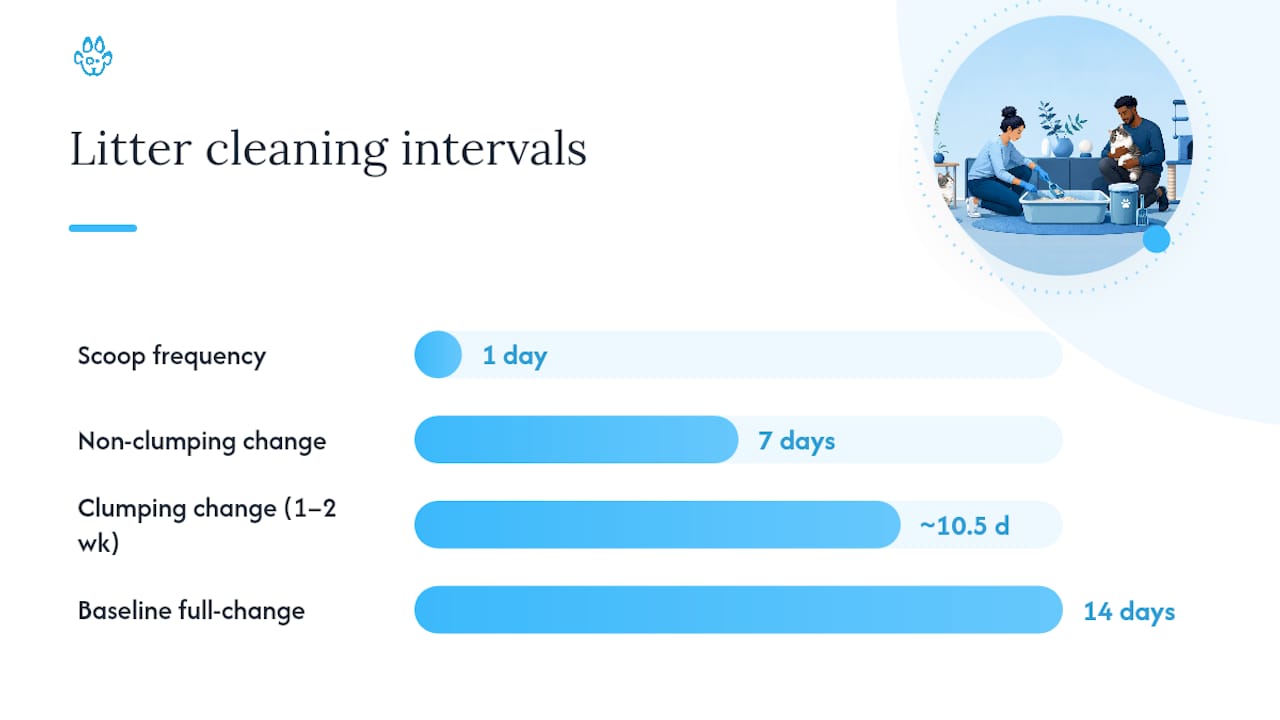
Scoop your cat's litter box at least daily, and more frequently if you have multiple cats. Do a full litter change and box scrub regularly, with frequency depending on litter type and number of cats, changing more often for non-clumping litter or multiple cats. Adjust up if someone in your home is pregnant or immunocompromised, and adjust up (again) if your cat starts giving the box the side eye.
TL;DR:
- Using clumping litter allows for full box changes every one to two weeks, while non-clumping litter requires weekly changes due to faster odor spread.
- The recommended number of litter boxes follows the N+1 rule, meaning two cats need three boxes to prevent territorial disputes and reduce cleaning frequency.
- Monthly deep cleaning involves scrubbing with unscented soap, rinsing thoroughly, and replacing the litter to prevent bacteria buildup and odors.
- Daily scooping should be done consistently, ideally at the same time each day, to remove waste before it becomes infectious or noticeable to the cat.
- Households with immunocompromised individuals or pregnant people should adopt stricter routines, such as gloves and thorough handwashing after litter box maintenance.
What's the best litter box cleaning schedule to follow?
A good litter box routine runs on four cadences: daily, weekly, monthly, and yearly. Once you know the rhythm, it takes less mental energy than deciding what to make for dinner.
Daily (5 minutes):
- Scoop out clumps and solids, morning or evening, same time each day if you can manage it.
- Check litter depth and top off to roughly 2 to 3 inches.
- Do a quick sniff and visual check. Cats notice a dirty box faster than you do.
Weekly to biweekly (10 minutes):
- Clumping litter: dump the whole box and start fresh every one to two weeks.
- Non-clumping litter: plan on a full change weekly since it doesn't isolate waste as well.
- Wipe down the inside walls of the box with a damp cloth between full changes if you notice residue.
Monthly:
- Do a true deep clean with soap and water (full steps below).
- Inspect the box itself for cracks, scratches, or a smell that won't quit even after cleaning. Scratched plastic holds onto bacteria and urine odor no matter how hard you scrub, per PetMD's litter box cleaning guidance.
Yearly:
- Replace the box entirely every one to two years, sooner if it's scratched up or the odor has moved in permanently.
Set a phone reminder for the weekly reset. Future you, holding a clean scoop, will thank present you.
What changes how often you should clean the litter box?
The daily-scoop, biweekly-change baseline is a starting point, not a universal law. A few variables push that schedule in either direction, and getting them right matters more than the calendar date.
Start with cat math. Veterinarians recommend one litter box per cat, plus one extra. This is the N+1 rule, and Cornell's Feline Health Center is one of several veterinary sources that recommend it, because cats can be surprisingly territorial about where they do their business. Two cats means three boxes, not two. Skip this and you'll be scooping more often just to keep pace with the traffic.
Litter type matters just as much:
- Clumping litter isolates waste in tight clumps, which is why it stretches to a one to two week full-change schedule.
- Non-clumping litter breaks down and spreads odor faster, so weekly full changes are closer to the rule.
- Silica or crystal litters vary by brand, so follow the packaging, but expect somewhere in between.
Box design plays a role too. Covered boxes trap odor inside (great for your nose, less great for the litter's freshness), which usually means more frequent scooping. Larger boxes buy you a little more time between full changes simply because there's more surface area to spread waste across.
Age and health shift the math again. Kittens, senior cats, and cats recovering from illness need more frequent checks, both for hygiene and because changes in their litter box habits are often the first sign something is wrong.
How do you deep clean a litter box the right way?
A proper deep clean uses simple supplies: unscented dish soap, a dedicated scrub brush (not the one you use on dinner plates, please), disposable gloves if you prefer them, and a trash bag for the old litter.
- Empty all the old litter into a trash bag and tie it off.
- Pre-rinse the box with hot water to loosen stuck-on residue.
- Scrub with a small amount of unscented dish soap, working into corners and along the base where clumps like to hide.
- Rinse thoroughly, more than once, until there's no soap smell left at all.
- Air-dry completely before adding fresh litter. A damp box is a magnet for bacteria and a cat repellent in one.
- Refill with fresh litter to a depth of about 2 to 3 inches.
Deep clean frequency depends on litter type: weekly for non-clumping litter, roughly every two to four weeks for high-quality clumping litter, according to Purina's litter box maintenance guidance.
Skip the bleach and skip the heavily scented cleaners. Bleach can react with ammonia in urine and produce fumes nobody, human or feline, should be breathing. Scented sprays might smell like a spa day to you, but cats have noses built for survival, not perfume counters, and a strong scent can be enough to send them looking for a bathroom alternative, like your favorite rug. One habit worth building in: keep a second scrub brush dedicated only to the litter box, stored separately from your other cleaning tools, since cross-contamination between them is an easy mistake to avoid.
Is cleaning the litter box safe for everyone in the house?
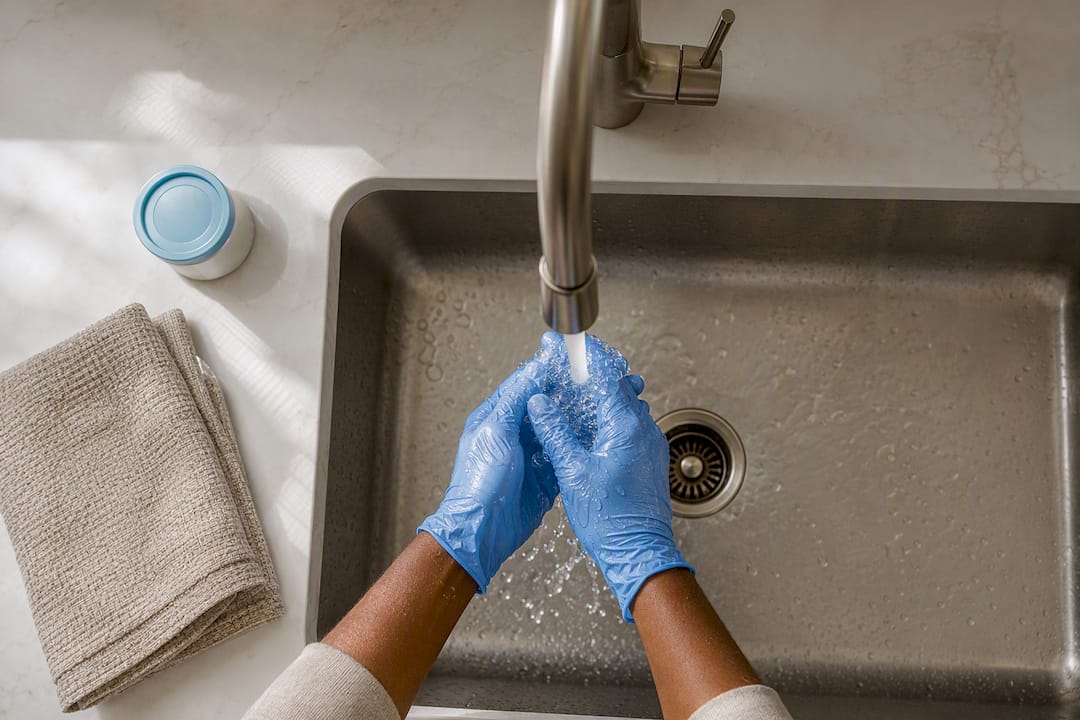
Cleaning a litter box carries real health considerations, not just an ick factor. The CDC advises pregnant people and immunocompromised individuals to avoid litter box duty when possible. If nobody else can take over, gloves and thorough handwashing afterward are non-negotiable.
Here's the detail that makes daily scooping more than a tidiness habit: Toxoplasma gondii, the parasite behind toxoplasmosis, needs time in the environment after it's shed in cat feces before it becomes capable of causing infection, a process called sporulation. Veterinary sources including Cornell's Feline Health Center put the window at 1 to 5 days depending on conditions, with 24 hours as the fastest it can possibly happen. Scoop every day and you stay ahead of even the fastest case. Skip a day or two, and you are inside the window where it is a real possibility, not a remote one.
A few disposal habits matter as much as the schedule itself:
- Bag waste and toss it in household trash. Don't compost it.
- Never rinse litter or wash the box in the kitchen sink or bathtub, per guidance on litter box hygiene from the Worms & Germs Blog, a public health resource run by veterinary specialists at the University of Guelph.
- Wash hands with soap for at least 20 seconds after every scoop, glove or no glove.
- Keep the litter box physically separated from food prep and eating areas.
What tools and routines make litter box maintenance easier?
A few small upgrades take the friction out of daily maintenance, and friction is usually why schedules fall apart in the first place.
Sample routines by household:
- One cat: scoop once daily, full change every two weeks, deep clean monthly.
- Two cats: scoop twice daily, full change every one to two weeks, deep clean every two to three weeks.
- Three or more cats: scoop morning and evening at minimum, full change weekly, deep clean every two weeks.
Tools worth having on hand:
- A metal scoop with fine slots holds up longer than plastic and clumps less litter with the waste.
- A small dedicated trash can with a lid keeps odor contained between larger disposal runs.
- Odor-locking liners help in some setups, though they can trap moisture against the box walls if not changed often, so don't lean on them as a substitute for regular full changes.
Watch for behavioral signals that your schedule needs tightening: a cat avoiding the box, more marking outside it, or odor that returns within a day or two of cleaning. Those are your cat's way of filing a complaint, and it's usually worth listening.
Why trust this litter box routine?
This routine reflects guidance from veterinary sources like Cornell's Feline Health Center and public health guidance from the CDC, not guesswork or internet folklore. It's also the same standard we hold our own care team to, since consistency in the small stuff is exactly what makes a litter box routine stick in the first place.
If you want to set up your home right from day one, our guide on must haves for first time cat owners covers the basics beyond just the box.
Let Sparky Steps handle litter duty when you can't
Sparky Steps has provided licensed, bonded, and insured cat sitting to Chicago pet parents since 2016. Every cat sitting visit includes scooping, fresh water and food checks, and a genuine hello, all logged through real-time photo updates via DoTimely so you know exactly when your cat was cared for. Founder Michael Jaurigue is a Fear Free Certified Professional with credentials through Pet Sitters International and NAPPS, and that training shapes how the whole care team handles cats, gently and on their own terms.
Cat sitting is available citywide, with dedicated coverage across our North Side neighborhoods. You get the same trusted walker visit after visit, not a rotating cast of strangers. If your travel dates are coming up, take a look at Sparky Steps' pet sitting page to check availability and book a visit that keeps your cat's litter box, and your cat, exactly on schedule.
Sources
- How to clean a litter box, PetMD
- How often should you clean the litter box? Purina
- Toxoplasmosis, CDC
- Cleaning tips for litter boxes, Worms & Germs Blog, University of Guelph
FAQ
How often should a litter box be scooped?
Scoop at least once a day, and twice a day if you have more than one cat sharing boxes, according to PetMD's cleaning guidance.
How often should you clean your cat's litter box?
Do a full litter change and scrub every one to two weeks for clumping litter, and weekly for non-clumping litter, with daily scooping in between.
What time of day should I clean my litter box?
There's no required time, but picking a consistent slot, morning or evening, makes the habit stick and matches your cat's own routine.
How long can I go without cleaning my cat's litter box?
Not long. The parasite behind toxoplasmosis can begin to become infectious in cat waste in as little as 24 hours, and most cats will start avoiding a box that's gone uncleaned for more than a day or two.


