


Yes, combine your alarm and cameras with a real, scheduled physical check-in. Technology is great at recording what happens, but it rarely catches a slow leak under the water heater or a stack of packages announcing you're gone. A layered plan of locks, monitoring, and someone trustworthy walking through your home in person is what actually protects it, and Sparky Steps offers exactly that kind of visit for North Side pet parents already juggling travel logistics.
TL;DR:
- Water leak detectors near appliances are the most overlooked yet critical devices, especially on longer trips, to prevent costly damage.
- Updating firmware, verifying camera coverage, and enabling two-factor authentication are essential steps to ensure smart home systems remain reliable while absent.
- Setting randomized lighting schedules and pausing mail delivery help create a lived-in appearance that deters burglars during your absence.
- Regular in-person check-ins every one to three days are crucial for detecting leaks, smells, or damages that sensors often miss.
- Combining human visits with layered security measures offers better protection than relying solely on cameras or sensors.
What should be on your pre-departure checklist?
The day before you leave matters as much as the trip itself. A rushed morning is how deadbolts get skipped and thermostats get forgotten, so build your final walk-through around a short, prioritized list rather than trying to remember everything at once.
Start with the basics that keep people out:
- Lock every entry point, including deadbolts, sliding doors, and basement or garage access
- Arm the alarm system and confirm each sensor is actually responding
- Test that your cameras are recording and that notifications land on your phone, not just the app dashboard
Then handle the details that make your house look lived-in and running normally:
- Pause mail delivery through your local post office or arrange for a neighbor to collect it daily
- Set randomized lighting schedules rather than the same on-off time every night, since predictable timers are easier for a passerby to spot than natural variation
- Unplug space heaters, coffee makers, and anything else that doesn't need to stay powered
- Set the thermostat to an energy-saving but safe range for the season
- Write down emergency contacts, including a neighbor, your check-in service, and your utility providers, and leave them somewhere your caretaker can find them fast
None of this takes more than twenty minutes if you treat it as a routine instead of a scramble.
How do you set up smart home monitoring correctly?
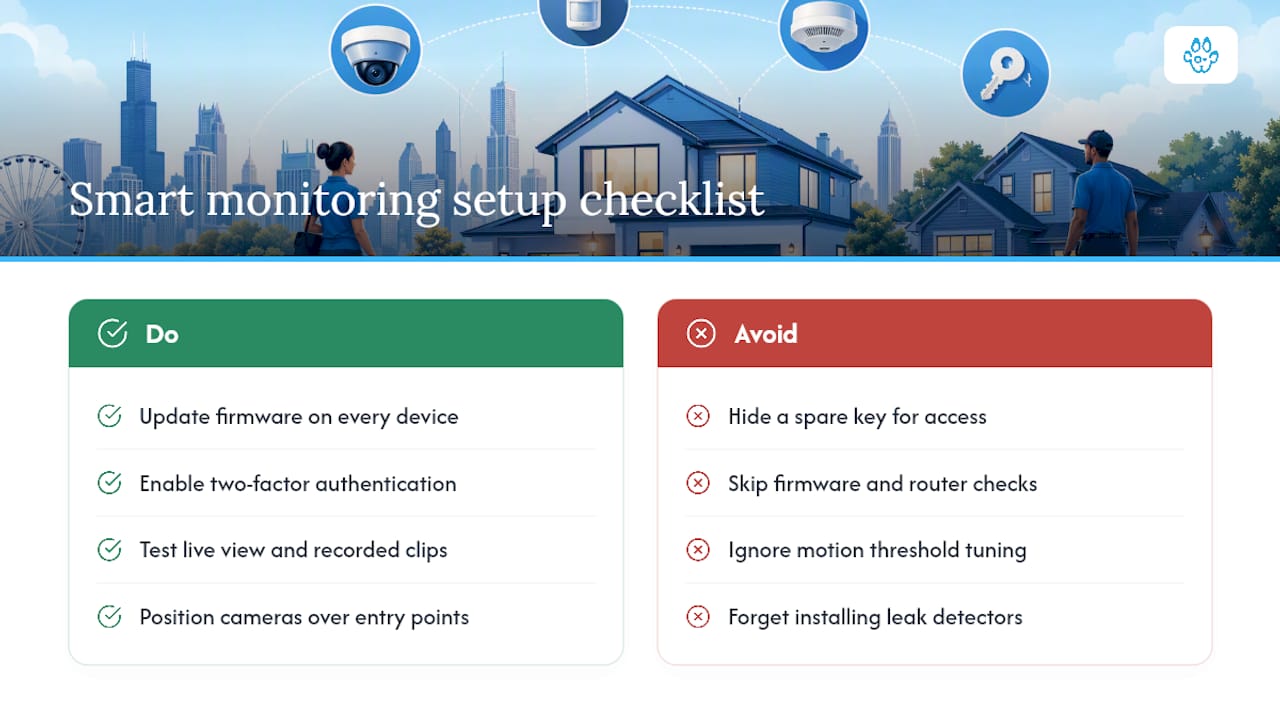
Cameras, video doorbells, smart locks, and motion sensors each play a different role. A doorbell camera watches your porch and packages. Interior motion sensors flag movement where nobody should be. Smart locks let you grant temporary access without hiding a spare key in the mailbox. Leak detectors, meanwhile, are the one device most homeowners forget until it's too late.
Before you leave, run through the boring but essential checks: update firmware on every connected device, confirm your Wi-Fi router is stable, and enable two-factor authentication so nobody but you can log into the system remotely. A device that hasn't been updated in months is far more likely to lose connection mid-trip, right when you need it most.
Position outdoor cameras so they actually cover entry points, not just the driveway, and verify cloud storage retention so old footage doesn't get overwritten before you can review it. Test live view and pull up a recorded clip from each camera. Adjust your motion thresholds too. A sensor that pings you every time a squirrel runs across the yard will train you to ignore alerts, and that's exactly when a real one slips by. The tech only helps if someone is actually watching the alerts, so confirm your batteries and backup power are solid too.
How do you prevent water damage while you're away?
Water damage usually beats out theft as the more expensive disaster, and it's the one homeowners overlook most. Here's how to lock it down before you leave:
- Decide whether to shut off the main water supply or just isolate individual appliance valves. For trips shorter than two weeks, isolating the washing machine, dishwasher, and ice maker valves is usually enough.
- For anything longer, especially over two or three weeks, shutting off the main at the meter eliminates the risk of an unseen catastrophic flood, though you'll need to coordinate with whoever is watering your plants or checking your HVAC.
- Install leak sensors near the water heater, dishwasher, and washing machine hose connections; these are the spots where slow failures start.
- Set your thermostat for the season: warm enough in winter to prevent frozen pipes, cool enough in summer to protect electronics and pets left behind.
- Run water through rarely used drains so they don't dry out and let sewer gas in, and test your sump pump before you go.
Before any extended absence, check your homeowner's insurance policy for unoccupied-home clauses. Some insurers reduce or deny coverage after a set number of vacant days, and that's a nasty surprise to discover after a pipe already burst.
Who should check your home, and how often?
A weekend trip barely needs more than occasional check-ins. A week or two away calls for visits every few days. For longer trips, especially during seasons with freeze risk, more frequent checks usually make sense.
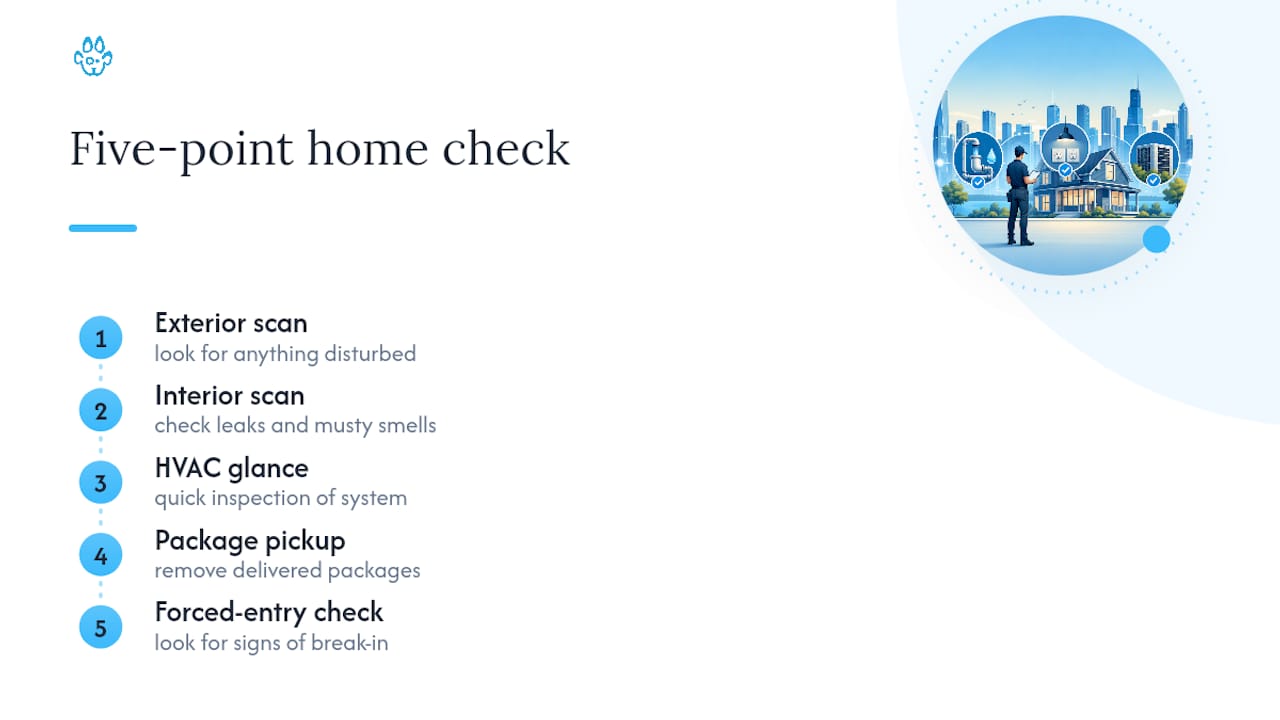
Every visit, whoever does it, should cover the same ground: a walk around the exterior looking for anything disturbed, an interior scan for leaks or musty smells, a glance at the HVAC system, package pickup, and a check for any sign of forced entry.
When deciding who does that walk-through, ask a few blunt questions. Are they licensed, bonded, and insured? Will the same person show up each time, or is it a rotating cast of strangers? Do you get a photo and a timestamp so you actually know the visit happened, or just a text saying "all good"? References help too; anyone can claim to be reliable, but a track record backs it up.
For access, skip the spare key under the flowerpot. Temporary smart-lock codes or a key safe with a rotating code are far harder to exploit, and you can shut off access the second the trip ends.
One habit worth adopting: give your check-in person a written list of what "normal" looks like in your home, like which lights are usually on and where the water shutoff valve is. It saves precious minutes if something actually goes wrong.
What should you do if you get an alert or find a problem?
- Pull up your live camera feed and check recent sensor logs before doing anything else. Most alerts turn out to be nothing.
- If it's genuinely urgent, a fire, an active break-in, or visible flooding, call local emergency services immediately. Don't waste time trying to verify it yourself first.
- If the situation is unclear, contact your monitoring company for guidance.
- Ask your on-the-ground contact, whether that's a neighbor or a professional check-in service, to physically confirm what's happening and send photos with timestamps.
- Document everything you can for insurance purposes, then schedule repairs and a follow-up walkthrough once you're back.
Having someone who can actually show up matters more than any alert notification ever will.
What Sparky Steps sees that cameras miss
Sparky Steps runs small, consistent care teams who send GPS-timestamped photos and notes with every visit, and every walker is licensed, bonded, and insured. That combination catches things a lens simply can't: a damp patch spreading behind a washing machine, packages stacking up unnoticed, a furnace making a new and unfamiliar noise, or scuff marks near a side door that suggest someone tried the handle. Those visit records also become useful documentation if you ever need to file an insurance claim, giving you a timestamped trail instead of a vague memory of "it seemed fine last week."
Our take: stop treating cameras like a complete plan
Here's where a lot of home security advice goes sideways: it treats a camera system as the finish line instead of one layer of several. A doorbell camera is genuinely useful for catching a porch pirate. It is nearly useless for catching a slow leak behind the dishwasher or noticing that the basement smells like mildew for the first time in a decade.
The homeowners who handle absences well are not the ones with the fanciest sensors. They are the ones who pair reasonable tech with a person who physically walks through the house and knows what "normal" looks like. That is the piece most guides skip past on their way to selling you another gadget.
If you take one thing from this: prioritize the human check-in first, then build your tech stack around supporting that person, not replacing them.
"We've walked into homes where a camera showed nothing unusual for days, but the second we stepped inside, something felt off. That's the part no sensor can flag."
- Michael Jaurigue
How Sparky Steps handles home check-ins
Sparky Steps builds home check-ins the same way we build pet care: consistency first. You get the same trusted walkers each visit, not a rotating cast of strangers, and every stop comes with real-time updates through DoTimely, including photos, notes, and GPS timestamps, so you know exactly what happened and when. Every walker is licensed, bonded, and insured, and the same team already caring for your pets can extend that trust to your home.
For a weekend trip, a couple of check-ins usually covers it. For a week or longer, we typically recommend visits every one to three days, adjusted for weather and how long you'll be gone. Before you leave, hand over access details, emergency contacts, and any quirks about your house worth flagging, like a finicky garage door or a thermostat that runs cold.
Head to our home check-in services page to see what's included and get one scheduled before your next trip.
Sources
- How to prepare your home before travel: expert tips for a worry-free trip, Forbes
- Home security while on vacation, Vivint
FAQ
How do I safeguard my home while on vacation?
Combine locked entry points, tested alarm sensors, cameras with verified notifications, and a scheduled physical check-in from a trusted person or a service like Sparky Steps.
How long can I leave my house unoccupied?
There's no fixed limit, but most insurance policies have unoccupied-home clauses that kick in after a set number of days, so check your policy before any trip longer than two or three weeks.
How do I monitor my home when I'm away?
Use cameras and sensors for continuous coverage, but pair them with in-person check-ins every one to three days, since a person on-site catches leaks, packages, and damage that cameras typically miss.
What should I do before leaving my house for two weeks?
Lock all entries, arm your alarm, pause mail, set randomized lighting, isolate or shut off water valves as needed, adjust your thermostat, and schedule visits every one to three days as appropriate.

