


Start senior dog home care by combining three things at once: safer footing and easier access around the house, a lean body condition through measured feeding, and veterinary checkups every six months. None of these fixes require a renovation or a big budget. Watch your dog's diet, mobility, and behavior closely, and treat any change as a signal worth checking, not just "getting old." The sections below turn that into an actionable checklist.
TL;DR:
- Dogs are considered seniors roughly in the last quarter of their lifespan, which varies by breed and size, with small breeds aging later than large breeds.
- Home modifications like non-slip surfaces, ramps, and elevated bowls reduce fall risk and ease mobility issues without high costs or renovations.
- Maintaining a lean body condition and providing adequate protein are crucial for health and joint comfort, with feeding measured and diet considerations discussed with a vet.
- Biannual veterinary checkups are recommended for seniors to catch silent conditions like kidney disease or hypertension early, rather than sticking to yearly exams.
- Movement should be adapted into short, frequent walks, with attention to signs of discomfort or limping, and pain management should involve multimodal approaches coordinated with a veterinarian.
When does a dog become a senior?
"Senior" isn't one age. It's roughly the last quarter of your dog's expected lifespan, and that finish line moves a lot depending on size and breed. A Great Dane might hit senior status around 6, while a Chihuahua might not get there until 10 or 11.
Rough guideposts:
- Giant breeds (Great Dane, Mastiff): senior around 6 to 7 years
- Large breeds (Labrador, German Shepherd): senior around 7 to 8 years
- Medium breeds (Beagle, Bulldog): senior around 8 to 9 years
- Small breeds (Chihuahua, Yorkie): senior around 10 to 12 years
Once your dog crosses into that window, this is the time to start twice-yearly vet visits instead of the once-a-year default. AAHA's 2023 senior care guidelines back that schedule, and getting ahead of it beats playing catch-up later.
What home changes actually reduce falls and pain?
Most senior dog injuries at home come from the same culprits: slick floors, high jumps, and bowls set too low for a stiff neck. Fixing this is cheaper than a vet bill and takes an afternoon.
- Add non-slip surfaces where your dog walks most: entryways, near the food station, and any favorite napping spot. Cheap yoga mats or carpet runners work as well as pricier rubber traction pads.
- Install ramps or steps for the couch, bed, and car. A too-steep ramp is worse than none, so check the slope, aim for a gentle grade, not a ladder.
- Raise food and water bowls to elbow height for dogs with neck or shoulder stiffness, and pick supportive, orthopedic bedding over a thin cushion.
- Keep essentials clustered: food, water, bed, and an easy path to the door for bathroom breaks. Fewer trips across the house means fewer chances to slip.
- Add nightlights along hallway routes. Aging eyes lose night vision fast, and a dim hallway is a fall waiting to happen.
One safety note worth flagging: skip the human heating pad unless you are standing right there watching it. They overheat fast, and senior dogs with reduced mobility cannot always shift away from a hot spot.
Low-cost fixes (a $15 rug, a cardboard-box step) go a long way before you need to invest in orthopedic ramps or heated beds.
What should a senior dog eat to stay healthy?
Keeping your dog lean is arguably the single biggest lever you control for a senior dog's comfort, especially if arthritis is in the picture. Extra pounds on aging joints mean more pain, less movement, and a faster spiral. AAHA's senior care guidelines list weight and body condition management among the most strongly supported interventions for extending healthy years in older dogs.
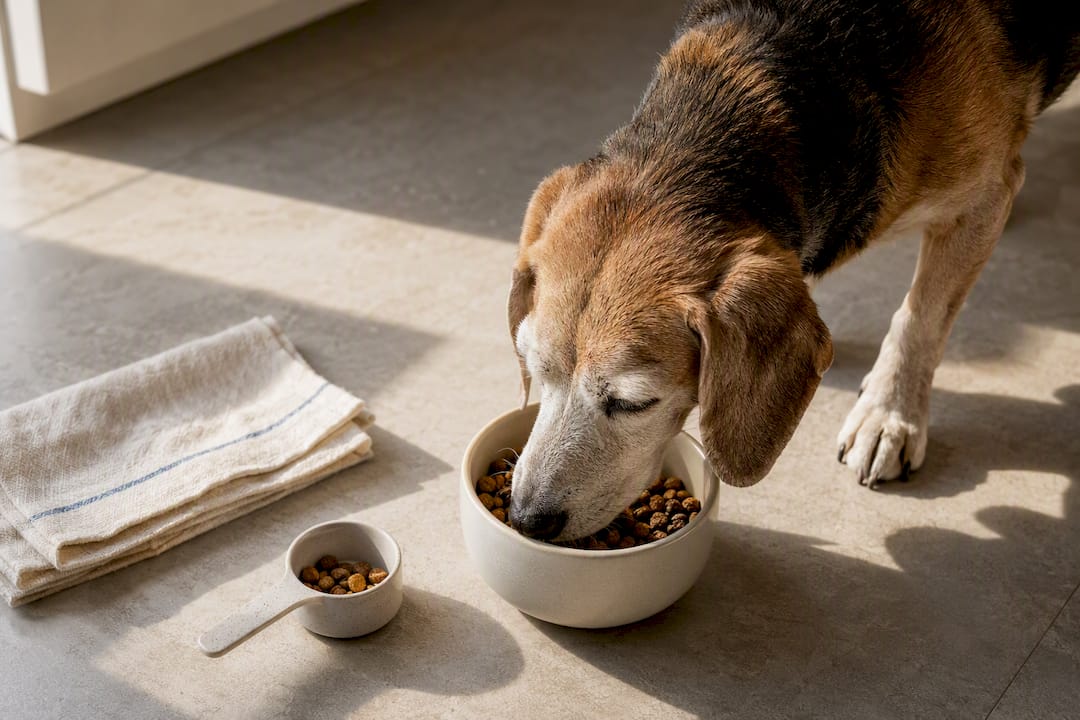
Protein is where a lot of pet parents get it backward. Healthy senior dogs generally still need solid protein to maintain muscle. Do not switch to a "senior formula" automatically assuming it means less protein. Unless your vet has diagnosed a kidney or liver issue and prescribed a specific therapeutic diet, cutting protein can do more harm than good.
Practical steps that work:
- Measure every meal instead of eyeballing it
- Use a slow feeder if your dog's appetite or interest has dropped
- Track calories loosely, especially if activity has decreased
- Ask your vet about prescription diets only when there's a diagnosed reason
If your dog suddenly stops finishing meals, do not assume it is just old age. Appetite loss is frequently the first sign of a treatable medical issue and deserves a vet visit, not a wait-and-see approach.
How much exercise does a senior dog need?
Movement still matters, it just needs a new shape. Trade one long walk for two or three short, easy ones, and always start with a slow warm-up instead of bolting out the door.
- Shorten walks and increase frequency; let your dog set the pace
- Ask your vet about joint supplements, prescription pain relief, or rehab options like hydrotherapy if stiffness is visible
- Introduce a supportive harness or toe grips gradually, not on the first walk
- Watch for the difference between "a little tired after" (normal) and limping, refusing stairs, or excessive panting the next day (a sign to scale back)
Multimodal pain management, meaning medication, weight control, and environment changes working together, consistently outperforms any single fix on its own. If your dog has arthritis specifically, walking technique matters as much as the walk itself.
Is my senior dog's confusion normal aging or something else?
Some behavior shifts are worth flagging fast: getting lost in familiar rooms, disrupted sleep schedules, or house soiling after years of being reliable. These can point to canine cognitive dysfunction, and treating them as medical issues rather than inevitable aging is the right call.
Easy daily enrichment helps regardless of the cause:
- Scatter a few treats for a two-minute scent-work session
- Rotate in a simple puzzle feeder instead of a plain bowl
- Keep routines predictable; senior dogs lean on consistency
- Use nightlights or calming pheromone diffusers to reduce nighttime anxiety
If symptoms show up, bring them to your vet rather than chalking it up to a "senior moment."
How often should a senior dog see the vet?
Twice a year, not once. That is the AAHA-recommended cadence for senior pets, and the extra visit exists because conditions like kidney disease and thyroid imbalance often progress quietly between annual exams.
A typical senior screening includes:
- Full physical exam and dental check
- Complete blood count (CBC) to catch anemia or infection
- Chemistry panel to flag kidney or liver stress
- Urinalysis to detect early kidney disease or diabetes
- Blood pressure check, since hidden hypertension is common in older dogs
Between visits, track weight, appetite, bathroom habits, mobility, and general mood at home. Contact your vet immediately for sudden weight loss, labored breathing, collapse, or a dog who suddenly will not eat at all.
How do I manage chronic pain and plan for the road ahead?
Chronic conditions like arthritis rarely respond to one fix. The best results come from combining medication, weight control, home adaptations, and rehab, all coordinated with your vet rather than pieced together on your own.
Quality-of-life scoring tools, like the HHHHHMM scale, give you something more useful than gut feeling: a repeatable way to track hurt, hunger, hydration, hygiene, happiness, mobility, and more, session over session.
A few things ease the load on you, too:
- Ask your vet if multiple medications can combine into one capsule
- Keep a simple log of changes in eating, energy, or bathroom habits
- Do not underestimate caregiver fatigue. It is real, and asking for extra support is not giving up on your dog
What we notice on our own walks
We have watched this play out on our own walks more times than we can count. A walker notices a dog taking the stairs a beat slower than last week, or leaving half a meal that used to disappear in seconds. Those small tells matter, and they are easiest to catch when the same person is showing up week after week, not a rotating cast of strangers.
If you are a little tired and a little worried, that is normal. Lean on your care team. That is what we are here for.
Written by the Sparky Steps Team
"We did not name the company after Sparky by accident. He taught us that the small stuff, noticed early and often, is what actually keeps a dog comfortable in the last chapter."
- Michael Jaurigue
How Sparky Steps supports senior dogs at home
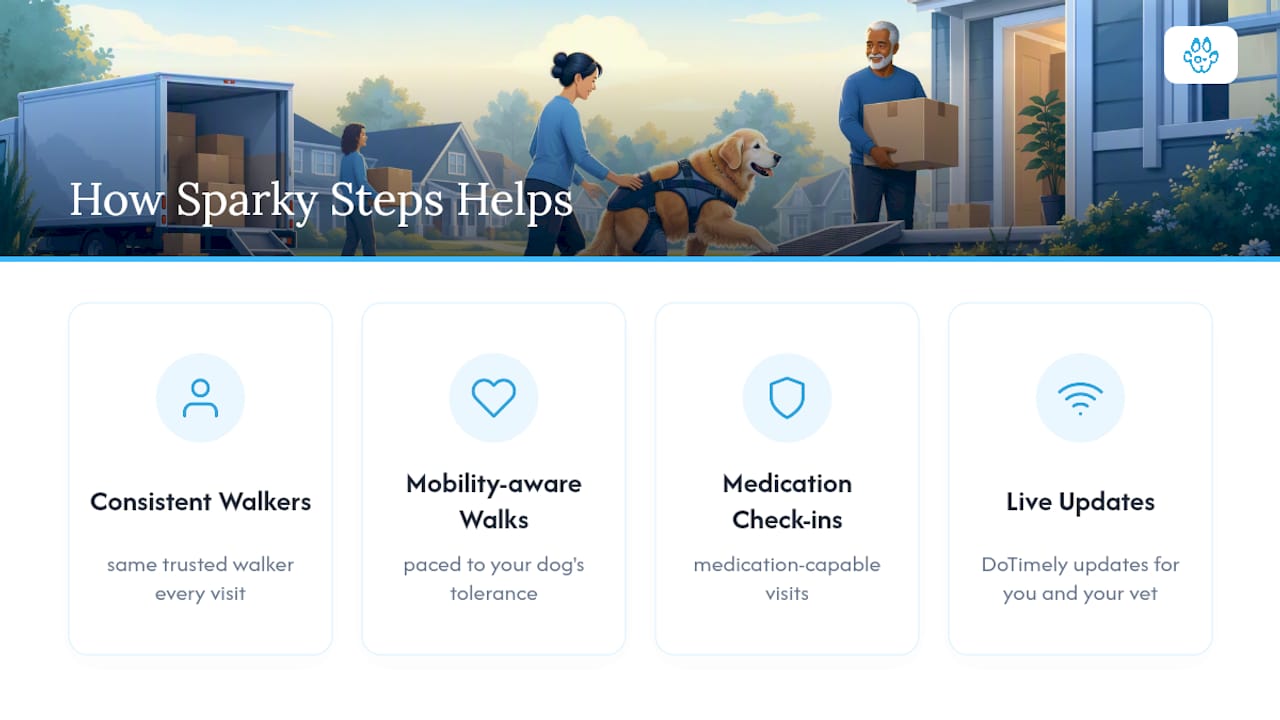
If you are juggling a senior dog's changing needs alongside work, family, and everything else, you do not have to do it solo. Sparky Steps builds care around your dog's actual routine, not a generic time slot. That means the same trusted walkers every visit, mobility-aware walks paced to your dog's tolerance, medication-capable check-ins, and real-time updates through DoTimely so you (and your vet, if needed) can track exactly how your dog is doing between appointments.
Every walker is licensed, bonded, and insured, and because it is the same familiar face each time, subtle changes in appetite or gait get noticed early instead of missed. If your dog needs company while you are at work or traveling, our pet sitting services cover everything from short visits to overnight stays.
Sources
- 2023 AAHA senior care guidelines for dogs and cats
- Setting the stage for owners when senior pets develop behavior problems, AVMA
FAQ
My senior dog can't be left alone. What can I do to help?
Build a support routine around consistent short check-ins rather than one long stretch alone, whether that's a trusted neighbor, family member, or a professional pet sitting service that visits on a regular schedule.
Why does my dog cry when he gets up after lying down for a while?
Vocalizing when standing after rest is a common sign of joint stiffness or arthritis pain, and it's worth mentioning to your vet rather than assuming it's just stiffness that will pass.
Will my dog eat if they are in pain?
Not necessarily. Pain and nausea from underlying conditions frequently suppress appetite, so a senior dog skipping meals should get a vet visit rather than a "wait and see" approach.
What are the signs that a senior dog is nearing the end of her life?
Persistent loss of appetite, difficulty standing or breathing, incontinence, and withdrawal from normal interaction are common signals; a structured quality-of-life scale can help you and your vet make that call with more clarity than guesswork alone.


