


For most anxious, senior, or medicated pets, in-home pet sitting is the better first choice because it skips the stress of a new environment entirely. Boarding tends to work well for social, adaptable dogs heading out on longer trips who genuinely enjoy other animals around them. The right call comes down to three things: your pet's stress tolerance, any medical needs, and how long you'll be gone. Keep reading for the full breakdown, a vetting checklist, and exactly what to ask before you book either one.
TL;DR:
- Pet sitting is better for anxious, senior, or medicated pets because it keeps them in familiar surroundings and minimizes stress.
- Always verify insurance, request references, and confirm backup plans before booking either a sitter or a boarding facility.
- In-home pet sitting often costs less and provides fewer health risks, especially for pets with medical needs or behavioral sensitivities.
- Boarding works best for social, high-energy pets who enjoy interaction and can handle new environments comfortably.
- Booking well in advance and preparing your pet with familiar items and practice visits ensures a smoother experience regardless of the option chosen.
Pet sitting vs boarding: the real tradeoffs
Choosing between pet sitting and boarding is not really about which service is better. It is about matching the setup to your particular dog or cat, and that means looking honestly at both sides.
In-home pet sitting keeps your pet in familiar territory, which matters more than most pet parents realize until their dog is the one pacing by the door at a boarding facility.
Pros of in-home pet sitting:
- No change of environment, so routines, smells, and sleeping spots stay the same
- Lower exposure to unfamiliar animals, which reduces the risk of kennel cough or other contagious issues
- A sitter in your home doubles as a light layer of security, since mail gets collected and lights turn on and off like normal
- One-on-one attention instead of sharing staff time with a dozen other pets
Cons of in-home pet sitting:
- You are trusting someone with a key to your house, so verifying insurance and background checks is not optional
- If a sitter gets sick or has an emergency, you need to know there is a backup plan already in place
- Pets can feel a little lonely between visits if you are booking drop-ins rather than overnight stays
Boarding flips the script entirely. Your pet leaves home, but gains constant company and supervision.
Pros of boarding:
- Staff are present all day, which matters for pets on tight medication schedules or those recovering from something minor
- Social dogs often thrive on the group play and structured routine
- Facilities are built for pet care specifically, with fenced yards, sanitized kennels, and staff trained for group settings
Cons of boarding:
- New sights, smells, and sounds can spike stress, especially for anxious or senior pets
- Group settings mean more exposure to illness, and vaccine requirements don't eliminate the risk of kennel cough entirely
- You are responsible for drop-off and pick-up, which adds a logistics step most in-home sitting skips
In-home pet sitting usually causes less disruption for anxious, senior, or routine-sensitive pets, while boarding suits dogs that treat every new environment like a party. Neither option is universally right, and that is kind of the whole point of this article.
Which option fits your pet's personality?
Once you know the tradeoffs, the decision usually gets easier. Here is how to sort it out:
- Choose pet sitting if your pet is anxious, senior, or on medication. Familiar surroundings reduce stress, and a one-on-one sitter can stick to a precise medication schedule without competing for attention.
- Choose pet sitting if you want your home looked after too. A sitter visiting daily (or staying overnight) keeps your house looking lived-in, waters your plants, and can spot a leaky pipe before it becomes a disaster.
- Choose boarding if your pet is social, high-energy, and thrives around other animals. Dogs that light up at the dog park often do just as well, or better, in a group boarding setting.
- Choose boarding if you need all-day supervision and your pet handles new environments in stride. This works particularly well for longer trips where a sitter's daily visits might not offer enough hands-on time.
- Handle multi-pet households case by case. One dog might do great boarding while a shy cat stays home with a sitter. There is no rule that says every animal in the house needs the same plan.
- Treat post-op or high-medical-need pets as a special category. These situations are exactly why Pet Sitters International recommends looping in your veterinarian before deciding. A vet knows whether your pet's recovery is better managed at home or under facility supervision.
- Mix and match when it makes sense. Try a trial boarding stay for your confident dog while booking an overnight sitter for your nervous cat. Nobody said the whole household has to travel the same road.
What to ask before you book either option
Whether you are interviewing a sitter or touring a boarding facility, the goal is the same: catch problems before your pet is the one dealing with them.
Questions for a pet sitter:
- Are you insured and bonded, and can you show proof?
- What happens if you get sick or have an emergency during my trip?
- Have you cared for pets with similar needs (breed, age, medical condition) before?
- Can you provide references from recent clients?
- How will you handle medication administration, and how often will you send updates?
- What is your plan for house keys or entry codes after the visit ends?
Questions for a boarding facility:
- What is your staff-to-pet ratio, and is someone present overnight?
- What vaccinations do you require, and how do you verify them?
- Do you have a relationship with a veterinarian if something goes wrong?
- How often are kennels cleaned, and what is your illness protocol?
- What does a typical day look like, including exercise and enrichment?
- What are your exact drop-off and pick-up windows?
Requesting a facility tour and verifying that sitters are bonded and insured is not being overly cautious. It is basic due diligence. A few red flags worth walking away from: no references, no written care policies, refusal to let you see the facility in person, or a rotating cast of staff who do not seem to know your pet's name by day two.
What pet sitting and boarding actually cost
Prices for both options swing widely depending on your city, the length of the stay, and whether you need overnight coverage or quick daily drop-ins. Cost comparisons for boarding and pet sitting show that drop-in visits tend to run cheaper per instance than overnight sits, while boarding per-night rates climb higher at premium facilities with more amenities.
Booking timing matters more than most pet parents plan for. Holidays and peak summer travel weeks fill up fast, sometimes months ahead, at reputable sitting services and boarding facilities alike. If you are traveling around a major holiday, start calling in the fall, not the week before Thanksgiving.
Fees that catch people off guard:
- Medication administration surcharges, even for a once-daily pill
- Late pick-up penalties at boarding facilities
- Behavioral surcharges for pets that need extra handling
- Transportation fees if a sitter or service picks up and drops off your pet
Budget a little cushion beyond the base rate. The advertised price rarely tells the whole story.
Health, vaccines, and emergency planning
Boarding facilities commonly require core vaccines plus Bordetella, the vaccine most associated with kennel cough. That said, group settings can still see illness spread even with vaccine policies in place, so ask your chosen facility exactly what they require and how strictly they enforce it. In-home sitting reduces this exposure since your pet is not mingling with a rotating cast of other animals.
Medication handling deserves its own conversation, regardless of which option you pick.
- Write out clear, dated instructions rather than relying on a verbal explanation
- Label every medication with dosage and timing
- Confirm ahead of time whether your sitter or facility is comfortable giving pills, injections, or topical treatments
- Ask what happens if a dose gets missed or your pet refuses medication
Emergency planning is the piece people skip until they wish they hadn't. Leave a signed authorization for veterinary care, be upfront about who covers costs if something happens, and provide your preferred vet clinic's contact info along with a backup. A five-minute conversation before you leave can save a frantic, expensive scramble while you are out of town.
Getting your pet (and home) ready to go
A little prep work goes a long way toward a stress-free trip for everyone involved, pets included.
- Schedule a trial visit or overnight stay first. A practice run lets your pet meet the sitter or get a feel for the boarding facility before the real trip, so day one of your actual vacation is not also day one of a brand-new relationship.
- Write down feeding instructions, medication schedules, and emergency contacts. Do not assume you will remember to mention it verbally. Put it on paper or in an email.
- Pack familiar items. A blanket that smells like home, a favorite toy, or even an unwashed t-shirt can take the edge off a new environment.
- Prep your home if you are using a sitter. Secure any escape routes, hide the spare key better than "under the mat," and give your sitter clear instructions on locking up.
- Practice short separations beforehand. If your dog has serious separation anxiety, a few short trial absences in the weeks before your trip helps more than you would expect. Our guide on caring for anxious dogs covers this in more detail.
One thing worth doing right before drop-off or before your sitter arrives: tire your pet out with a good walk or play session. A dog that is already a little sleepy handles transitions far better than one who is bouncing off the walls.
For a full rundown of everything to hand off, check our guide to preparing your pet sitter.
Why team-backed care beats a single sitter, every time
Here is the risk nobody mentions upfront: if your one independent sitter gets sick or has a family emergency, who shows up instead? Solo sitters without backup coverage create a real gap that pet parents do not discover until it is too late. A team model solves that by design. Sparky Steps walkers are licensed, bonded, and insured, trained in fear-free handling, and backed by a full care team, so if one caregiver is unavailable, someone who already knows your pet steps in. Every visit gets logged through DoTimely with photos and notes, which means you are never wondering how it went.
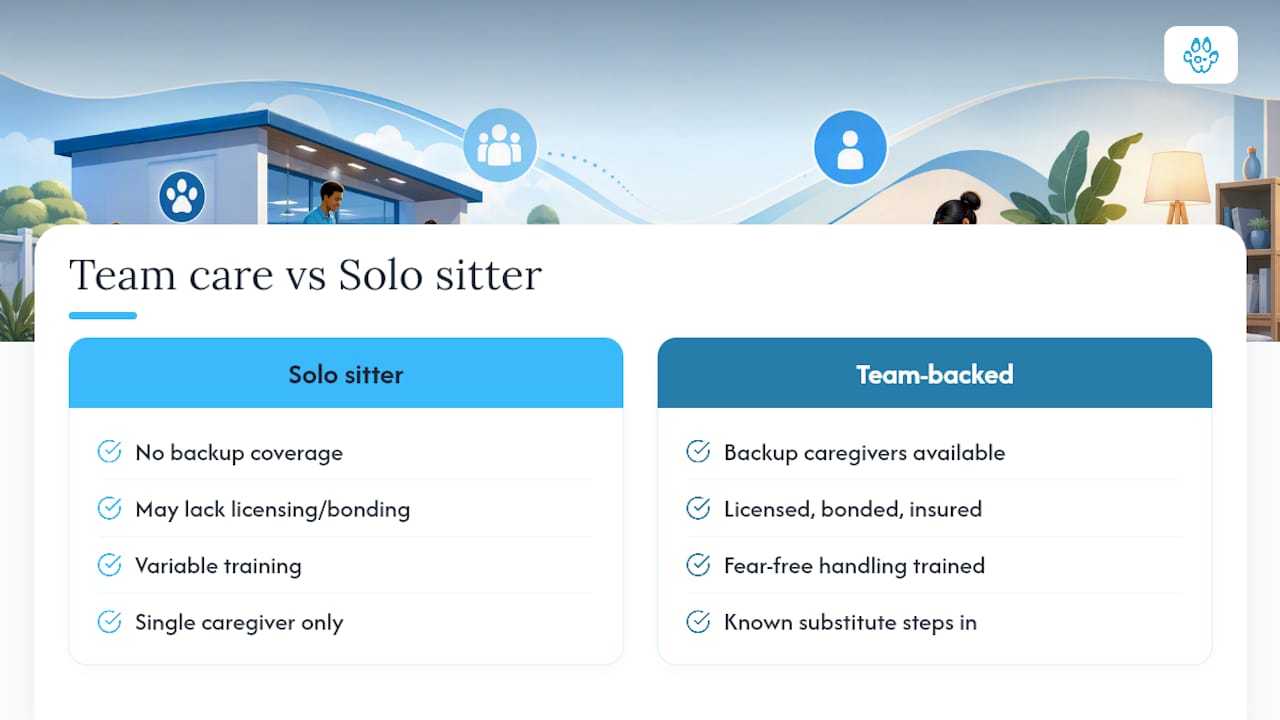
Our take: stop optimizing for the cheapest option
Most advice on this topic treats pet sitting and boarding like a coin flip. It is not. The research backs a simple truth: anxious, senior, or medicated pets do better staying in familiar surroundings, and social, resilient pets often do fine, or even better, with company all day. What conventional advice underplays is backup coverage. Pet parents ask plenty of questions about vaccines and cleaning schedules, but rarely ask "what happens if my sitter can't make it?" That single question separates a hobbyist sitter from a real care team.
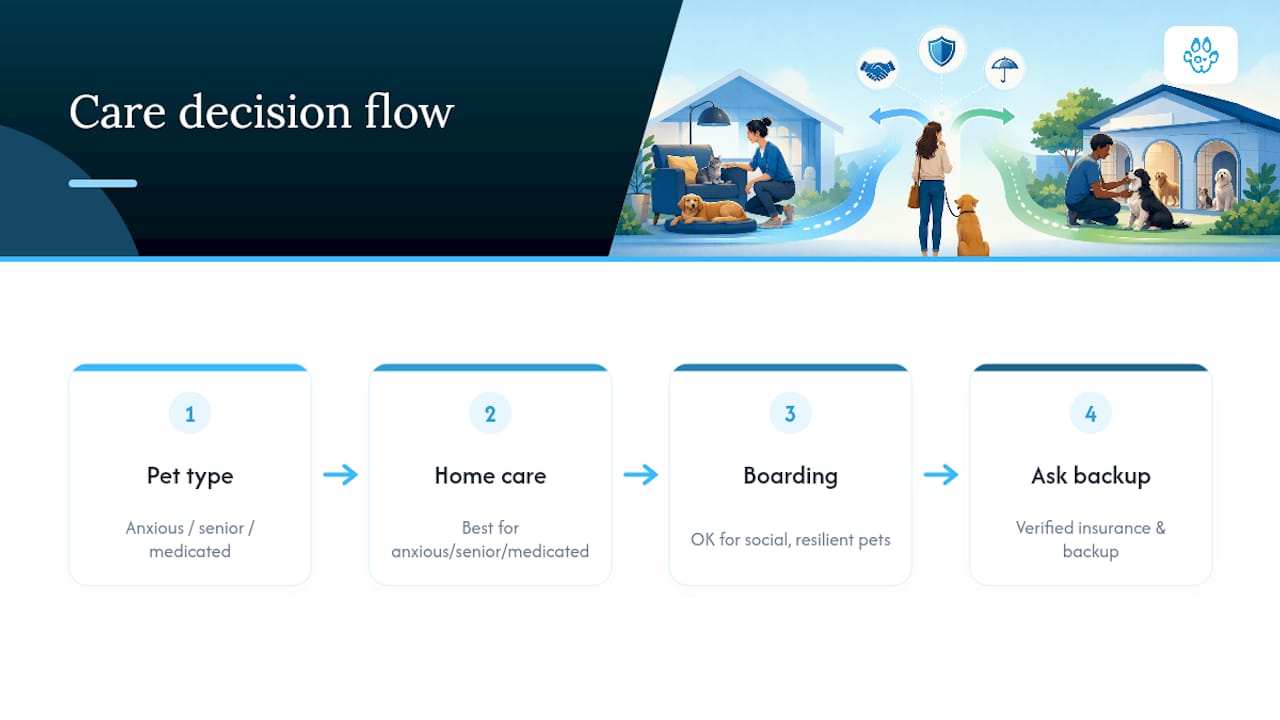
If we are being honest, the cheapest option on paper is rarely the one that gives you peace of mind at 30,000 feet with no cell service. Prioritize verified insurance, a documented backup plan, and real-time updates over a lower price tag. Your pet will not care about the discount. They will care about who is actually there.
Written by the Sparky Steps Team
"We built Sparky Steps because our own dog Sparky deserved better than crossed fingers and a stranger's profile photo. Consistency and backup are not extras, they are the whole point."
- Michael Jaurigue
How Sparky Steps makes the decision easier
Sparky Steps is the team-backed alternative to rolling the dice on a solo sitter you found online: the same trusted walkers every visit, licensed, bonded, and insured, with a full care team providing backup if life happens. We offer in-home pet sitting, overnight stays, small-animal care for everything from guinea pigs to rabbits, and home check-ins for pet parents who want extra eyes on the house while they are away. This setup fits pet parents on Chicago's North Side who want consistency without gambling on whoever is available that week.
Visit our pet sitting page to check service areas and request a meet-and-greet before your next trip.
Sources
- Pet sitting vs. boarding: which is right for your pet? Animal Humane Society
- Pet sitting vs. boarding vs. daycare: which is best? PetWorks
- Pet boarding and pet sitting: deciding how to care for your pets when you're away, Chewy
- Pet Sitters International
FAQ
Do boarding facilities require specific vaccines?
Most require core vaccines plus Bordetella (kennel cough), though exact policies vary by facility, so confirm requirements before booking.
Can a pet sitter give my dog medication?
Most sitters can administer pills or basic treatments if you provide clear written instructions, but confirm this ahead of time since not every sitter handles injections or complex regimens.
How far in advance should I book pet sitting or boarding?
Book weeks ahead for holidays or summer travel, since peak seasons fill up fast at both boarding facilities and reputable sitting services.
Is in-home pet sitting better than boarding for anxious dogs?
Generally yes. Staying in a familiar environment reduces stress for most anxious, senior, or routine-sensitive pets compared to a new boarding setting.
What should I check before hiring a pet sitter?
Verify insurance and bonding, ask for recent references, and confirm there's a backup plan in place if your sitter becomes unavailable.


