


Fear Free handling means working with a pet's emotional state instead of muscling past it, using gentle control, choice, and gradual touch to keep fear, anxiety, and stress as low as possible during everyday care. The payoff is real: calmer pets, fewer injuries to the people handling them, and better outcomes at the vet or groomer. Organizations like Fear Free, co-founded by veterinarian Marty Becker, built this framework, and teams like Sparky Steps apply it to daily dog walking and pet sitting, not just clinic visits.
TL;DR:
- Fear Free certified veterinary practices report about 22% fewer workplace injuries on average, according to an independent five-year study, promoting safer handling for staff and pets.
- Applying touch gradient and considerate, slow approaches can significantly reduce pets' stress signals during grooming, vet visits, or home handling.
- Consistent, trained pet care providers like Sparky Steps improve pet comfort and trust by maintaining familiar routines and reading body language effectively.
- Introducing preparatory home routines, such as leaving carriers out and practicing short car rides, can greatly decrease pre-visit anxiety and improve veterinary outcomes.
- Using pre-visit pharmaceuticals early and customizing handling techniques minimizes stress, leading to calmer pets and more efficient medical procedures.
What fear, anxiety, and stress look like in your pet
Fear Free handling exists because fear, anxiety, and stress, often shortened to FAS, are physical realities for pets, not bad attitudes they can shake off. A dog pinned on an exam table doesn't calm down because you tell it to relax. Its heart rate spikes, cortisol floods its system, and its brain shifts into pure survival mode. That's a biological response, not a choice, and forceful handling tends to backfire, making pets more reactive and less cooperative the next time around.
Recognizing FAS early is half the battle. Watch for:
- Pinned ears, tucked tail, or a low crouch in dogs
- Flattened whiskers, dilated pupils, or a puffed tail in cats
- Freezing completely still in small animals like rabbits or guinea pigs (often mistaken for "being calm")
- Excessive panting, drooling, or lip licking with no obvious cause
- Sudden attempts to bolt, hide, or burrow
These signs show up everywhere, not just at the vet. Nail trims, bath time, car rides, even a stranger reaching for a leash, can all trigger the same stress response. Once you can spot it, you can adjust before things escalate.
The three pillars behind every Fear Free technique
Fear Free training built its entire approach around three core ideas: Considerate Approach, Gentle Control, and Touch Gradient. These pillars, taught in Fear Free's professional certification programs, give pet parents a consistent framework instead of a random grab bag of tricks.
- Considerate Approach means entering a pet's space slowly and predictably. Instead of reaching straight for a dog's collar, you let it sniff your hand first and approach on its own terms.
- Gentle Control replaces brute restraint with tools and positioning that keep everyone safe without pinning the pet down. A snug towel wrap for a squirmy cat is Gentle Control in action.
- Touch Gradient starts contact somewhere low-stakes, like a shoulder or chest, before working toward sensitive areas like paws or ears.
Applied together, these pillars shift handling from "get it done fast" to "get it done without a fight." That's a smaller ask than it sounds, and it works.
Handling techniques you can start using today
You don't need a veterinary degree to apply Fear Free principles at home. Here's a simple sequence to work through:
- Start the touch gradient at the shoulder. Rest your hand there for a few seconds before moving toward the target area, whether that's paws, ears, or a belly for grooming. If your pet tenses up, pause and back off a step.
- Reward calm behavior in the moment, not after. Deliver a treat the instant your pet tolerates the touch, not thirty seconds later when it's already anxious again. Timing is everything here.
- Use a towel wrap for wiggly cats or small dogs. Wrapping snugly from the neck down (sometimes called a "purrito") keeps paws contained during nail trims without pinning the whole body.
- Choose a basket muzzle over a solid one when muzzling is necessary. Basket muzzles let a stressed dog pant, drink, and take treats, which keeps positive reinforcement in play even during a tense moment.
- Watch for the stop signal. Stiffening, freezing, or turning away means the session is over for now. Pushing through a frozen pet almost never ends well.
Keep sessions absurdly short at first, like five seconds of paw-touching, then quit while you're ahead. Pets remember how an interaction ended more than how it started, so end on a win every time.
Getting your pet ready for the vet or groomer
Most of the stress in a clinic visit happens before you even walk through the door. A little prep work at home changes the whole experience.
- Leave the carrier out year round with a cozy blanket inside, not just on appointment day, so it stops being a scary surprise box.
- Practice short, calm car rides that don't always end at the vet, so your pet stops associating the car with bad news.
- Bring a favorite blanket or shirt with your scent on it to the waiting room.
- Ask if you can wait in the car instead of a noisy lobby full of other anxious animals.
- Talk to your veterinarian about pre-visit pharmaceuticals, often called PVPs, for pets with a history of high FAS. Clinical guidance increasingly supports using sedation earlier rather than as a last resort, since it can mean lower drug doses and fewer traumatic memories down the road.
None of this requires a specialist. It just requires a little planning and a willingness to skip the "we'll just push through it" approach.
Does Fear Free handling actually change outcomes? Yes.
Fear Free Certified veterinary practices report 22% fewer total workplace injuries than non-certified practices, including fewer bites and scratches and fewer needle stick injuries, according to an independent five-year analysis. Fewer frightened animals means fewer people getting hurt trying to handle them, which is a simple equation once you see the numbers.
Calmer patients also mean better medicine. A pet that isn't fighting the exam table holds still for a cleaner ultrasound, a more accurate blood draw, and sometimes a lower sedation dose than a struggling one would need. It's not just about comfort; it changes what a veterinarian can actually see and measure.
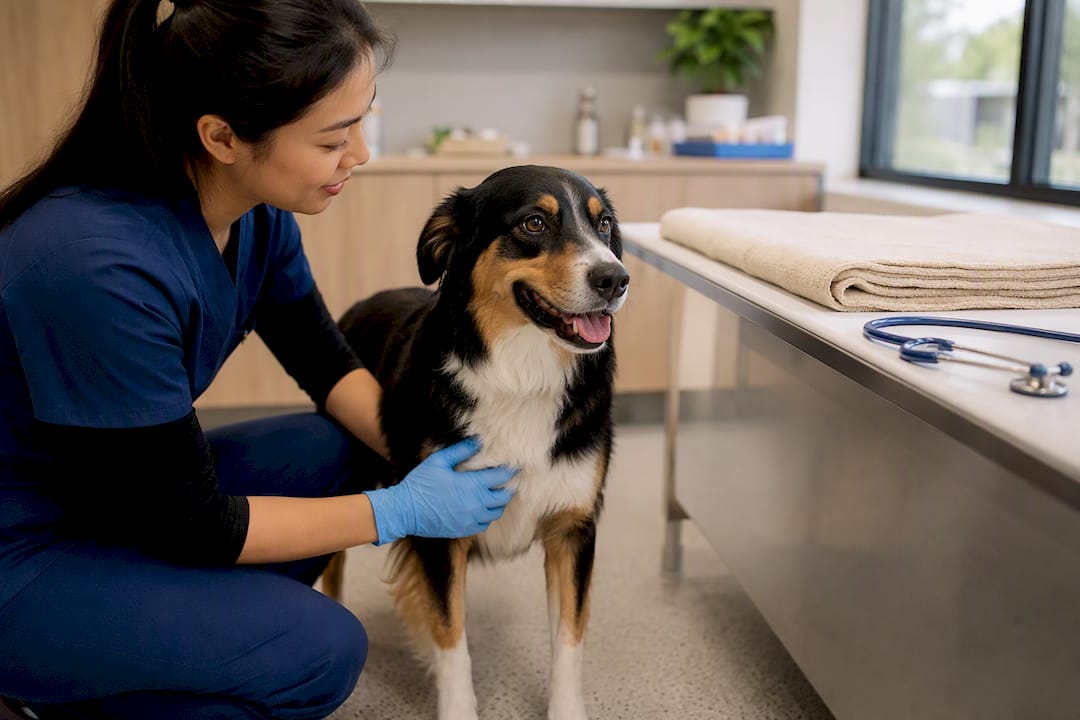
Pet parents notice the difference too. Plenty say they would rather pay for calmer, gentler handling than save a little money on a stressful visit, which tells you this isn't a niche preference. It's what people want for their animals.
How Sparky Steps builds Fear Free handling into everyday care
Fear Free handling shouldn't live only in a clinic. Sparky Steps was founded by Michael Jaurigue, a Fear Free Certified Professional, and that training shapes how the whole care team approaches every walk and visit, not just the stressful ones.
- The same trusted walkers show up for your pet every time, and predictability alone lowers anxiety more than most pet parents realize.
- Every visit comes with real-time updates through DoTimely, including GPS tracking, photos, and notes, so you're never wondering how things went.
- The care team is held to professional standards that matter for accountability and peace of mind.
- Gentle leash handling, slow approaches with nervous dogs, and reading body language before a greeting are standard practice, not special requests.
If you've ever watched a stiff-tailed dog relax the moment a familiar face walks in, you already know why consistency and gentle handling go hand in hand. For more on how a calm greeting sets the tone, the first five minutes of a visit matter more than most pet parents expect.
"Fear Free changed how I think about every single visit, not just the hard ones. A dog who trusts the hand reaching for its leash is a dog who has a genuinely good day, and that starts long before anyone touches a collar." - Michael Jaurigue
Sparky Steps: calm handling built into every visit, not an add-on
Sparky Steps is the alternative to a rotating cast of strangers from an app: the same trusted walkers, trained in Fear Free principles, showing up for your dog or cat every single time. For a nervous rescue dog or a cat who hides at the sound of a doorbell, that consistency does more than any single technique could on its own. Founder Michael Jaurigue's FFCP credential shapes how the whole care team approaches skittish pets, from a slow, considerate greeting to knowing when to simply give an anxious animal more space.
Sparky Steps covers dog walking, cat sitting, small animal care, and in-home pet sitting across Chicago's North Side, with real-time GPS tracking, photos, and notes sent after every visit through DoTimely. If your dog has boundless energy that needs a Fear Free outlet, the dog running service pairs that same gentle, consistent handling with a good, hard sweat session.
Written by the Sparky Steps Team
Sources
The claims and techniques above draw on Fear Free's veterinary professional certification standards, the Fear Free workplace injury white paper, and VCA Hospitals' overview of Fear Free for dogs.
- Fear Free Certified Veterinary Practices Report Fewer Injuries
- Veterinary Professional Certification, Canine and Feline, Fear Free
- Fear Free for dogs, overview (VCA)
FAQ
What does it mean if a vet is Fear Free certified?
It means the veterinarian and often the whole clinic completed training in the Considerate Approach, Gentle Control, and Touch Gradient pillars, plus practical workflow changes like separate cat and dog waiting areas and non-slip exam tables.
What can I give my dog to calm down before a vet visit?
For dogs with a history of high fear or anxiety, a veterinarian may prescribe pre-visit pharmaceuticals, and clinical guidance supports using them earlier rather than waiting until a pet is already in distress. Never give any calming medication without talking to your vet first.
Do vets know how to handle aggressive dogs?
Fear Free trained veterinary staff are taught to recognize that aggression usually signals fear rather than dominance, and they're trained to pause, adjust their approach, or reschedule a procedure when a dog's stress level is too high to proceed safely.
How do walkers handle anxious dogs during walks?
Sparky Steps walkers use slow, considerate approaches with nervous dogs, reading body language before a greeting and giving each dog space to warm up on its own terms rather than forcing contact.
Is Fear Free handling only for veterinary clinics?
No, the same principles apply to grooming, home visits, and dog walking. Gentle control, predictable routines, and reading a pet's stress signals matter just as much on a neighborhood walk as they do on an exam table.


