


Deep water your plants the day before you leave, move them out of direct sun, and group them together to raise humidity. From there, match your method to your trip: soak-and-relax for a long weekend, a wick or drip-bottle system for one to two weeks, and a sitter or reservoir setup for anything past 15 days. Get those two moves right (timing and duration matching) and most houseplants coast through your absence just fine.
TL;DR:
- Self-watering systems like wicks, drip-bottles, and mats are effective for trips up to two weeks if tested beforehand and adjusted properly.
- Reservoir setups can support plants for three to four weeks, but longer absences generally require a human caretaker for reliable health.
- Deep watering 24 hours before departure and grouping plants increases soil moisture and humidity, reducing watering needs during absence.
- For trips over two weeks, a trusted plant sitter or professional home-check service ensures prompt attention to plant needs and pest control.
- Returning plants to health involves gradual rehydration, pruning, pest inspection, and delaying fertilizer to prevent shock.
Plant care while traveling: a quick checklist by trip length
Plant care while traveling gets a lot simpler once you stop treating every trip the same way. A long weekend and a month abroad are two completely different problems, and the fix for one can actively hurt you on the other. Overwatering a plant before a short trip is like packing an umbrella for the Sahara. Waste of effort, and it might leave the pot soggy for no reason.
Here's the breakdown:
Short trips (1 to 5 days): Water normally the day before you leave, move plants a few feet from bright windows, and walk out the door. Most houseplants, even thirsty ones like ferns, handle this without any special setup. Fallback options: group plants near each other in a bathroom or kitchen for a humidity boost, or set them on a tray of wet pebbles.
Medium trips (6 to 14 days): This is where self-watering methods earn their keep. A wick system or drip-bottle setup, tested for at least a couple of days beforehand, covers most of your tropical plants and even some vegetable starts. Fallback options: watering globes for smaller pots, or a quick mid-trip check-in from a neighbor if you have one.
Long trips (15+ days): Reservoir systems, capillary mats, or a human being. Reservoir setups can support plants for three to four weeks depending on pot size and plant type, but a sitter remains the most dependable option for mixed collections or anything you'd be genuinely sad to lose. Fallback options: a capillary mat connected to a single large reservoir, or a professional home-check visit scheduled midway through your trip.
Whichever bracket you fall into, test your system before you pack a bag and stop fertilizing at least a week or two out. Fertilizer pushes new growth, and new growth wants water you won't be there to give it.
Self-watering methods explained: wicks, drip-bottles, globes, and mats
Self-watering systems aren't complicated, but each one has a personality, and knowing which one fits your plant saves you a surprise brown leaf on arrival home.
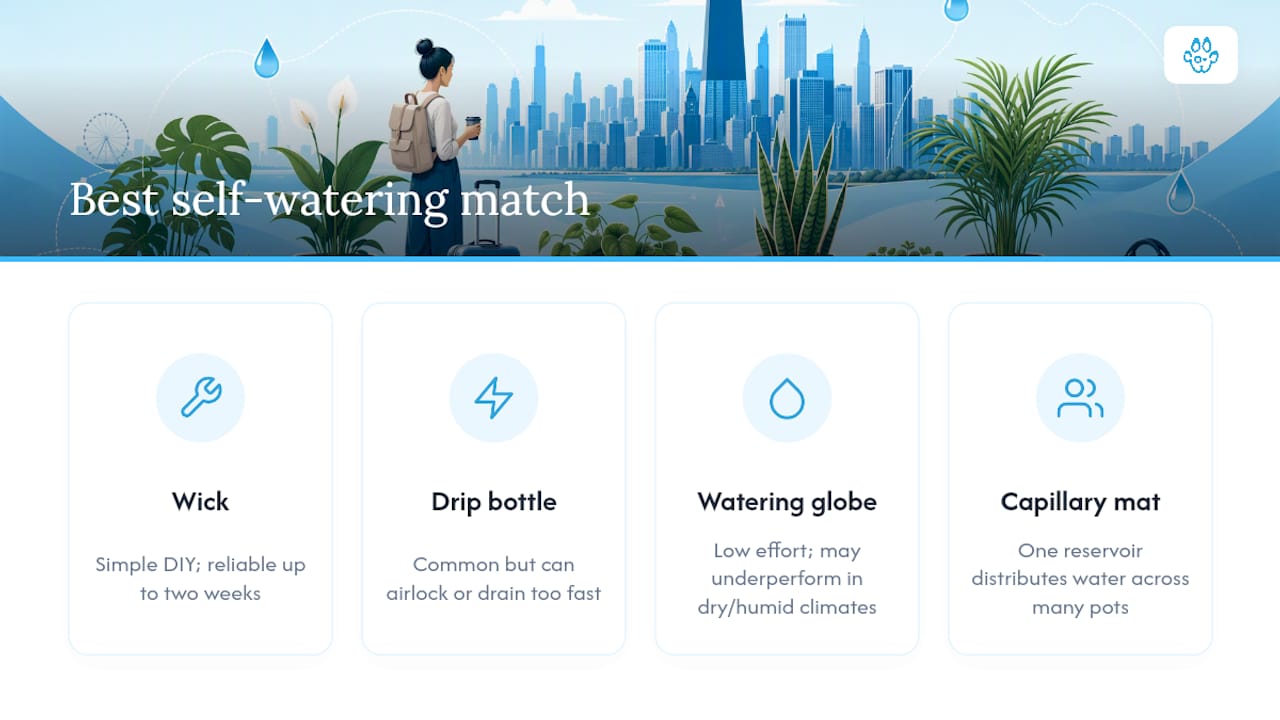
A wick system uses a cotton or nylon cord run from a water reservoir into the soil, pulling moisture up through capillary action, the same physics that lets a paper towel soak up a spill. Cut a strip of old t-shirt or nylon rope, bury one end a few inches into the pot, and drop the other end into a jar of water set above or level with the soil. Wick systems are generally reliable for up to two weeks, which makes them a solid match for the medium-trip bracket.
The drip-bottle method is the one everyone's seen on social media: a plastic bottle, a few pinholes in the cap, upended and jabbed into the soil. It works, but two things go wrong constantly. First, an airlock in the bottle can stop the flow entirely, so squeeze the bottle slightly before inserting it to release trapped air. Second, too many holes drain the whole bottle in a day, leaving your plant no better off than if you'd done nothing.
Watering globes are the low-effort option. Fill the bulb, push the stake into the soil, and it releases water as the soil dries. They're easy but less precise than a wick, and they tend to underperform in very dry or very humid climates.
For larger collections, capillary mats paired with a single reservoir distribute water evenly across many pots at once, and they're more reliable than running a dozen individual wicks. If you're covering an entire windowsill of plants, a mat plus reservoir beats juggling several small systems. Faucet-connected drip timers work similarly for outdoor beds or greenhouse setups.
One habit worth building in regardless of which system you pick: run it for 48 hours before you leave, checking the soil at hour 24 and hour 48. If it's bone dry or waterlogged, adjust the flow rate before you're on a plane with no way to fix it.
Pre-trip preparation: what to do the day before you leave
The single biggest mistake in plant care while traveling is watering the morning you leave instead of the day before. A deep soak 24 hours ahead of departure gives the soil time to fully absorb the water and drain, so your plant isn't sitting in a swamp for two weeks. Water the morning of and you risk a waterlogged pot that invites root rot right when nobody's around to notice.
Beyond timing, a few habits make a real difference:
- Prune dead or yellowing leaves and check the undersides for pests. A spider mite infestation left unchecked for two weeks can spread to every plant nearby.
- Wipe down dusty leaves so they can actually breathe. Dust blocks light absorption and slows gas exchange.
- Move plants back from bright windows and cluster them together. Grouping plants raises local humidity and can meaningfully slow water loss.
- Add 1 to 3 inches of mulch, bark, or even damp newspaper on top of the soil to slow surface evaporation.
- Skip the fertilizer for one to two weeks before you go. Fertilizer stimulates growth, and growth means thirst you won't be around to satisfy.
- Label your pots and jot down simple instructions if anyone else might peek in.
When it's time to call in a plant sitter
Some trips just aren't DIY territory. If you're gone longer than about 10 to 14 days, if you've got a mixed collection with different watering needs, if you have outdoor beds that need irrigation, or if a plant is genuinely irreplaceable, human attention is the safest bet.
Set your helper up for success:
- Label each plant with its watering frequency and amount.
- Pre-measure water into labeled containers so there's no guesswork.
- Write out a simple schedule: which days, which plants, what to check for.
- Leave a backup contact in case something looks off.
Professional home-check services add a layer of consistency here. Sparky Steps, for example, sends the same trusted walkers every visit rather than a rotating cast of strangers, with real-time photos and notes after each stop so you're never wondering what's happening back home. Book a trial visit before a big trip so you and your plants both know what to expect.
What to do the moment you get home
Walking back in after two weeks away and seeing a wilted fern is rough, but resist the urge to drown it in relief-watering. Recovery has an order.
- Check soil moisture first. If it's bone dry, rehydrate slowly over a day or two rather than drenching it all at once, which can shock the roots.
- Pull back any mulch that's gone moldy and inspect leaves and soil for pests that may have moved in while you were gone.
- Prune damaged or yellowed leaves, but hold off on fertilizer for at least a week. Let the plant stabilize first.
- If several plants look stressed, triage. Treat the worst-off ones first instead of splitting your attention evenly.
Most houseplants bounce back within a few days once they're back on a normal rhythm.
Let Sparky Steps handle the parts you can't automate
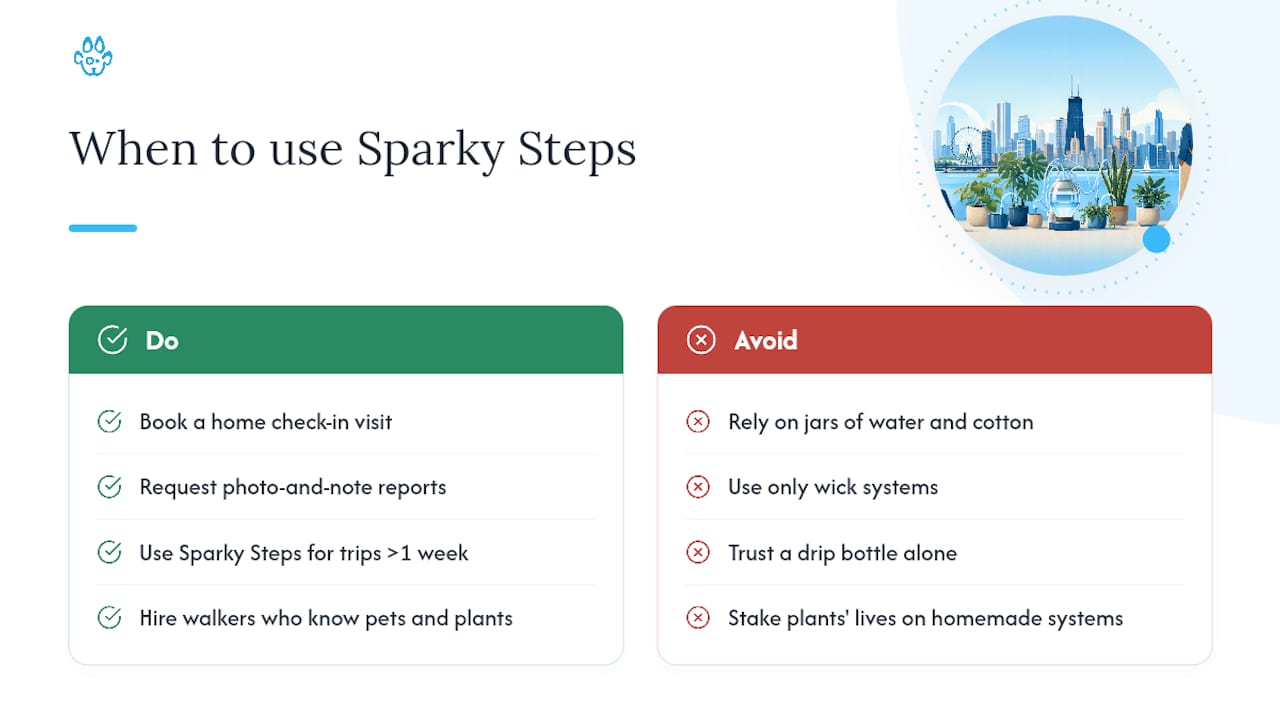
A wick system can't tell you if a leaf is turning yellow. A drip bottle won't notice if your fiddle leaf fig suddenly looks off. That's the gap Sparky Steps fills for Chicago pet parents who also happen to be plant parents: instead of betting a whole trip on a jar of water and some cotton string, you get the same trusted walkers checking in on your plants (and pets) with real-time photos and notes after every visit, so you know exactly what's happening at home instead of guessing from a beach chair. It's the same model that's built 10 years of trust across the North Side, applied to your ficus. If you're planning a trip longer than a week or two, or you'd just rather not stake your snake plant's life on a homemade drip system, book a home check-in visit and see how it fits your schedule.
Sources
FAQ
How can I keep my plants alive when I go on vacation?
Deep water 24 hours before you leave, move plants out of direct sun, group them together for humidity, and use a wick system, drip-bottle, or watering globe matched to your trip length. For trips longer than about 10 to 14 days, a sitter or home-check visit is your most reliable option.
Can plants survive three weeks without water?
Some can. Succulents, snake plants, and ZZ plants often tolerate several weeks unattended, but most tropical houseplants need a self-watering system or human help to make it that long without stress.
How do I prepare plants for a two-week vacation?
Deep soak the day before departure, move plants away from bright windows, add a wick system or drip-bottle setup, apply 1 to 3 inches of mulch, and stop fertilizing at least a week beforehand. Wick systems are generally reliable for about two weeks when tested in advance.
How do I keep plants alive while away for two months?
A trip that long calls for a plant sitter or regular home-check visits rather than a purely DIY setup. Reservoir systems can bridge some gaps for a few weeks, but nothing catches a problem early like a person walking through the door and checking on things.


