


Tipping pet sitters is optional, not obligatory, but typically, it's the norm for overnight stays, multi-day bookings, and anytime your sitter goes above the basics.
TL;DR:
- Tips for overnight or multi-day pet care typically range from 10% to 20% of the total bill, with higher tips recommended for specialized or emergency care.
- Holiday visits, medication administration, vet trips, and last-minute coverage warrant higher tips due to increased responsibility and inconvenience.
- Flat tips of $5 to $10 per drop-in visit or walk are common, with additional amounts for challenging conditions or multiple pets involved.
- Tipping early and through preferred methods like cash or direct transfer avoids awkwardness, especially when tip cuts are possible through large platforms.
- Showing appreciation with positive reviews and small gifts can often be more valuable and less awkward than monetary tips over the long term.
Tipping pet sitters: a quick guide with exact ranges
You don't need a calculator app to figure out a fair tip. You need a couple of anchor numbers and a little judgment about how much extra your sitter dealt with.
For overnights and multi-day stays, the going rate lands between 10% and 20% of the total bill, and Petful's sitter interviews put most pet parents in the 15% to 20% range once you factor in longer stays or specialized care. If your dog needs insulin shots twice a day or your senior cat needs coaxing to eat, that pushes you toward the top of the range.
Drop-in visits (the quick "let the dog out, refill the water bowl, scoop the litter box" kind of appointment) usually get $5 to $10 flat, or 10% to 15% if you'd rather tip proportionally. Duration matters here. A 15-minute potty break isn't the same job as a 45-minute visit that includes a walk, feeding, and a full report on whether your cat ignored the sitter completely (she probably did).
A single 30-minute walk typically earns a $5 tip. That's the baseline nearly every guide agrees on, including Dogster's rundown of who to tip in the pet care world. Add another $5 to $10 on top of that when:
- The weather was miserable (think Chicago in February, sideways snow and all)
- Your walker handled multiple dogs, including ones that don't love each other
- They stepped in on short notice to cover an emergency
Let's walk through two real scenarios so you're not doing math on your phone at 11 PM.
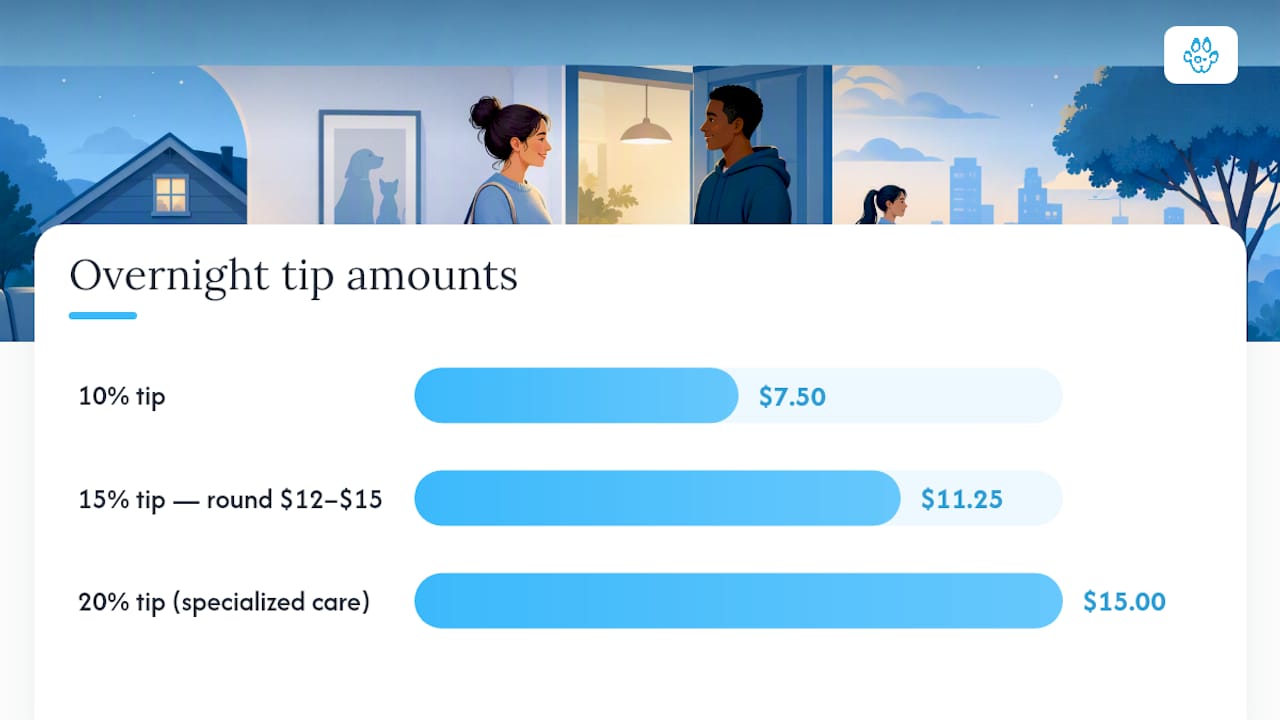
Scenario one: a $75 overnight stay. At 15%, you're looking at an $11.25 tip, which most people round up to $12 or $15 for simplicity. If your sitter also gave your arthritic dog a joint supplement twice a day without being asked twice, bump it to 20%, or $15.
Scenario two: a five-visit drop-in package. Say each drop-in runs $20, for a total of $100 across the stay. A flat $5 to $10 per visit adds up to $25 to $50 total, which lines up neatly with the 15% to 20% overnight guidance. If the sitter also watered your plants and grabbed your mail without complaint, that's the kind of quiet extra effort worth rounding up for.
None of these numbers are laws carved into a dog tag. They're starting points. Adjust up when the job got harder than expected, and don't feel guilty adjusting down for a routine, no-drama visit.
When tipping pet sitters is expected (and when it's optional)
Some situations practically call for a tip. Others, not so much. Here's how to tell the difference.
- Holidays. If your sitter worked Thanksgiving, Christmas, or New Year's Eve while everyone else was eating pie and watching football, that's worth recognizing. Holiday tips often run noticeably higher than a standard visit, and that tracks with what most sitters expect for giving up their own family time.
- Medication and medical needs. Giving pills, insulin shots, or subcutaneous fluids isn't part of a basic walk. It's a skill, and it comes with real responsibility if something goes wrong. Petful's industry commentary points to medication administration and vet trips as clear reasons to tip on the higher end.
- Vet runs and emergencies. If your sitter had to rush your dog to an emergency vet because he ate something he absolutely should not have (dogs are professionals at this), that's above and beyond. Tip accordingly.
- Last-minute saves. Your flight got canceled and you needed overnight coverage with two hours' notice? A sitter who rearranged their schedule to make that happen earned more than the standard rate.
- Long stays and multi-pet households. Two weeks of care for three cats, a dog, and a very judgmental parrot is a different job than a single afternoon visit. Scale the tip with the workload.
Tipping tends to matter less for a single, routine, short visit with no complications. It's also less common when a tip is already baked into a service fee, or when the person caring for your pet is an employee at a larger boarding facility rather than an independent sitter. Dogster points out that vets and many facility staff typically don't receive tips at all, the same way you wouldn't tip your dentist.
How to tip pet sitters without the awkward small talk
The easiest way to avoid an uncomfortable moment is to ask early. Bring it up at the meet-and-greet or drop a note in your booking details: "How do you prefer to receive tips?" Most sitters will tell you straight, and it saves everyone from that weird end-of-visit shuffle where you're both pretending not to think about money.
Common tipping methods include:
- A cash handoff at the end of the stay or the last visit
- Venmo, Cash App, or a similar transfer, especially convenient for recurring clients
- An in-app tip, if you are booking through a service that pays the sitter directly
Timing matters too. Tip after the service, not at booking. You want to reward the actual care given, not guess in advance how it will go. The Savvy Sitter's guide to tipping methods breaks this down well, covering percentage tips, per-visit flat amounts, and even annual bonuses for recurring walkers.
One wrinkle worth knowing: if you are booking through a large gig-economy platform, check whether the company takes a cut of the tip before it reaches the sitter. Some do, which is exactly why a lot of independent sitters would rather you hand them cash or send a direct transfer. If full value reaching your sitter matters to you, ask directly instead of assuming an app handles it fairly.
Ways to show appreciation beyond a tip
Cash isn't the only currency that matters here. A glowing review, written the same week your sitter finishes a stay, can do more for their business than a one-time $10 bill. Petful's reporting on gratitude found that reviews, referrals, and rebooking often outrank a small tip in long-term value for independent sitters.
A few low-cost, high-impact moves:
- Leave a detailed 5-star review mentioning specifics (not just "great job," but what made it great)
- Write a short thank-you note. People keep these longer than you'd think
- Refer a friend or neighbor who needs pet care
- Rebook early, before your next trip sneaks up on you
- A small gift card to a local coffee shop covers the same warm feeling as a tip, minus any awkward cash-counting
Being an easy, clear client (labeling the leash, writing down feeding instructions, not springing surprises) often matters more to a sitter's day than an occasional bonus. Consistency builds trust, and trust is worth more than a single generous tip.
The Sparky Steps take on tips, pay, and holidays
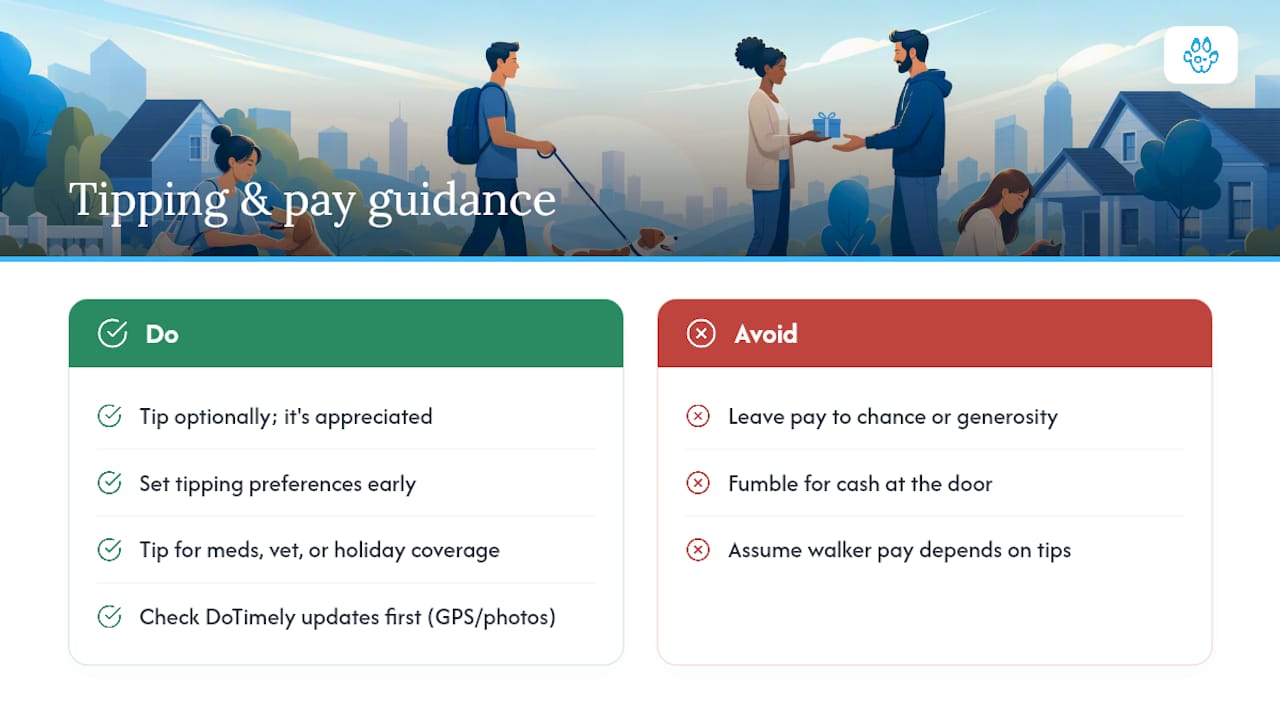
At Sparky Steps, we have thought about this from both sides of the leash since 2016. Tips are always optional and always appreciated, but they are never how we make sure our care team gets paid fairly. Every walker on our team is licensed, bonded, and insured, and pay is not left up to chance or generosity.
We ask new clients about tipping preferences early, usually right when we are getting to know your pet, so nobody is fumbling for cash at the door. If your walker handles medication, an unplanned vet trip, or holiday coverage, we will flag that so you know when extra appreciation is genuinely earned. Every visit comes with real-time updates through DoTimely, including GPS tracking and photos, so you always know exactly what care your pet received before deciding how to say thanks.
Our honest take on tipping pet sitters
Here's where a lot of tipping guides get it backwards: they treat the percentage as the whole conversation. It isn't. The number matters less than whether you actually know what your sitter did that day.
We would also push back gently on the idea that tipping fixes pay problems. It shouldn't have to. If a sitter is depending on tips to make ends meet, that's a business model issue, not a tipping etiquette issue. Tip generously when it's earned, but don't let it substitute for asking whether the person caring for your dog is actually paid fairly to begin with.
Start with the relationship. The tip follows naturally from there.
"Good pay and clear expectations should not be optional extras. Tips are a bonus, not a Band-Aid." - Michael Jaurigue
If you want consistent, trusted care
Sparky Steps offers dog walking, cat sitting, overnight pet sitting, and small animal care across Chicago's North Side, with the same trusted walkers coming back visit after visit instead of a rotating cast of strangers. When you book with us, we will ask about your tipping preferences upfront so there is zero awkwardness later, and every visit comes with photo updates and GPS tracking so you know exactly what happened while you were away.
If you are weighing your options for reliable in-home care, take a look at our pet sitting services in Chicago.
Written by the Sparky Steps Team
Sources
This guide draws on tipping norms from Petful, which details reasons to tip and common flat amounts; Dogster, which clarifies who typically does and doesn't receive tips; The Savvy Sitter, an independent, insured pet-sitting company that breaks down tipping methods and scenario guidance; and PetPlugz, another independent, background-checked sitting service.
- How much should I pay my pet sitter? Petful
- Which pet care providers should you tip and how much? Dogster
- Tipping in the pet service industry, The Savvy Sitter
- How much to tip a pet sitter, PetPlugz
FAQ
Is it normal to tip a pet sitter?
Yes. Tipping is common but not required, especially for overnight stays, holiday coverage, or extra care like medication administration.
How much should I tip a pet sitter per day?
For overnight or daily sitting, 10% to 20% of the daily rate is standard, with 15% to 20% common for longer stays or specialized care.
What are the red flags in a pet sitter?
Watch for vague communication, no proof of insurance or bonding, and an unwillingness to do a meet-and-greet before booking. Our trustworthy pet sitter checklist covers this in more detail.
Is $100 a day good for dog sitting?
That depends on your city and the level of care involved, but it falls within a reasonable range for full-day or overnight sitting in many markets.
Should you tip a dog walker for a single walk?
A $5 flat tip is typical for a single 30-minute walk, with an additional $5 to $10 added when conditions are challenging or the sitter handles more dogs or covers last-minute requests.


