

A usable pet sitter instructions document is a one-page urgent summary plus a longer operational handover that lets a caregiver follow your pet’s normal day without guessing. It needs pet ID and medical basics, exact feeding and medication details, the daily routine in order, emergency contacts with a signed vet release and a spending cap, and clear rules for when to just watch, when to text, and when to call. Anything less leaves a sitter improvising.
TL;DR:
- Microchip numbers and up-to-date weight information are crucial for accurate medication dosing and quick pet identification during emergencies.
- Precise feeding and medication instructions, including brand, dosage, schedule, and storage, prevent mishaps and ensure your pet’s health.
- Mapping the full daily routine and behavioral signals allows sitters to shadow your pet’s day without guesswork and recognize normal versus concerning signs.
- Emergency contacts must include primary and emergency vets, poison control, and a veterinary release with a clear spending cap to enable prompt decision-making.
- Regularly updating handwritten instructions, testing access points, and providing clear household logistics minimize logistics failures and ensure smooth pet care.
What belongs in your pet’s essential profile?
Start with the facts a stranger would need to identify and describe your pet to a vet over the phone, fast. This is the foundation every other section builds on, so don’t rush it.
- Full name, nicknames, species, and breed (mixed breed is fine, just say so)
- Age and current weight, updated within the last few months
- A clear, recent photo showing color and markings
- Microchip number and registry name
- Vaccination status, including rabies tag number if visible on the collar
- Allergies, chronic conditions, and any medications tied to them
Weight matters more than most pet parents assume. Emergency vets use it to calculate medication dosing on the spot, and a sitter who only knows “medium size” can’t give a useful answer. The microchip number matters just as much, arguably more, because a chip is only useful if someone can look it up. The AAHA Universal Pet Microchip Lookup tool accepts 9, 10, and 15-digit chip numbers and tells you which registry to contact, but only if the sitter has that number written down somewhere they can find it in a hurry. If your dog has never been chipped, our piece on why you must microchip your pet walks through the registration process.
How do you write feeding and medication instructions that prevent errors?
Vague instructions cause more sitting mishaps than any other single mistake, and medication mix-ups top the list. “Give him his pill” is not an instruction. It’s a guess waiting to go wrong.
For feeding, spell out the exact brand, formulation, and can or bag size, then describe the scoop itself (“the red 1/4 cup scoop in the pantry, not the metal one”) rather than assuming a “cup” means the same thing to everyone. Note the exact meal times and what mixed in, wet food or a supplement, matters here.
For medication, write out:
- Full drug name and strength (not just “the heart pill”)
- Exact dose and route (oral, topical, injected)
- Schedule and the date/time it was last given
- Where it’s stored and any special handling (refrigerated, with food, etc.)
Preventatives deserve their own line. Heartworm and flea treatments are timing sensitive. The American Heartworm Society notes that a missed or late monthly dose can mean restarting the prevention protocol and extra vet follow-up, so write the last-given date and next-due date in plain numbers, not “sometime this month.” If your vet gave written dosing instructions, print a copy and attach it rather than paraphrasing from memory.
How should you map the daily routine and behavior notes?
Write the day the way your pet actually experiences it, start to finish, not as a scattered list of facts. A sitter reading top to bottom should be able to shadow the whole day without asking a single follow-up question.
- Morning: wake time, first potty break, breakfast, and morning meds
- Midday: walk length and route, water refresh, any midday medication
- Afternoon: play or quiet time, second walk if applicable
- Evening: dinner, evening meds, final potty break, wind-down routine
Note the harness or leash type by name (Julius K9? Front-clip? Retractable, never used near traffic?), plus any pulling habits or routes to avoid. Then cover the behavioral side: hiding spots when scared, noise triggers, resource guarding around food or toys, and what body language signals a problem versus normal quirkiness.
Finally, draw the line between “text me a photo,” “call me now,” and “go straight to the emergency vet.” That single distinction, spelled out in advance, removes more guesswork than anything else in the document.
How do you cover access, alarms, and where supplies live?
Sitters lose more time to logistics failures than pet care failures. Keys that don’t work, alarm codes that trigger a false alarm, and a hunt for the leash all eat into the visit and stress everyone out.
- Access: key location or lockbox code, alarm arm/disarm steps, and where to park
- Home basics: Wi-Fi password, thermostat settings, and the location of the breaker box and water shutoff, just in case
- Supplies: exact location of food, bowls, scoops, litter, carriers, towels, and cleaning supplies
- Stock check: confirm food and litter will last the entire visit window, plus who’s approved to authorize an emergency supply run
A quick walkthrough of “if you can’t find X, check Y” saves a frantic mid-visit text. It also means the sitter isn’t opening every cabinet in your kitchen like a contestant on a game show. (Every pet parent has a junk drawer. We don’t judge.)
What emergency contacts and authorizations do sitters actually need?
This is the section that turns a helpless bystander into a caregiver who can act. List your primary vet’s name, phone, and address, plus the nearest 24-hour emergency animal hospital. Both should include hours and directions, because “the emergency vet on Ashland” doesn’t help at 2 a.m.
- Primary vet and 24-hour emergency clinic, name, address, phone
- ASPCA Animal Poison Control Hotline, since poison hotlines belong on every emergency card
- Pet insurance provider and policy number, if applicable
- A signed veterinary release
Many clinics will not treat a pet without owner authorization, so a signed veterinary release that names your sitter as an authorized decision-maker removes that bottleneck when you’re unreachable on a flight. Pair it with a plainly stated spending cap (“authorized up to a spending cap that reflects what you’d actually want done if your pet were seriously hurt without reaching me first”) so the sitter isn’t left calculating on the fly during a crisis. Our guide to what emergency pet sitting covers breaks down how that authorization plays out in practice.
Escalation should follow one simple sequence: monitor the situation, message you if it’s not urgent, call you if it needs a quick decision, and head straight to the clinic if it’s clearly an emergency. Writing that sequence down removes hesitation in the moment.
How do you prepare, hand off, and keep instructions current?
Build two documents: a one-page urgent card (contacts, address, first actions) and the longer operational handover with everything else. Print both and email both. A phone can die; paper can’t.
- Do a meet-and-greet before you leave and test the keys, lockbox, or codes in person
- Label gear, harness, leash, carrier, and photograph distinguishing marks so a sitter can describe your pet accurately if separated
- Date every version of the file and keep one master copy so nobody’s working from an outdated draft
- For overnight stays or multiple caregivers, add a shared note or shift log so each person knows what the last person did
Pro Tip: Test the lockbox and alarm code yourself, in front of the sitter, before you hand over the keys. A code that “should work” is not the same as a code that does, and you don’t want to find out the difference from a locked porch at 6 a.m.
Our ultimate guide to preparing your pet sitter covers this handoff process in more depth, and our Chicago pet care checklist is a solid template to adapt for your own home.
Why do professional sitters prefer operational handovers?
Ask any experienced sitter and they’ll tell you the same thing: a document written like a checklist beats a document written like a pep talk. An operational handover, one that mirrors your pet’s actual routine instead of listing scattered tips, cuts down on both stress and mistakes because the sitter isn’t reconstructing your pet’s day from memory.
At Sparky Steps, this is how the whole care team operates day to day. Sparky Steps provides professional, vetted walkers and visits come with real-time updates through DoTimely, GPS tracking, photos, and notes, so pet parents see exactly how the routine played out, not just a thumbs-up text after the fact.
What should you write for choking, seizures, and allergic reactions?
Generic emergency advice is worse than useless in the moment. Sitters need pet-specific action steps written in plain language, because panic narrows focus fast.
For choking, note whether your pet has ever choked before, on what, and whether you’ve shown the sitter how to check the mouth or perform a modified Heimlich for pets. If you haven’t demonstrated it, say so honestly, and default the instruction to “go to the emergency vet immediately.”
For seizures, describe what your pet’s seizures typically look like (if they’ve had one before), how long they usually last, and what NOT to do, don’t restrain the pet or put hands near the mouth. Note if there’s a rescue medication and exact dosing, and state clearly at what point (a specific number of minutes) a seizure becomes an emergency vet trip rather than a wait-and-watch.
For allergic reactions, list known allergens (foods, bee stings, medications) and what a reaction has looked like in the past, hives, swelling, vomiting. Note if there’s an antihistamine dose pre-approved by your vet, and the storage location for any epinephrine if your pet has ever needed it.
In every case, the instruction should end with a specific next step, not a vague “use your judgment.” A scared sitter needs a script, not a suggestion.
How should other pets and household members interact with your pet?
If you have multiple animals, write out the household dynamics like you’re briefing a substitute teacher on classroom personalities. Who’s the mellow one? Who guards the food bowl? Who needs to eat in a separate room entirely?
Note feeding separation needs, whether pets can be loose together unsupervised, and any history of resource guarding around toys, beds, or doorways. If your cat and dog have an uneasy truce, say exactly what “uneasy” looks like, so a sitter doesn’t mistake normal grumbling for a real fight.
Cover people, too. If a dog walker or neighbor sometimes stops by, note whether your pet is fine with strangers entering or needs a slow introduction. If there are kids in the house or next door, mention any bite history or fear triggers around children specifically. And if your pet has a favorite human who visits, a grandkid, a regular dog walker, name them, because a familiar face can defuse an anxious moment faster than any treat.
The goal isn’t to make your pet sound complicated. It’s to give the sitter enough context that a normal quirk doesn’t get mistaken for an emergency, or worse, an emergency doesn’t get mistaken for a normal quirk.
What body language and communication signals should sitters watch for?
Pets can’t say “my stomach hurts” or “I’m scared of that noise,” so they say it with their bodies, and a sitter who doesn’t speak your pet’s specific dialect can miss the signs.
Describe what calm looks like for your pet first, loose tail, relaxed ears, normal appetite, so the sitter has a baseline. Then describe stress signals: a tucked tail, flattened ears, excessive panting with no exertion, hiding, or a dog that suddenly won’t make eye contact. For cats, note if a swishing tail or dilated pupils mean “playful” or “about to bite,” because it genuinely varies pet to pet.
Flag anything that should trigger a call rather than a shrug: repeated vomiting, straining without producing waste, unusual lethargy, or labored breathing. If your senior dog naturally moves slower in the evening, say so, so a sitter doesn’t panic over normal aging.
One useful trick: describe your pet’s “happy noise” versus “worried noise” if there’s a difference (a specific whine, a particular bark cadence). It sounds oddly specific, but it’s exactly the kind of detail that lets a sitter tell the difference between excitement at the door and genuine distress.
What toys and activities should sitters know about?
List favorite toys by name and location, and be specific about anything off-limits. If your dog destroys stuffed toys and swallows the squeaker, say “supervised only” or “no stuffed toys” rather than assuming the sitter will guess.
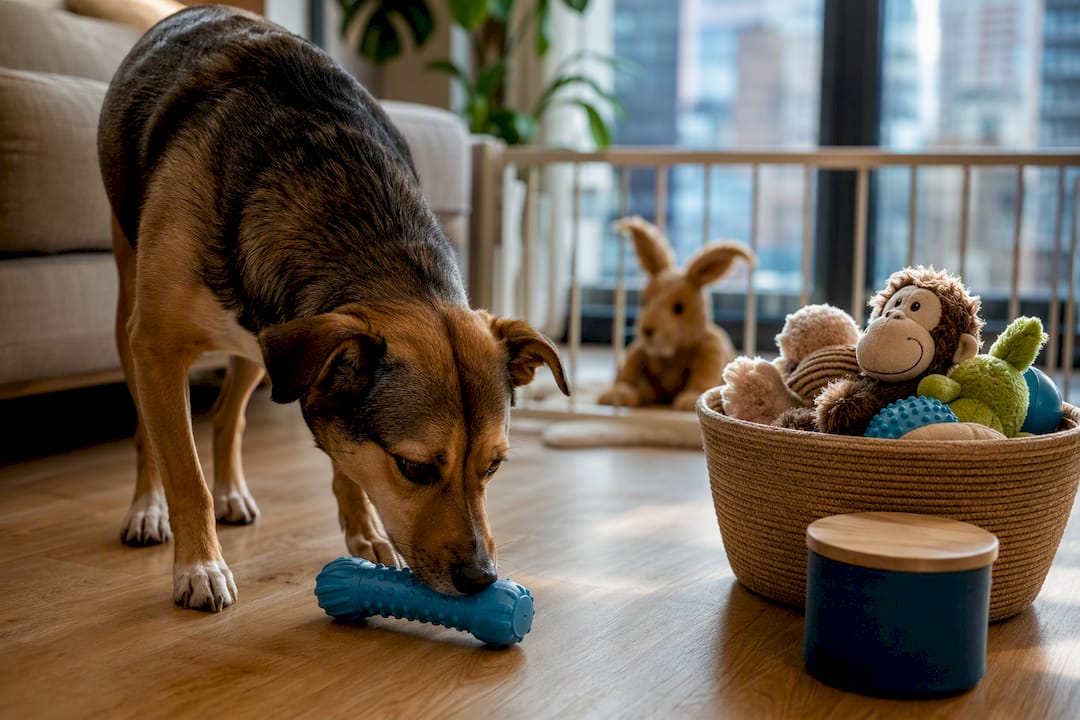
Note any toy-related resource guarding here too, if it links back to the household dynamics section, a quick reference note (“see behavior section”) keeps the sitter from having to hunt across pages. Mention approved chew items and treat frequency, since well-meaning sitters sometimes overdo treats trying to bond quickly.
For activities, flag anything physically restricted, no fetch if there’s a joint issue, no swimming if there’s an ear infection history, and note preferred play styles (tug, puzzle feeders, flirt poles) so the visit stays enjoyable rather than just functional.
How do you handle waste disposal and sanitation?
This is the least glamorous part of any pet sitter instructions document, and also one of the most commonly skipped. Skip it and you’ll come home to a mystery.
For dogs, note where waste bags are kept, which outdoor bins are acceptable for disposal, and any neighborhood-specific rules your sitter should know. For cats, specify litter brand, scooping frequency (daily, twice daily), and where extra litter is stored, plus how to dispose of waste, flushable liner, sealed bag, specific outdoor bin.

For small animals, cage or hutch cleaning frequency and bedding type matter just as much as feeding schedules. Note any disinfecting products that are safe to use around your specific pet, since some cleaners are fine for floors but not for cages or aquariums.
Sources
- Preparing for the Unexpected: Essential Pet Sitter Instructions
- How to Complete a Pet Care Instructions Form for Your Pet Sitter
FAQ
Are typical day rates, depending heavily on the market and type of visits, good pay for pet sitting?
It depends heavily on the market and what’s included, drop-in visits versus overnight stays versus multi-pet households. In many cities, a basic single visit can cost less, but overnight or extended care typically commands more given the added responsibility.
What are red flags in a pet sitter?
Watch for vague answers about experience, no proof of insurance or bonding, reluctance to do a meet-and-greet, and no clear plan for emergencies. A trustworthy sitter should welcome detailed instructions rather than treat them as unnecessary paperwork.
Are typical day rates for overnight or full-day in-home sitting in many markets good pay for dog sitting?
For overnight or full-day in-home sitting, especially with medication administration or multiple pets, typical day rates for overnight or full-day in-home sitting in many markets is reasonable in many markets and reflects the added responsibility compared to a single short visit.
What is required to become a pet sitter?
Requirements vary by location and employer, but most reputable services expect background checks, some form of insurance or bonding, and comfort handling emergencies. Formal certification isn’t universally required, but training in pet first aid and fear-free handling builds real credibility.
Do I really need a signed veterinary release?
Yes. Many clinics won’t move forward with treatment without owner authorization on file, so a signed release naming your sitter as a decision-maker, paired with a stated spending limit, prevents delays exactly when speed matters most.
If writing all of this out sounds like more than you want to manage solo, that’s what a professional care team is for. Sparky Steps pairs every pet parent with the same trusted walkers each visit, backed by real-time photo and GPS updates through DoTimely, so nothing gets left to guesswork. Explore pet sitting in Chicago to see how a consistent, background-checked team handles the handover for you.
Sparky Steps provides professional, vetted walkers and visits come with real-time updates through DoTimely, GPS tracking, photos, and notes, so pet parents see exactly how the routine played out, not just a thumbs-up text after the fact.
Recommended
- The Ultimate Guide to Preparing your Pet Sitter
- Pet Parents: Pet Sitter Background Checks Miss Training Insurance GPS
- Signs of a Trustworthy Pet Sitter: Your 2026 Checklist
- Licensed, Bonded, Insured: Pet Sitting vs Boarding for Pet Parents
The Sparky Steps Team used AI to research and outline this article. A human on the team edited and fact-checked the final text.


