

The safest bets for pet parents are urea based blends, calcium magnesium acetate (CMA) products, and purpose built brands like Safe Paw and Just For Pets Snow & Ice Melter. All four skip the chloride salts that cause the worst paw burns and poisoning cases. The tradeoff is real: gentler formulas usually melt ice slower in deep freezes, so pair any product with a paw rinse after every single walk.
TL;DR:
- Pet-safe ice melts like urea, CMA, and Safe Paw avoid chloride salts that cause skin irritation and poisoning, but they melt ice more slowly in extreme cold.
- Labels claiming “pet safe” are unregulated; checking active ingredients like sodium chloride or ethylene glycol is essential to avoid harmful products.
- Urea and CMA blends are safer options but still pose risks if ingested, stressing the importance of proper storage and supervision.
- Rinsing pet paws after walks significantly reduces the risk of irritation and ingestion-related poisoning, regardless of the product used.
- Prioritizing good habits, like paw rinsing and route planning, offers more protection than relying solely on the safety claims of ice melt brands.
What Is the Best Pet Safe Ice Melt for Home Use?
There is no single ingredient that melts ice like rock salt while being completely harmless to a dog who decides to taste it. That is the honest starting point, and it’s why “best pet safe ice melt” is really a shorthand for “safest available tradeoff,” not a guarantee of zero risk.
The standard industry term here is “pet friendly ice melter,” and you’ll see it on plenty of bags at the hardware store. The problem is that phrase isn’t regulated by any agency, so two products can both say “pet safe” while containing very different ingredients. One industry source notes that “pet friendly” labeling is largely a marketing term without a standard definition behind it, which means the label alone can’t do your homework for you.
What actually separates a safer deicer for dogs from a dangerous one is the active ingredient. Urea, magnesium chloride, and acetate or formate compounds (like CMA) tend to cause far less dermal irritation than sodium chloride, calcium chloride, or potassium chloride. None of them are risk free if a dog eats a mouthful, but the severity and likelihood of harm drop noticeably. Keep that distinction in mind as you shop, because it matters more than any bag’s marketing copy.
Shortlist: Best Pet Safe Ice Melts You Can Buy
Here’s the quick roundup for readers who just want names to look for on a store shelf.
Safe Paw is a patented, non-chloride formula built from the ground up to skip the ingredients that cause the most paw and gut trouble. It’s a solid pick for home sidewalks, decks, and any yard area where a curious nose might get close to the granules. Because it avoids chloride salts entirely, it also tends to be less corrosive to concrete and metal railings.
Just For Pets Snow & Ice Melter is a retail product marketed specifically for households with animals, and it’s widely available at pet supply retailers. It’s a straightforward choice for driveways and walkways where you want a bag that says exactly who it’s for on the front label.
Just For Pets offers a similar pet focused positioning within the same product family, giving shoppers another labeled option to compare against ingredient lists rather than marketing alone.
Urea based granular blends (sold under various generic and store brand names) are common and budget friendly. They’re gentler on paws than chloride salts but can still cause drooling and stomach upset if a dog eats enough, so treat “urea based” as safer, not risk free.
Calcium magnesium acetate (CMA) blends round out the list as the gentlest option on plants, concrete, and paws alike, though they usually cost more and can work more slowly on thick ice.
| Product | Best for | Ingredients to check | Availability |
|---|---|---|---|
| Safe Paw | Home sidewalks, decks, pet areas | Non chloride formula | Pet and hardware retailers |
| Just For Pets Snow & Ice Melter | Driveways and walkways | Confirm no ethylene glycol | Pet supply retailers |
| Urea based granular blends | Moderate cold, quick small area use | Urea (watch for added chlorides) | Hardware and grocery stores |
| Calcium magnesium acetate (CMA) blends | Plant beds, patios, budget flexible buyers | Acetate/formate base | Specialty and online retailers |
| Just For Pets | Households wanting a labeled pet focused option | Confirm active ingredients on bag | Pet supply retailers |
Whatever bag you grab, flip it over. If “sodium chloride,” “calcium chloride,” or “ethylene glycol” shows up high on the ingredient list, that’s a red flag worth walking away from regardless of what the front of the package promises.
How Do Ice Melt Ingredients Affect Pet Safety?
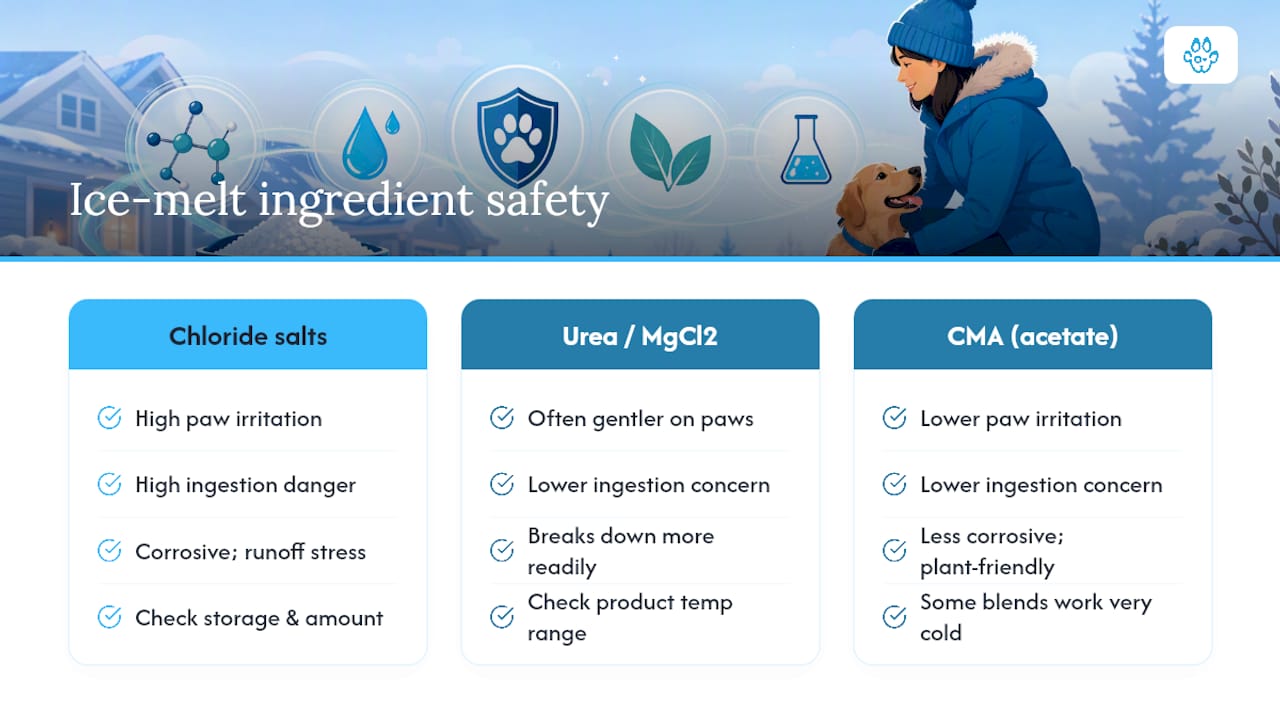
Chloride salts are the ones to watch most closely. Sodium chloride, calcium chloride, magnesium chloride, and potassium chloride all draw moisture out of paw pads, which is exactly how they melt ice, and exactly why they leave skin cracked and raw after repeated contact. Ingestion is the bigger danger. The ASPCA warns that large ingestions of sodium chloride, around 4 grams per kilogram of body weight, can cause fatal sodium toxicosis in dogs. For a 30 pound dog, that’s a smaller pile of salt than most people assume.
Ethylene glycol deserves its own warning. It’s not always in ice melt itself, but it shows up in some deicing products and in leaking antifreeze, and it’s one of the most acutely toxic substances a dog can encounter in winter. Skip anything listing it, no exceptions.
On the safer end of the spectrum, urea and magnesium chloride are often marketed as gentler alternatives, and acetate or formate based products like CMA tend to be both less corrosive and easier on nearby plants. Some CMA blends stay effective down to very low temperatures, though performance varies by formulation, so read the temperature range printed on the bag rather than assuming “pet safe” means “works at any temperature.”
A quick gut check on scale: it doesn’t take a full spilled bag to cause a problem. A determined 20 pound terrier only needs to lap up a modest handful of a chloride heavy product to reach concerning levels, which is why storage and application amount matter just as much as which brand you buy.
Environmentally, chloride runoff stresses soil and nearby waterways over a season of repeated use, while acetate and urea based products break down more readily and are gentler on turf and garden beds near sidewalks, as detailed in Winter vs. Summer Dog Nutrition.
How to Choose a Pet Safer Ice Melt: A Quick Checklist
Shopping for a non-toxic ice melt for pets comes down to five checks before you swipe your card.
- Read the ingredient list first, not the front label. “Pet safe” isn’t a regulated term, so flip the bag over and look for chloride salts or ethylene glycol before trusting any marketing claim.
- Match the product to your actual temperature range. Some urea and acetate blends lose effectiveness below certain thresholds, so buy for your coldest expected week, not an average one.
- Consider your surface. Concrete, pavers, and wood decks each react differently to corrosive ingredients, so a low corrosion product protects your property as much as your dog.
- Use the minimum effective amount. More granules don’t mean faster melting, they mean more residue on paws and more risk if a curious pet investigates the pile.
- Store bags somewhere your pet cannot reach. A garage shelf beats a bin near the back door where a nose at counter height can get curious.
Pro Tip: Keep the original bag until it’s empty. If anything ever goes wrong, having the exact ingredient list on hand saves your vet valuable guessing time.
Protecting Pets During Ice Melt Season: A Walk-by-Walk Routine
Good habits beat any single product, full stop. Here’s the routine worth building into every winter walk.
Before you head out:
- Fit dog boots at home for short stretches first so your pet tolerates them before relying on them outside, then keep paw wax or boots as your go to barrier.
- Choose a route that avoids heavily salted commercial entrances when a quieter side street will do.
During the walk:
- Keep the leash short near sidewalk edges and treated patches so you can steer away from visible granules.
- Discourage licking at paws or snow piles, even if your dog seems more curious than bothered.
After every walk, without exception:
- Rinse or wipe paws with lukewarm water, since that single habit prevents most ingestion and irritation cases.
- Dry pads thoroughly and check between toes for cracking or embedded ice balls.
Pairing a safer product with boots or wax, rather than trusting either one alone, is the combination vets keep coming back to.
What to Do if Your Pet Eats Ice Melt
If you catch your pet at a pile of ice melt or notice paw licking that won’t quit, act fast but don’t panic. Remove access to the product immediately, rinse the mouth and paws with lukewarm water, and hang onto the bag so you can read the exact ingredients to your vet over the phone.

Watch for vomiting, excessive drooling, staggering, tremors, seizures, or unusual lethargy. Any of those signs means it’s time to call your veterinarian or the ASPCA Poison Control line right away, not “in the morning.” Most vet visits for ice melt exposure involve supportive care: fluids, monitoring, and sometimes medication to settle the stomach. Sodium levels can climb fast with chloride heavy products, so timing genuinely changes outcomes here.
What Sparky Steps Walkers Notice on Neighborhood Sidewalks
Our care team walks the same blocks daily, which means we notice which stretches get salted heavy and which stay clear. We build routes around it, do a quick paw check at pickup and drop off, and wipe down paws before anyone comes back inside. It’s a small habit that saves a lot of worry.
“After ten years of winter walks, the dogs who do best are the ones whose people wipe paws every single time, no exceptions,” says Michael Jaurigue.
Our Take: What Actually Matters Most This Winter
Here’s where a lot of winter pet advice gets it backwards: people spend more energy debating which bag of ice melt to buy than they spend on the habit that actually prevents harm. The research keeps pointing the same direction. A safer product reduces your baseline risk, but the paw rinse after every walk is what closes the gap between “safer” and “safe enough.”
We’d also push back gently on the instinct to chase the most aggressive melting power available. Unless you’re dealing with genuine ice storms, a urea or CMA based product handles most Chicago winters just fine, and the lower irritation risk is worth the tradeoff nine walks out of ten.
If we had to rank priorities for a pet parent standing in the hardware store aisle: read the ingredient label first, buy boots or paw wax second, and treat the product itself as your third line of defense, not your first. Products help. Habits protect.
— The Sparky Steps Team
Want to Skip the Ice Melt Worry Altogether?
Some pet parents handle winter walks themselves, boots and paw wax in hand, and that’s a great approach when you have the time and a flexible schedule. But if your workday doesn’t leave room for a midday sidewalk patrol, hiring consistent, trained walkers takes the guesswork off your plate entirely. Our care team already knows which North Side blocks get salted heaviest, builds routes around it, and handles the paw wipe down before your dog ever steps back inside. You get real-time updates with photos after every visit, so you’re never wondering how the walk went. For pet parents who want extra energy burned off safely, our dog running service is worth a look too. Ready for one less winter worry? Check out our pet care safety practices and see how Sparky Steps keeps paws protected all season long.
Sources
- Ice melt toxicity and pets | ASPCApro
- Keeping pets safe during winter: dangers of ice melts | ASPCA
- Ice melts safe for dogs | Pet Poison Helpline
- Dog: be careful with ice melt | VCA Hospitals
FAQ
Is rock salt safe for dogs?
No. Rock salt is sodium chloride, and large ingestions can cause fatal sodium toxicosis in dogs, so it should be avoided around pets entirely.
Is calcium chloride ice melter safe for pets?
Calcium chloride is one of the chloride salts vets recommend avoiding around pets because it causes dermal irritation and poses ingestion risks similar to rock salt.
What type of ice melt is the least harmful to concrete?
Calcium magnesium acetate (CMA) blends are generally the least corrosive to concrete and other surfaces, since acetate based formulas skip the corrosive chloride compounds found in traditional rock salt.
Are urea based ice melts really pet safe?
They’re safer than chloride products but not risk free. Urea can still cause gastrointestinal upset if a pet eats enough, so supervision still matters.
What should I do if my dog licks ice melt off its paws?
Rinse the paws and mouth with lukewarm water immediately, keep the product bag to check ingredients, and contact your vet if you see signs like drooling, vomiting, or unusual behavior.
Written by the Sparky Steps Team
Authorship Note The content above aligns with the values of Sparky Steps LLC. While artificial intelligence helped organize the article, the images, and helped translate our ideas into clear, practical language, the final blog post is a delightful collaboration between passionate human writers who adore animals and a sprinkle of artificial intelligence magic. Remember, Remember to rinse paws every time after walks!
Recommended
- How Cold is too Cold to Walk your Dog
- Pet Care Safety
- Top Five Tips to Help Maximize Dog Park Safety
The Sparky Steps Team used AI to research and outline this article. A human on the team edited and fact-checked the final text.


