

Special needs pet care is defined as the specialized support, medical management, and environmental accommodation provided to pets living with physical disabilities, chronic illnesses, behavioral challenges, or age-related health decline. These fur babies require more than a standard feeding and walking routine. They need individualized care plans, consistent schedules, and caregivers who understand their unique signals and limits. Dogs losing sight, hearing, or limbs can live happy, fulfilling lives with the right support in place. Whether your pet was born with a condition or developed one over time, understanding what specialized pet care actually involves is the first step toward giving them the quality of life they deserve.
What is special needs pet care, and who does it apply to?
Special needs pet care applies to any pet whose daily health and comfort require consistent intervention beyond routine feeding and exercise. The industry term used by veterinary professionals is “specially abled” or “medically complex” pet care, though “special needs” remains the most widely recognized phrase among pet parents.

Senior pets are classified as special needs generally after age 7 for dogs and age 10 for cats, due to age-related health declines that mirror those seen in younger disabled pets. That means millions of pet parents are already providing some form of special needs care without realizing it has a name. Recognizing this helps you access the right resources and ask the right questions at your next vet visit.
The scope of special needs pet care covers four broad categories: physical disabilities, chronic medical conditions, sensory impairments, and behavioral health challenges. Each category carries different daily care demands, costs, and emotional weight. A pet with epilepsy needs medication management and seizure monitoring. A blind cat needs a consistent furniture layout and scent-based navigation cues. A paralyzed dog needs bladder assistance and pressure sore prevention. One label, very different care plans.
What conditions qualify a pet as special needs?
Understanding which conditions fall under this umbrella helps you plan care accurately and avoid underestimating what your pet needs.
| Condition Category | Common Examples | Key Care Implications |
|---|---|---|
| Physical disabilities | Limb amputation, paralysis, spinal injury | Mobility aids, bladder/bowel assistance, pressure sore prevention |
| Chronic medical conditions | Diabetes, epilepsy, kidney disease, heart disease | Daily medication, frequent vet visits, dietary management |
| Sensory impairments | Blindness, deafness, loss of smell | Environmental consistency, alternative communication cues |
| Behavioral challenges | Anxiety disorders, compulsive behaviors, trauma responses | Structured routines, behavior modification, mental enrichment |
| Age-related decline | Arthritis, cognitive dysfunction, incontinence | Joint support, ramps, consistent schedules, patience |
Physical disabilities like limb loss or paralysis often carry the highest upfront costs for equipment such as wheelchairs and harnesses. Chronic conditions like diabetes or epilepsy increase monthly medical costs by $30–100, while limb amputations or sensory impairments usually require no ongoing medical expenses beyond annual checkups. That distinction matters when you are budgeting for long-term care.
Behavioral health challenges are the most commonly overlooked category. A dog with severe separation anxiety or a cat recovering from trauma requires just as much structured support as a pet with a physical condition. The care looks different, but the commitment level is the same.
How do you tailor daily care routines for special needs pets?
Consistent routines are the backbone of caring for disabled pets. Maintaining a strict, consistent routine is the biggest challenge in caring for specially abled pets, and integrating medical and care tasks into daily habits reduces errors significantly. Think of it like building a personal care protocol, not just a schedule.
Building a structured daily routine
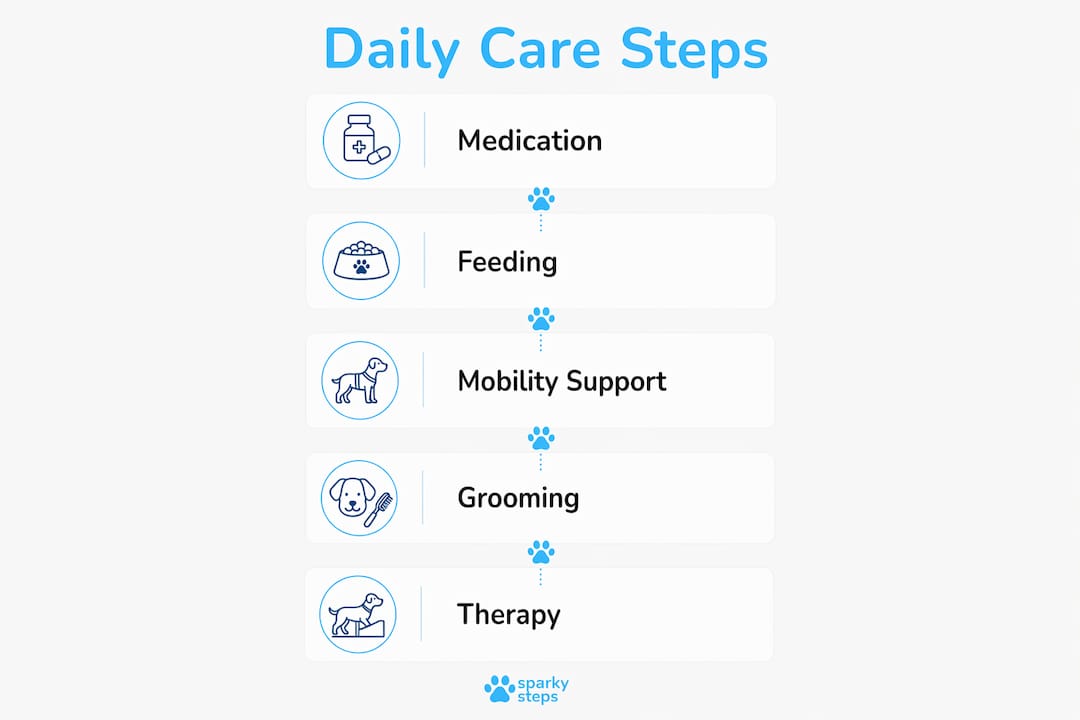
Start by listing every care task your pet needs: medications, feeding, elimination assistance, grooming, physical therapy exercises, and enrichment. Then group related tasks together, a practice experts call “lumping.” Giving medication right after breakfast, for example, ties the task to an existing habit and makes it nearly impossible to forget. Experts advise using visual reminders and grouping tasks to prevent missed doses that could lead to emergencies.
Nursing care tasks such as helping with urination, defecation, grooming, and mobility support are critical for the well-being of many special needs pets. For pets with paralysis or severe mobility impairment, bladder expression may need to happen every four to six hours. Missing this task even once can cause a urinary tract infection or worse. This is not optional maintenance. It is medical care performed at home.
Pro Tip: Post a physical checklist in a high-traffic area of your home, like the kitchen or bathroom door. A visual reminder placed where you already go multiple times a day is more reliable than any phone alarm, especially on exhausting days.
Caregiver fatigue is real and rarely discussed. Caring for a medically complex pet is rewarding, but it is also relentless. Build short breaks into your week, ask for help from trusted people, and use tools like the DoTimely app to track visits, medications, and notes so nothing slips through the cracks.
What equipment and home modifications best support special needs pets?
The right equipment does not have to be expensive to be effective. Small home modifications like adding rugs, ramps, and removing obstacles significantly improve comfort and safety for specially abled pets without requiring costly equipment. Gillian Shippen, a veterinary care specialist, notes that small, consistent home modifications outweigh expensive gadgets in improving special needs pets’ quality of life.
| Equipment Type | Purpose | Pros | Cons |
|---|---|---|---|
| Wheelchair or cart | Mobility support for paralyzed pets | Restores independence, improves mood | High upfront cost, requires fitting |
| Support harness | Assists with standing and walking | Affordable, versatile | Needs proper sizing to avoid chafing |
| Ramps and stairs | Access to furniture, vehicles, beds | Low cost, easy to install | Takes up space |
| Non-slip rugs | Traction on hard floors | Very affordable, immediate impact | Requires regular cleaning |
| Orthopedic bedding | Joint pressure relief | Improves sleep quality | Bulky, higher cost than standard beds |
| Adaptive feeding bowls | Elevated or angled feeding for neck or joint issues | Reduces strain, easy to find | Limited style options |
The most impactful change most pet parents can make costs almost nothing: remove clutter from your pet’s regular paths and keep furniture in the same position every day. A blind pet memorizes spatial layouts. Rearranging a room is the equivalent of moving all the furniture in a dark house without telling anyone. Not a great surprise. (Dad joke intended. )
Pro Tip: When selecting a harness or mobility aid, look for adaptive accessories that prioritize fit over style. A harness that fits poorly creates pressure sores faster than you would expect, especially on pets with reduced sensation.
For pets with chronic skin or coat issues related to immobility, veterinary nursing care includes regular ear cleaning, preventing matting through grooming, and maintaining skin hygiene to prevent infections in immobile areas. These tasks belong on your daily checklist, not just your monthly grooming schedule.
How do you manage medical and financial challenges in special needs pet care?
Medical costs for special needs pets are manageable with the right planning. Here is what pet parents need to know:
- Understand your baseline costs. Chronic conditions like diabetes or epilepsy carry recurring medication costs of $30–100 per month. Mobility impairments carry high upfront equipment costs but lower ongoing expenses. Knowing which category your pet falls into shapes your financial planning.
- Ask your vet about cost-saving alternatives. Dr. Lori Teller of Texas A&M VetMed emphasizes that owners should not hesitate to seek advice on cost-saving treatments. Generic medications, compounded drugs, and adjusted dosing schedules can reduce monthly costs without compromising care quality.
- Apply for financial assistance early. Financial aid for pet medical expenses often requires submission of specific documentation and is reviewed within 72–96 hours for a decision. Required materials typically include owner contact information, pet species and age, a veterinary estimate, and a photo. Do not wait for a crisis to start this process.
- Prioritize preventative care. Regular vet visits catch complications before they become emergencies. An undetected urinary tract infection in a paralyzed dog can become life-threatening within days. Preventative monitoring is cheaper than emergency treatment every time.
- Track everything. Keep a running log of medications, symptoms, and behavioral changes. This record helps your vet make faster, better decisions and can prevent duplicate testing.
Pet health care options have expanded significantly, and many veterinary schools, nonprofit organizations, and breed-specific rescues offer financial assistance programs. A quick call to your local veterinary school or a search through organizations like The Animal Foundation can open doors you did not know existed.
What emotional and social support do special needs pets require?
Physical care keeps a pet alive. Emotional and social support keeps them thriving. These two things are not the same, and the second one is just as non-negotiable as the first.
- Tailor enrichment to ability, not limitation. A deaf dog cannot hear a squeaky toy, but they can feel vibrations and respond to hand signals. A blind cat cannot chase a laser pointer, but they can hunt by scent using hidden treats. Every pet can play. The method just needs adjusting.
- Learn your pet’s unique stress signals. A dog with chronic pain may not whimper. They may simply go still, flatten their ears, or stop eating. Recognizing subtle behavioral shifts is a skill that takes time to develop, and it is one of the most valuable things you can do for a medically complex pet.
- Use alternative communication methods. Deaf pets respond well to hand signals and light cues. Blind pets rely on consistent verbal cues, scent markers, and touch. Mixing communication methods confuses them. Pick a system and stick with it.
- Caregiver consistency matters more than you think. Specialized caregivers trained in techniques such as manual bladder expression and reading unique body language are critical for safe, effective care. A rotating cast of unfamiliar faces creates anxiety in any pet. For a special needs pet, it can set back weeks of behavioral progress.
- Make time for quality connection. Slow walks, gentle grooming sessions, and quiet time together count as enrichment. Your presence and calm energy are therapeutic. You are not just a caregiver. You are their safe place.
For more on caring for diverse pets with specific needs, including small animals with chronic conditions, Sparky Steps has additional resources tailored to Chicago pet parents.
Key Takeaways
Effective special needs pet care combines consistent daily routines, targeted home modifications, proactive medical management, and emotional support tailored to each pet’s specific condition.
| Point | Details |
|---|---|
| Define the condition clearly | Identify whether your pet’s needs are physical, medical, sensory, or behavioral to build the right care plan. |
| Build a lumped routine | Group care tasks together and use visual checklists to prevent missed medications or assistance tasks. |
| Modify the home first | Non-slip rugs, ramps, and consistent furniture placement cost little and deliver immediate safety benefits. |
| Plan finances proactively | Chronic conditions cost $30–100 per month in medications; apply for financial aid before a crisis hits. |
| Prioritize caregiver consistency | Special needs pets thrive with familiar, trained caregivers who understand their unique signals and routines. |
What I have learned from years of caring for special needs pets
I have been around a lot of dogs over the past decade at Sparky Steps, and the ones that have taught me the most are the ones who had every reason to struggle but simply did not. Three-legged dogs who sprint like they have four. Blind cats who navigate a kitchen with more confidence than most humans navigate a new city. Deaf dogs who watch your face so intently they never miss a cue.
Here is what I have actually found to be true, not just what sounds good in theory: the pet almost always adapts faster than the pet parent does. The grief and worry that come with a diagnosis belong to us, not to them. They are not mourning what they lost. They are figuring out what works now. Our job is to keep up.
The hardest part of special needs caregiving is not the physical tasks. It is the mental load of managing a complex routine day after day without burning out. The pet parents I have seen do this well are the ones who ask for help early, build systems instead of relying on memory, and give themselves permission to not be perfect every single day.
One more thing: humor helps. Not at the pet’s expense, but at the situation’s. When you can laugh at the chaos of a dog in a wheelchair zooming into the coffee table for the third time this week, you are going to be okay. And so is your dog.
For pet parents navigating senior dog care specifically, the overlap with special needs care is significant. The strategies are nearly identical. Start there if your pet is aging into new challenges.
— Michael Jaurigue
Sparky Steps and special needs pet care in Chicago
Sparky Steps has served 250+ Chicago pet parents since 2016, and a meaningful number of those fur babies have special needs. Our care team is experienced with mobility challenges, medication-aware routines, and the kind of patient, attentive presence that medically complex pets genuinely need. Every visit includes real-time updates via DoTimely, with GPS tracking, photos, and notes sent directly to you. You always know what happened and how your pet is doing. For pet parents who need consistent, trustworthy support, our Chicago pet sitting services and dog walking in Chicago are built around the same trusted walkers every time. No strangers. No surprises. Just reliable care your pet can count on.
FAQ
What is special needs pet care exactly?
Special needs pet care is the individualized support provided to pets with physical disabilities, chronic medical conditions, sensory impairments, or behavioral challenges that require care beyond a standard routine.
At what age does a pet become a senior special needs pet?
Dogs are generally classified as senior, and therefore special needs, after age 7. Cats reach that threshold at age 10, when age-related health declines typically begin.
How much does caring for a special needs pet cost per month?
Chronic conditions like diabetes or epilepsy add $30–100 per month in medication costs. Mobility impairments carry higher upfront equipment costs but lower ongoing expenses after the initial purchase.
Can I hire a regular pet sitter for a special needs pet?
General pet sitters without specific special needs experience can pose health risks. Caregivers should have hands-on experience with tasks like bladder expression, medication administration, and reading unique behavioral cues before caring for a medically complex pet unsupervised.
Where can I find financial help for special needs pet medical costs?
Organizations like The Animal Foundation offer pet medical assistance programs. Applications typically require owner contact information, a veterinary estimate, and a photo, with decisions made within 72–96 hours.
Written by the Sparky Steps Team.
Authorship Note
The content above aligns with the values of Sparky Steps LLC. While our trusty artificial intelligence helped organize the article, whip up some fun images, and translate ideas into clear, practical language, the final masterpiece is a delightful collaboration between passionate human writers who adore animals and a sprinkle of artificial intelligence magic. Remember, if you think writing is easy, try typing with paws!


