


For most dogs, the Ruffwear Front Range Harness is the smartest all-around pick, thanks to its padded chest panel, wide size range, and dual clip points. If your dog hauls you down the sidewalk like a sled team, the Non-stop Dogwear Line Harness gives you better front-clip control. If your pup ducks and dodges at the sight of a harness, the Voyager Step-in Air Dog Vest Harness slides on without the wrestling match. The real secret, though, isn't the brand. It's measuring your dog's chest girth correctly and picking the clip location that matches how your dog actually walks. The main thing over all of this is find the harness that works well with your dog. The thing we've learned after walking dogs all across the Chicago land area for the last 10+ years is it's all about where the dog is at in there training. Harnesses are great for dogs because it relieves the pressure on their neck and allows for comfortable walking. But if your dog hasn't been trained to walk reliably with you on the walk, they need to put in some more work before graduating to a harness. Especially if you clip the leash to the back of the harness, which allows for more pulling from the dog. Either way harnesses can go a long way for a comfortable walk if the dog is ready for that! Stay safe out there everyone! Cheers!
TL;DR:
- Choosing the right harness depends heavily on your dog's walk behavior, with front-clip or dual-clip styles best for pulling dogs.
- Proper measurement around the chest girth and careful strap tension checks are essential to ensure a secure, comfortable fit.
- Materials like nylon webbing with metal hardware and features such as quick-release buckles and reflective trim are key for durability and safety.
- Step-in styles tend to run slightly large, so measuring precisely and rechecking fit after initial outings is crucial.
- Regular inspection, cleaning, and prompt replacement of worn harnesses help maintain safety and comfort over time.
Which Dog Harness Should You Buy?
Sorting through a wall of good options is a lot like standing in the dog food aisle: everything claims to be the best, and your dog just wants to go outside already. Here's the shortlist that actually earns its keep, based on build quality, clip design, and how well each one solves a specific walking problem.
Ruffwear Front Range Harness. This is the harness we'd hand to a first-time dog parent without a second thought. It has a padded chest and belly panel, five points of adjustment, and both a back clip and a front clip loop for redirecting pullers. Sizes run from extra small to extra-extra large, so it covers everything from a Chihuahua to a Bernese Mountain Dog.
Non-stop Dogwear Line Harness. Built by a company known for sled and working-dog gear, this one is made for a dog who treats every walk like the Iditarod. The Y-shaped front design leaves shoulders free to move, while the reinforced back handle gives you real leverage on a strong, muscular dog.
Voyager Step-in Air Dog Vest Harness. No buckling over the head, no fuss. Your dog steps in, you clip two side buckles, and you're moving. The mesh vest breathes well in warm weather, which makes it a favorite for casual walkers and dogs who hate anything going over their ears.
EzyDog easy-on harness. Another step-in design, but built with thicker webbing for dogs who need something sturdier than a mesh vest. One motion gets it on, which matters a lot at 6 a.m. when your dog is already spinning circles by the door.
Kurgo Tru-Fit. Kurgo built its name on car-ready gear, and the Tru-Fit line doubles as a genuinely crash-tested seatbelt harness (tested at an FMVSS 213-certified facility) and a walking harness. If your dog rides shotgun on weekend trips, this dual-purpose design saves you from buying two products.
Ruffwear Web Master Harness. This is the harness for dogs who need serious control, like assistance dogs or big breeds prone to jumping fences. It wraps further around the body than a standard harness, with a sturdy top handle for lifting or guiding.
2 Hounds Design Freedom No Pull Dog Harness. A dual-clip design with a martingale-style loop at the front that gently discourages pulling without choking. Trainers reach for this one often because it corrects behavior without any of the tightening or pinching some anti-pull designs rely on.
| Harness | Best for | Clip location | Sizing notes | Material and padding | Standout feature | Approximate price |
|---|---|---|---|---|---|---|
| Ruffwear Front Range Harness | Everyday walks, broad size range | Back and front | XS to XXL, adjustable at 5 points | Padded nylon mesh | Durability and fit range | $$$ |
| Non-stop Dogwear Line Harness | Strong pullers, active dogs | Front and back | Runs true to chest girth | Rugged nylon, minimal padding | Built for sled-dog level pulling | $$$ |
| Voyager Step-in Air Dog Vest Harness | Head-shy dogs, casual walks | Back | Runs slightly large | Breathable mesh | Fast step-in fit | $ |
| EzyDog easy-on harness | Fast, simple fitting | Back | True to size | Webbing, light padding | Single-motion put-on | $$ |
| Kurgo Tru-Fit | Car rides plus walking | Back, dual purpose | True to size | Padded nylon | Crash-tested, doubles as a car harness | $$$ |
| Ruffwear Web Master Harness | Escape artists, dogs needing lift assistance | Back with top handle | XS to XL | Reinforced nylon | Extra body coverage and control | $$$$ |
| 2 Hounds Design Freedom No Pull Dog Harness | Pullers who need gentle correction | Front and back | Runs small, size up | Nylon, light padding | Martingale-style front loop | $$$ |
A few fit notes worth knowing before you check out. The Ruffwear Front Range runs true to size but fits best snug, since the padding compresses slightly after a few walks. Step-in styles like the Voyager and EzyDog tend to run a touch generous, so measure carefully rather than guessing off the size chart alone. And any harness with a quick-release buckle, which most on this list have, makes emergency removal far easier if your dog ever gets tangled or spooked.
How Do You Pick the Right Harness Style for Your Dog?
Your dog's behavior on leash tells you almost everything you need to know about which harness style to buy. A harness is not one-size-fits-all gear, and the wrong clip location can actually reinforce the exact problem you're trying to fix.
- If your dog pulls hard, go with a front-clip or dual-clip harness. Front-clip and no-pull harnesses redirect pulling by turning the dog slightly toward you instead of letting them lean into the pressure, while a back-clip harness can actually reinforce pulling in an untrained dog.
- If your dog walks politely already, a back-clip Y-harness works fine and is more comfortable for long walks or runs.
- If your dog has a short snout or a sensitive neck, stick with a harness over any collar. Vets often recommend harnesses for brachycephalic breeds, puppies, seniors, and dogs with neck issues because they spread pressure across the chest instead of the throat.
- If your dog is a Houdini on walks, a dual-clip or step-in style with a snug chest fit, like the Web Master, reduces the chance of backing out.
- If nothing seems to work, stop shopping and call a trainer. A harness can support good leash habits, but it cannot replace training for a dog with serious reactivity or anxiety.
One dad joke while we're here: buying a harness won't fix a dog who thinks every squirrel owes him money. That part still takes practice.
How Do You Measure Your Dog for a Harness?
Getting the size right matters more than the brand you choose. Chest girth, not weight, is the number that actually determines a proper fit, so grab a soft measuring tape before you shop, not after the harness arrives.
- Wrap the tape around the widest part of your dog's rib cage, just behind the front legs, while your dog is standing normally.
- Keep the tape snug but not tight. You should be able to slide two fingers underneath it comfortably.
- For step-in styles, also measure around the base of the neck where the harness sits.
- Once the harness is on, run the same two-finger check along the straps. If two fingers slide in easily but not much more, you've got a proper fit.
- Test for escape risk by having your dog back up slowly on leash. If the harness slips over the shoulders or head, it's too loose or the wrong style entirely.
- If your dog measures between two sizes, size up rather than down. A slightly loose strap can be tightened; a too-small chest panel cannot.
- Puppies grow fast. Re-measure every few weeks during the first year, and expect to size up more than once before they're full grown.
What Materials and Hardware Should You Look For?
Nylon webbing is the industry standard for a reason: it's affordable, durable, and holds up to weather. Mesh, like what you'll find on the Voyager Step-in Air, breathes better in summer but wears faster on rough terrain. Neoprene padding adds cushioning for dogs who log serious mileage. Leather looks sharp but needs more upkeep and isn't the best choice for rain-soaked Chicago sidewalks.
Beyond fabric, check the hardware before you buy.
- Metal D-rings hold up better than plastic under repeated leash pressure, especially for bigger dogs.
- Reinforced or double stitching at stress points is a quiet sign of a harness built to last more than one season.
- Quick-release buckles let you get a harness off fast if your dog ever gets caught on something.
- Reflective trim or a small LED clip is worth it if you walk before sunrise or after dark, which describes most dog parents at some point.
- A sturdy top handle, like the one on the Ruffwear Web Master, gives you a grab point for curbs, stairs, or a sudden squirrel emergency.
How Do You Keep a Harness Safe Over Time?
A harness is gear, not a permanent fixture, and it needs regular attention just like a leash or collar does.
- Run your hands along the straps every few walks, feeling for fraying, stiff spots, or cracked plastic buckles.
- Watch for redness, bald patches, or hair loss under the straps, which are early signs of chafing.
- Wash nylon and mesh harnesses by hand with mild soap, then air dry completely before the next wear to avoid mildew.
- Padded styles benefit from a soft brush to clear out dirt trapped in the foam.
- Replace the harness at the first sign of frayed webbing, a buckle that doesn't click securely, or hot spots that don't clear up after a day or two of rest.
What Sparky Steps Walkers Actually Reach For
Founder Michael Jaurigue is a Fear Free Certified Professional and holds credentials from Pet Sitters International and NAPPS, and the whole Sparky Steps care team is licensed, bonded, and insured here in Chicago. That background shapes what actually goes in our walkers' bags.
For most city dogs, our walkers reach for a front-clip or dual-clip harness first, since it gives better control on crowded sidewalks without any yanking. For seniors or dogs with neck sensitivity, a well-padded Y-harness is the go-to, since it keeps pressure off the throat entirely. For reactive dogs, our team fits the harness loosely at first, lets the dog wear it around the house with a few treats, then tightens it gradually over several short walks. On the first three outings in any new harness, we watch for rubbing behind the front legs and check that the dog isn't trying to back out of it at every distraction. Small adjustments early on save a lot of frustration later.

Want a Second Set of Eyes on Your Dog's New Harness?
Picking the right harness is half the battle. Watching how your dog actually moves in it on a real walk is the other half, and that's where an extra set of trained eyes helps. Sparky Steps sends the same trusted walkers to your dog every time, not a rotating cast of strangers, so they get to know how your dog pulls, hesitates, or settles into new gear over multiple outings. Every visit comes with real-time updates through DoTimely, including photos and notes, so you can see exactly how the harness is sitting without leaving your desk.
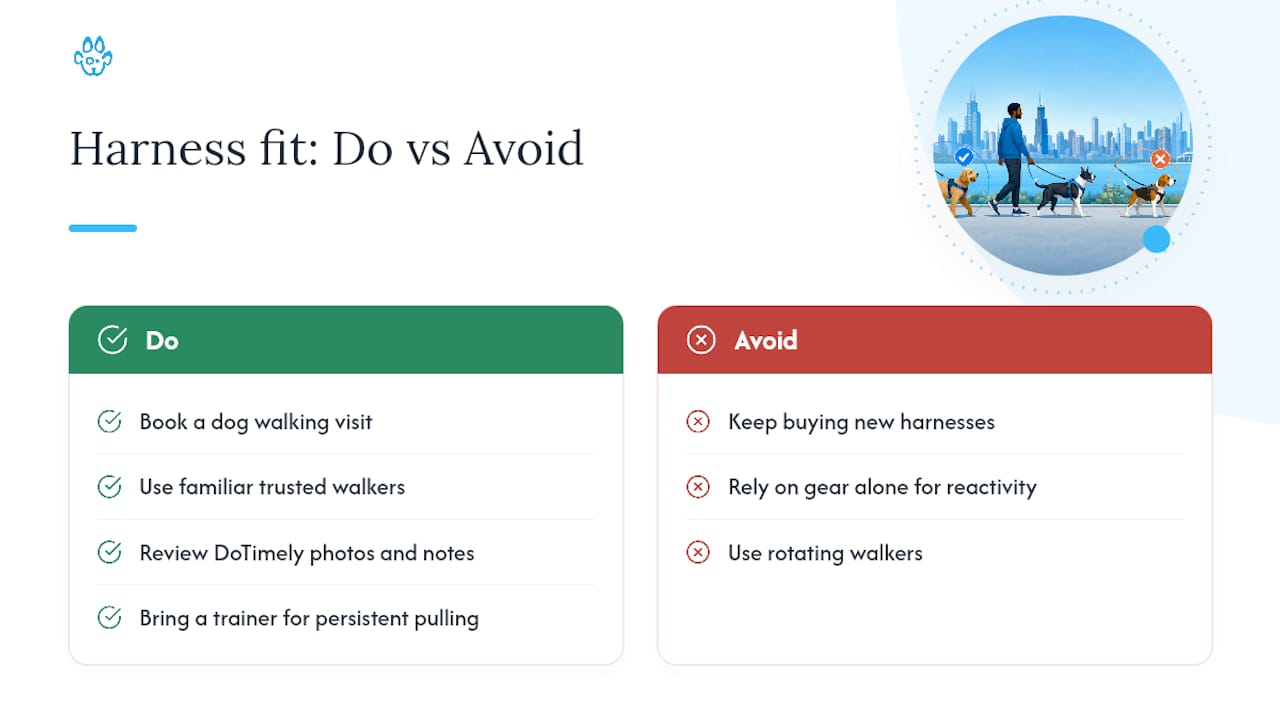
If your dog is dealing with a stubborn pulling habit or reactivity that gear alone can't fix, that's a sign to bring in a trainer alongside your walking routine, not a reason to keep buying new harnesses. But for everyday fit checks, wear-in walks, and honest feedback on whether that new harness is working, book a dog walking visit and let a familiar, fear-free-minded walker put it to the test. Visits start at $17.
Sources
- How to find the right dog harness for your dog, AKC
- How to choose the right collar or harness for your dog, Dogster
- How to measure a dog for a harness, My Little and Large
Always check with your vet for guidance specific to your dog's breed or health history.
FAQ
What dog harness do vets recommend?
Vets generally recommend a well-padded, back-clip or dual-clip Y-shaped harness that keeps pressure off the neck, especially for puppies, seniors, and short-snouted breeds. The Ruffwear Front Range Harness is a common pick because it fits this profile with a wide size range.
What is the most comfortable harness for a dog?
The most comfortable options use padded chest and belly panels with breathable mesh, like the Ruffwear Front Range Harness or Voyager Step-in Air Dog Vest Harness, since they avoid pressure points around the shoulders and armpits.
Are harnesses actually good for dogs?
Yes. Harnesses spread leash pressure across the chest and shoulders instead of the throat, which most vets prefer over collars for daily walking, particularly for dogs with neck sensitivity or breathing concerns.
How much does dog walking cost if I want help testing a harness?
Sparky Steps dog walking visits start at $17 per visit, with current pricing details available on our dog walking page.
How do I know if a harness fits correctly?
You should be able to fit two fingers snugly under any strap, and your dog shouldn't be able to back out of it during a slow backward walk test. If it slips over the shoulders, size down or try a different style entirely.


