

TL;DR:
- A bonded pet sitter has a surety bond that reimburses clients for theft or dishonesty, providing financial protection. Bonding differs from insurance, which covers accidents and property damage; both together ensure comprehensive coverage. Verifying bonding involves requesting the certificate, checking the issuer, and confirming the coverage scope before hiring.

A bonded pet sitter is a pet care professional who holds a surety bond that reimburses clients for financial losses caused by theft or dishonest acts committed by the sitter or their employees. This is not the same as liability insurance, and mixing up the two is one of the most common mistakes pet owners make when hiring care for their fur babies. Understanding what bonding actually covers, how it works alongside insurance, and why it matters gives you a real advantage when choosing someone to trust with your home and your pets. Organizations like Pet Sitters International and providers like Pet Care Insurance have long recognized bonding as a baseline credibility signal for professional pet care.
What is a bonded pet sitter and how does bonding work?
Bonding is a financial guarantee, not an insurance policy. When a pet sitter is bonded, a third-party bond company agrees to reimburse you if the sitter or one of their employees steals from your home or commits a dishonest act. The bond company reimburses the client first and then seeks repayment from the sitter. That structure matters because it means you are not left chasing someone for money out of pocket.
Here is what a surety bond for pet sitters typically covers:
- Theft of cash, jewelry, or personal property by the sitter or their staff
- Fraudulent acts or intentional dishonesty during a job
- Financial losses directly tied to the sitter’s conduct inside your home
Typical bond premiums for pet sitters run between $100 and $300 per year for a $10,000 bond. That is a relatively low cost for a sitter to carry, which means any professional who skips it is probably cutting corners in other areas too. (Yes, that was a gentle red flag wrapped in a cheesy metaphor. You’re welcome.)
Bonding does not cover everything, though. Pet injuries and property damage caused accidentally are not handled by a surety bond. Those scenarios fall under general liability insurance or animal bailee coverage. Think of bonding as the “honesty guarantee” and insurance as the “oops, accidents happen” protection.
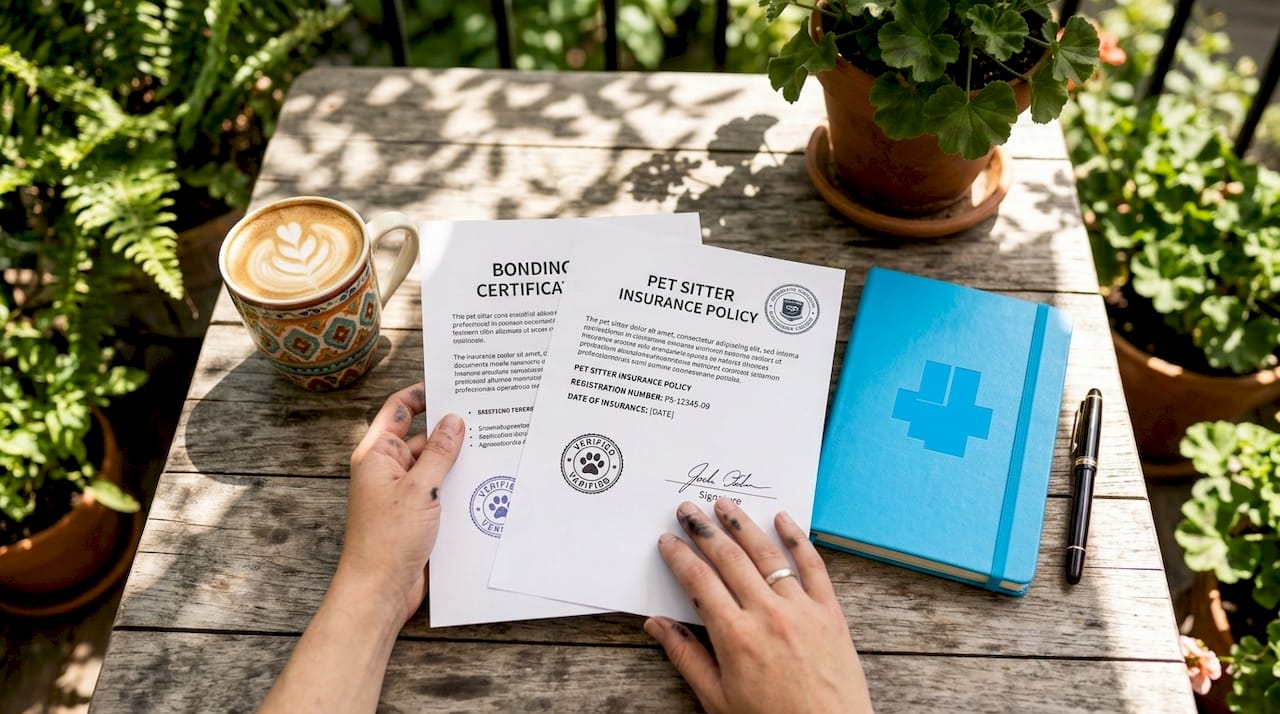
Pro Tip: Ask your sitter directly: “Are you bonded, and what does your bond specifically cover?” A confident, specific answer tells you a lot about their professionalism.
What is the difference between bonded and insured pet sitters?
The phrase “bonded and insured” gets thrown around a lot in pet care marketing, but the two words describe completely different protections. Knowing the difference helps you ask better questions and make smarter hiring decisions.
| Coverage Type | What It Protects Against | Example Scenario |
|---|---|---|
| Surety bond | Theft or dishonest acts by sitter/employees | Sitter takes jewelry from your bedroom |
| General liability insurance | Accidental property damage or bodily injury | Sitter breaks a lamp or slips on your stairs |
| Animal bailee insurance | Veterinary costs if a pet is injured in care | Dog escapes and gets hurt during a walk |
Bonding covers theft and dishonesty, while insurance covers liability, accidents, and some types of pet injuries. These two protections work together to create a safety net that covers most realistic worst-case scenarios. A sitter who carries only one of the two leaves a meaningful gap in your protection.
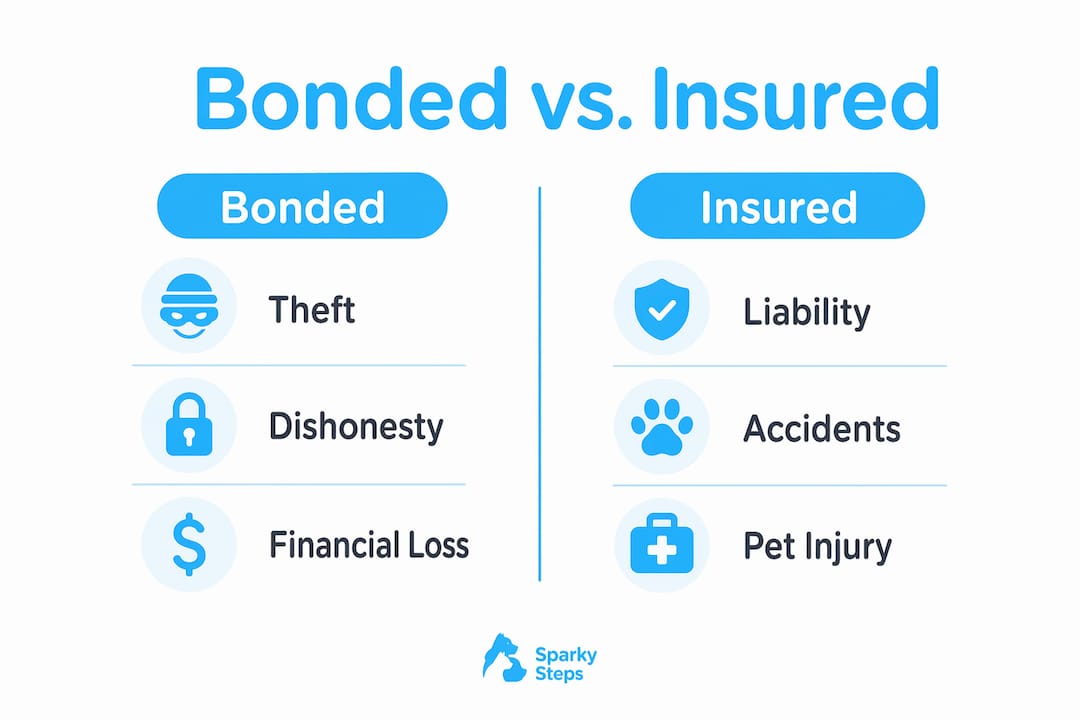
Why does the combination matter so much? Because the risks in pet care are genuinely varied. A sitter with unsupervised access to your home for a week faces situations that range from a dog knocking over a glass table to a missing watch. No single policy type addresses all of that. Insured and bonded sitters win client trust and booking preference over those without both coverages, and that preference is well-founded.
One more coverage type worth knowing: animal bailee insurance specifically covers veterinary costs if a pet in the sitter’s care is injured or becomes ill. Not every sitter carries this, so it is worth asking about separately if your pet has health vulnerabilities.
What are the benefits of hiring a bonded pet sitter?
Hiring a bonded sitter does more than protect your silverware. It signals that the person entering your home has made a formal, verifiable commitment to professional conduct. Here is what that commitment translates to in practice:
- Financial protection. If something goes missing, you have a clear path to reimbursement rather than a he-said-she-said dispute.
- Accountability. A sitter who has gone through the bonding process has been vetted by a bond company, which adds a layer of screening beyond a simple background check.
- Preserved relationships. Because the bond company handles reimbursement directly, disputes are resolved faster and with less damage to the client-sitter relationship.
- Professional credibility. Bonding works as a trust-building tool, especially for sitters with unsupervised access to client homes, reducing the anxiety that comes with handing over your house keys.
- Reduced vetting burden. When a sitter is bonded and insured, you can focus your energy on evaluating their care style and compatibility with your pet rather than mentally cataloging every worst-case scenario.
The last point is underrated. Worrying about theft while also trying to assess whether someone is good with anxious dogs is a lot to manage at once. Bonding handles one side of that equation so you can focus on the other.
Pro Tip: Request a copy of the bond certificate before the first visit. A trustworthy sitter will hand it over without hesitation. One who hesitates is telling you something.
How to find and verify that a pet sitter is truly bonded
Saying “I’m bonded” costs nothing. Proving it requires documentation. Here is a step-by-step process for verifying a sitter’s bonding status before you commit:
-
Ask for the bond certificate. The certificate should list the obligee (that’s you or your household), the bond amount, the effective start and end dates, and the specific risks covered. Bond certificates must be reviewed carefully because assuming “bonded” means comprehensive protection is a common and costly mistake.
-
Verify the bond issuer. Look up the bonding company independently. A legitimate surety bond comes from a licensed insurance or bonding company, not a self-generated document.
-
Check the coverage amount. A $10,000 bond is a common benchmark for pet sitters. If the bond amount is significantly lower, ask whether it realistically covers potential losses in your home.
-
Ask about insurance separately. Bonding and insurance are different documents. Request both certificates and confirm the insurance policy covers general liability and, ideally, animal bailee coverage.
-
Schedule a meet-and-greet. Beth Stultz-Hairston, president of Pet Sitters International, recommends meet-and-greets for confirming trust and fit beyond credentials alone. A certificate tells you about financial protection. A face-to-face conversation tells you about character.
-
Use professional associations as a filter. Pet Sitters International and similar organizations maintain directories of credentialed members. Starting your search there narrows the field to sitters who have already committed to professional standards.
-
Ask directly about coverage scope. Clients should ask sitters to clearly outline which coverages are included and request copies of all certificates. Transparency here is a strong positive signal.
You can also explore resources like in-home pet sitting benefits to understand what a quality in-home care experience should look like before you start interviewing sitters.
Are bonded pet care services the right choice for every pet owner?
Bonding is one piece of a larger picture, not the whole frame. Not every independent pet sitter carries a bond, and that does not automatically disqualify them. What it does mean is that you need to compensate with extra due diligence elsewhere.
Professional pet sitters often combine bonding, insurance, LLC formation, licensing, and signed contracts to build a full risk management foundation. That layered approach benefits both the sitter and the client. If a sitter lacks bonding, ask what other protections they carry and whether they use a formal service contract.
Consider these factors when deciding how much weight to give bonding status:
- Unsupervised home access. If your sitter will have a key and be in your home alone, bonding becomes much more important than it would be for a supervised dog park visit.
- Length and frequency of care. A one-time dog walk carries different risk than a two-week house-sitting arrangement.
- Pet vulnerability. If your pet has medical needs or anxiety, animal bailee insurance and liability coverage may matter more than bonding specifically.
- Alternative care models. Boarding facilities carry their own licensing and insurance requirements. For some pets and some owners, a licensed boarding facility may offer a different but equally valid protection structure.
Bonding status is a meaningful filter, but it works best as one factor in a thorough vetting process. Combine it with insurance verification, a signed contract, a meet-and-greet, and your own gut feeling about the person. That combination is far more reliable than any single credential alone.
Key takeaways
A bonded pet sitter holds a surety bond that protects you from financial loss due to theft or dishonesty, and combining that bond with liability and animal bailee insurance creates the most complete protection for your pet and your home.
| Point | Details |
|---|---|
| Bonding covers dishonesty | A surety bond reimburses clients for theft or fraudulent acts by the sitter or their employees. |
| Bonding is not insurance | Accidents, pet injuries, and property damage require separate liability or animal bailee insurance. |
| Verify the certificate | Always request the bond certificate and check the amount, dates, and covered risks before hiring. |
| Meet-and-greet is non-negotiable | Credentials confirm financial protection; a face-to-face meeting confirms trust and fit. |
| Bonding is one layer | Combine bonding with insurance, a signed contract, and personal vetting for full peace of mind. |
Why bonding matters more than the label suggests
Here is my honest perspective after years of working in and around the pet care world: the word “bonded” gets used as a marketing badge far more often than it gets explained. I have talked to pet owners who assumed a bonded sitter was covered for everything, including a dog getting injured on a walk or a broken window. That is not how it works, and the gap between assumption and reality is where problems happen.
What I have found is that bonding is genuinely valuable, but its real power is in what it signals rather than what it pays out. A sitter who has taken the time to get bonded has made a deliberate choice to operate professionally. That mindset tends to carry over into how they communicate, how they handle problems, and how they treat your home. The bond itself is a financial backstop. The professionalism it signals is the actual day-to-day benefit.
I also think the meet-and-greet is criminally underused. Meet-and-greet appointments are fundamental because bonding ensures financial safety but relationship and communication underpin trust. You can have every certificate in the world and still feel uneasy handing over your keys. Spend thirty minutes with the person first. Watch how they interact with your pet. Ask them what they would do if your dog got sick at 2 a.m. The answers matter more than any paperwork.
One more thing: if a sitter gets defensive when you ask for their bond certificate, that is your answer. A professional who is proud of their credentials hands them over with a smile. (Preferably a smile that does not make your dog bark, but that is a different article.)
— Michael
Trustworthy, bonded pet care in Chicago with Sparky Steps
If you are looking for bonded pet care services in the Chicago area, Sparky Steps has been providing vetted, insured, and dependable pet care since 2016. Every caregiver on the team is background-checked and committed to the kind of compassionate, personalized care your fur baby deserves. Real-time updates, GPS tracking, and a consistent caregiver model mean you always know what is happening with your pet. Schedule a meet-and-greet and ask about bonding and insurance coverage upfront. Visit Sparky Steps to book your first visit and experience pet care that puts your peace of mind first. You can also explore on-demand pet sitting options to find the right fit for your schedule.
FAQ
What does it mean when a pet sitter is bonded?
A bonded pet sitter holds a surety bond that reimburses clients for financial losses caused by theft or dishonest acts by the sitter or their employees. The bond company pays the client first and then seeks repayment from the sitter.
Is a bonded pet sitter necessary for every situation?
Bonding is most important when a sitter has unsupervised access to your home for extended periods. For shorter or supervised visits, bonding is still a positive signal of professionalism, but the risk level is lower.
What is the difference between a bonded and insured pet sitter?
Bonding covers theft and dishonest acts, while insurance covers accidents, property damage, and some pet injuries. The two protections work together and a sitter carrying both offers the most complete coverage.
How do I verify that a pet sitter is truly bonded?
Ask for the bond certificate and check the bond amount, effective dates, covered risks, and the name of the issuing bond company. Verify the issuer independently and request insurance certificates separately.
How much does it cost a pet sitter to be bonded?
Surety bond premiums for pet sitters typically range from $100 to $300 per year for a $10,000 bond. This is a low-cost professional commitment, so a sitter who skips it is likely skipping other professional standards too.
Written by the Sparky Steps Team.


