

Daily brushing with a dog-safe enzymatic toothpaste is the single most effective thing you can do for your dog’s teeth, full stop. Everything else, chews, water additives, dental diets, is a helpful backup, not a substitute. That matters more than most pet parents realize: an estimated 93% of dogs older than 3 years have some form of dental disease, and most of it is preventable with a routine you can build in a week.
Here’s the good news. You don’t need special training or fancy equipment to start tonight. You need a few basics and a little patience.
Tonight’s starter kit:
- Enzymatic dog toothpaste (never human toothpaste)
- A finger brush or angled dog toothbrush
- A VOHC-accepted dental chew as backup for tougher days
- A water additive for days brushing just isn’t happening
- Five calm minutes and some patience (your dog is judging your technique less than you think)
Key Takeaways
Daily brushing with dog-safe enzymatic toothpaste remains the most effective home defense against dental disease, and VOHC-accepted products fill the gaps when brushing isn’t possible.
| Point | Details |
|---|---|
| Brush daily if you can | Aim for daily brushing, with three to four times weekly as the realistic minimum. |
| Angle and focus matter | Hold the brush at 45 degrees to the gumline and prioritize outer surfaces of back teeth. |
| Use the VOHC seal to shop smarter | Choose VOHC-accepted chews, additives, or diets when brushing alone isn’t enough. |
| Never use human toothpaste | Fluoride and xylitol in human formulas are toxic to dogs; use enzymatic dog toothpaste only. |
| Get support when life gets busy | Sparky Steps walkers can reinforce routines with supervised chews and mouth checks during regular visits. |
How To Build Dog Dental Hygiene At Home Step by Step
Good dog dental hygiene at home isn’t about a single heroic scrubbing session. It’s a small, boring, repeatable habit, kind of like flossing, except your dog can’t nag you about it (yet).
Here’s a realistic weekly rhythm that fits into an actual human life:
- Daily (or as close as you can get): Brush for 30 to 60 seconds, focusing on the outer surfaces of the back teeth, where tartar loves to build up. Hold the brush at a 45 degree angle to the gumline and use small circular motions, the same motion your own dentist uses on you, minus the awkward small talk.
- Three to four times a week, minimum: If daily brushing isn’t realistic, aim for at least three to four sessions weekly. Anything less starts to lose its punch against plaque.
- Every other day: Offer a size-appropriate dental chew for 10 to 15 minutes of supervised gnawing.
- Weekly: Do a quick visual mouth check. Lift the lip, glance at the gums and teeth, and sniff (yes, really) for anything unusually foul.
- Monthly: Reassess. Is tartar building along the gumline despite your best efforts? That’s your cue to loop in your vet sooner rather than later.
Plaque isn’t patient. It can harden into tartar within 24 to 72 hours, which is exactly why consistency beats intensity here. A rushed, sporadic scrub once a week won’t cut it. A calm 45 second session most days will.
For dogs new to this whole “let a human touch my mouth” concept, build up over one to two weeks: start with letting them lick toothpaste off your finger, then rub gums gently, then introduce the brush once they’re relaxed with the taste and touch.
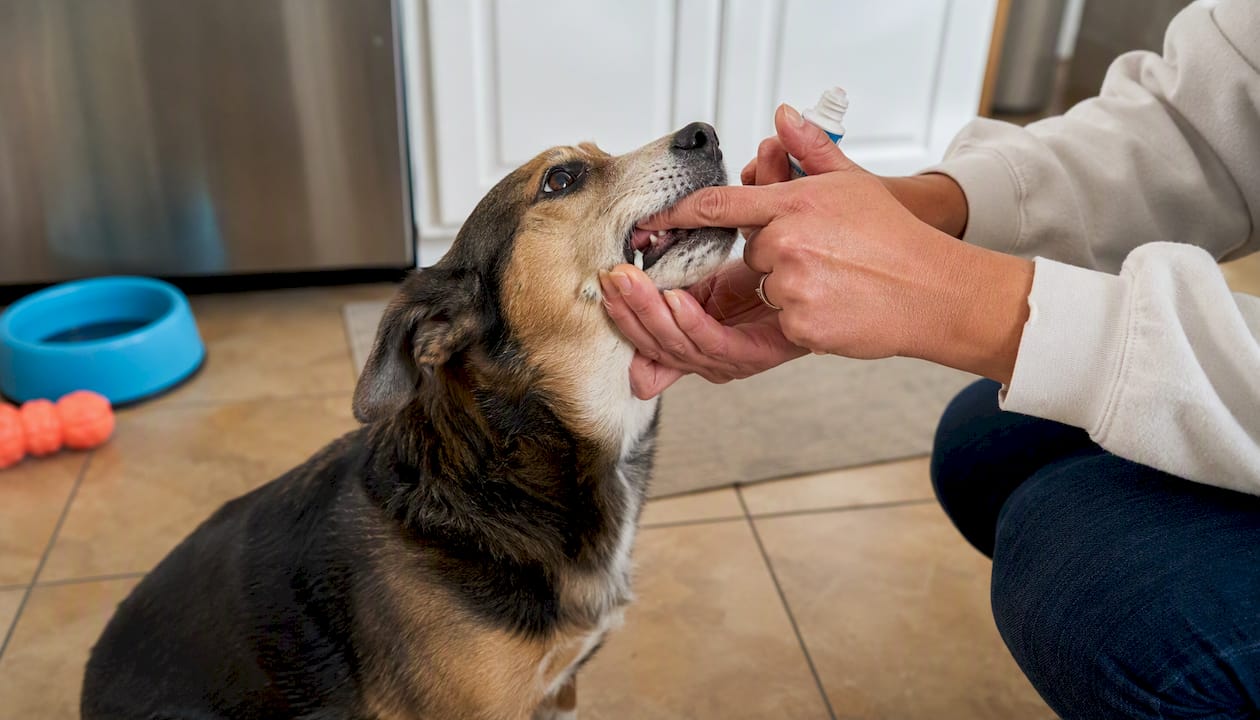
Pro Tip: End every session on a win, even a tiny one. If your dog only tolerates five seconds today, stop there and reward generously. Dental hygiene sessions are a marathon, not a sprint, and dogs remember how sessions end far more than how long they lasted.
What to Buy: Toothpaste, Brushes, Chews, and the VOHC Seal
Walk into a pet store’s dental aisle and you’ll find approximately eleven thousand products promising fresher breath and whiter teeth. Here’s how to cut through it.
Toothpaste has to be enzymatic and made specifically for dogs. Human toothpaste is off-limits entirely, not just “not ideal.” Human formulas often contain fluoride or xylitol, both of which are toxic to dogs if swallowed, and dogs definitely swallow toothpaste. Baking soda isn’t a safe substitute either.
Brushes should match your dog’s mouth. A finger brush works well for small dogs, puppies, or first-timers because it gives you more tactile control. An angled, long-handled brush reaches the back molars on medium and large dogs more comfortably. For toy breeds with tiny mouths, a soft baby toothbrush sized down often fits better than anything marketed as “dog specific.”
The VOHC Seal is the single most useful shortcut when shopping. The Veterinary Oral Health Council awards its Seal of Acceptance only to products that submit clinical data showing a repeatable reduction in plaque or tartar, tested against a defined protocol that starts with a professional scaling baseline before comparing outcomes. VOHC doesn’t run the trials itself; it reviews manufacturer-submitted data against that standard, which is still a meaningfully higher bar than marketing copy alone. Worth knowing: the seal is a voluntary industry credential, not a government safety stamp, so it tells you a product works as claimed, not that it’s regulated like a drug.
| Product Type | What It Does | Best For | Watch For |
|---|---|---|---|
| Enzymatic toothpaste | Breaks down plaque chemically while brushing | Daily use, all dogs | Never use human toothpaste |
| Finger brush | Gentle mechanical cleaning, easier for beginners | Puppies, small dogs, first timers | Less reach on back molars |
| Angled toothbrush | Deeper mechanical cleaning | Medium to large dogs | Requires more training buy-in |
| VOHC-accepted chews | Mechanical scraping, some add chemical action | Backup days, dogs resistant to brushing | Size to weight, always supervise |
| Water additives | Reduces bacteria in the mouth via drinking water | Dogs who won’t tolerate handling | Mild effect alone, not a brushing replacement |
| Dental diets | Kibble texture mechanically scrapes teeth while chewing | Long-term maintenance | Check with your vet before switching food |
What If You Can’t Brush Every Day?
Life happens. Some dogs fight the toothbrush like it’s a personal insult, and some owners simply can’t manage a daily session. That’s real, and there are legitimate backups, just not full replacements.
- VOHC-accepted chews provide mechanical scraping action on outer tooth surfaces, and some carry enzymes for added chemical action, but size matters enormously. A chew that’s swallowed in ten seconds flat offers almost no dental benefit and can be a choking hazard.
- Water additives add antibacterial ingredients to your dog’s drinking water. The effect is milder than brushing, but it’s genuinely better than doing nothing on the days brushing doesn’t happen.
- Dental diets use kibble shaped and textured to scrape teeth during normal chewing. They work passively, which makes them a solid long-term layer, especially paired with dietary strategies that support oral health.
- Supervised chew toys made of appropriate rubber or nylon offer mechanical action too, but always match the toy’s firmness and size to your dog’s jaw strength and always stay in the room.
- Dental wipes are a decent stopgap for puppies or dogs mid-desensitization, though they don’t reach below the gumline at all.
None of these options remove hardened tartar once it’s below the gumline. That job belongs to a vet, under anesthesia, with actual dental instruments. Think of chews and additives as supporting cast, not the lead role.
How Do You Get a Resistant Dog Used to Brushing?
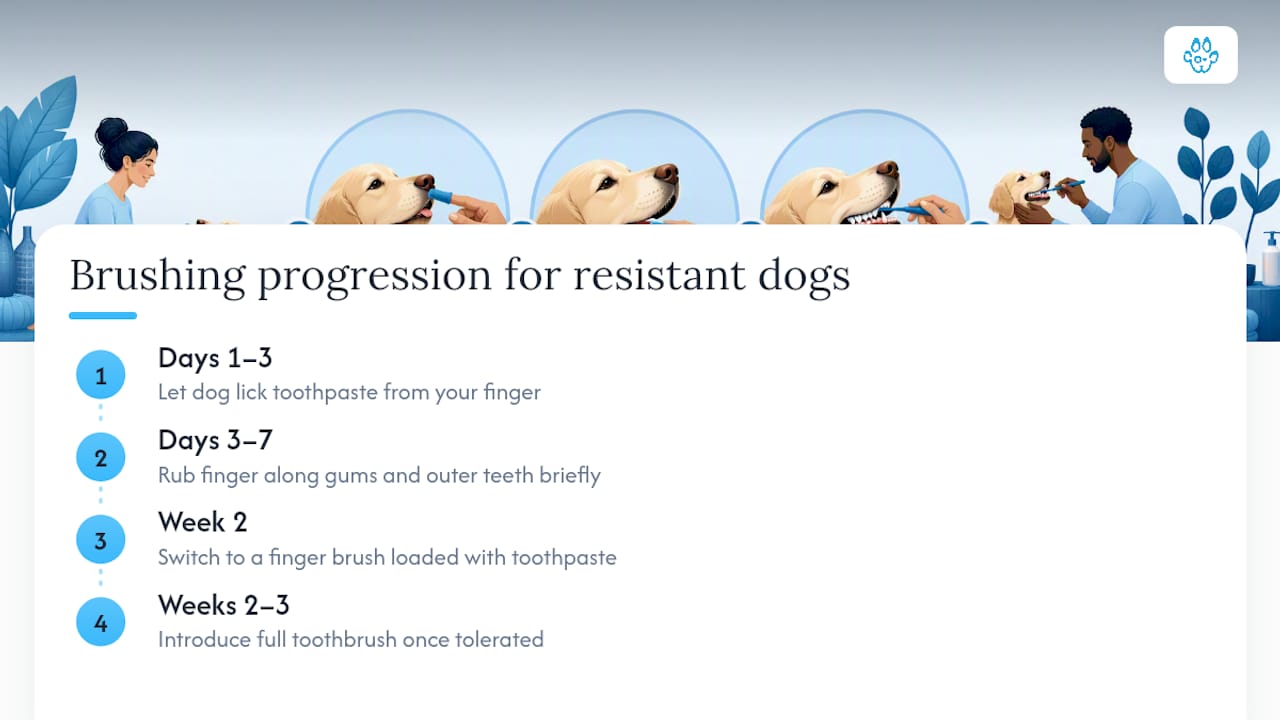
Some dogs act like a toothbrush is a torture device the first time they see one. That’s normal, and rushing it usually backfires. Veterinary dental care guidance recommends a slow, staged approach, and it genuinely works if you stick with it.
Step 1 (days 1 to 3): Let your dog lick a small amount of dog toothpaste off your finger. No brushing yet. This is purely a taste-association exercise.
Step 2 (days 3 to 7): Once they’re comfortable with the taste, gently rub your finger along their gums and outer teeth for a few seconds. Keep it short and upbeat.
Step 3 (week 2): Swap your bare finger for a finger brush loaded with toothpaste. Repeat the same gentle rubbing motion.
Step 4 (week 2 to 3): Introduce the full toothbrush once your dog tolerates the finger brush without pulling away.
Watch for signals that you’re moving too fast: lip licking, yawning, turning the head away, or freezing up. Any of those mean pause, back up a step, and try again tomorrow. For toy breeds and brachycephalic dogs (think Pugs, French Bulldogs), work in shorter bursts since their mouths tire and their airways are more sensitive. Larger, more food-motivated breeds often tolerate longer sessions if you keep treats flowing.
Pro Tip: Practice mouth handling completely separate from brushing at first, just lifting the lip, touching the muzzle, during calm moments like after a walk. A dog that’s used to having its mouth touched in general adjusts to a toothbrush much faster.
When Should You See a Vet About Your Dog’s Teeth?
Home care handles prevention. It doesn’t fix what’s already gone wrong. Watch for these red flags:
- Heavy brown or yellow tartar buildup along the gumline
- Bad breath that doesn’t improve with brushing
- Bleeding gums, even mild, during or after brushing
- Loose or visibly damaged teeth
- Excessive drooling or pawing at the mouth
- Difficulty eating, chewing on one side, or dropping food
- Facial swelling near the jaw or under the eye
- Sudden behavior changes like irritability or withdrawal (dental pain hides well)
Any of those warrant a vet visit, not a wait-and-see approach.
A professional cleaning is a more involved process than most owners expect. Vets use anesthesia because it’s the only safe way to scale below the gumline, where the real damage happens and where an awake dog simply won’t tolerate the instruments. The appointment typically includes scaling above and below the gumline, polishing, probing each tooth for pockets or damage, and often dental X-rays to check root health you can’t see by looking.
| Factor | What to Expect |
|---|---|
| Typical frequency | Annually for most adult dogs; more often for small breeds prone to crowding |
| Anesthesia | Standard practice, required for safe subgingival scaling |
| Home care’s effect | Consistent brushing can extend the interval between cleanings |
| What it catches | Hidden root issues, pocket depth, and problems invisible during a home check |
Common Mistakes That Undo Your Dental Routine
A few habits quietly sabotage even well-meaning owners:
- Using human toothpaste or baking soda. Both can contain ingredients toxic to dogs, and neither is formulated for a dog’s digestive tolerance.
- Choosing chews by price instead of size. A chew too small for your dog’s weight is a choking risk; one too hard can crack a tooth. Match chew size to your dog’s actual weight, not what’s on sale.
- Skipping the gumline. Most tartar accumulates right at the gum edge on the outer surfaces of the back teeth, so brushing only the front, visible teeth misses where the real work needs to happen.
- Relying on chews alone. Chews supplement brushing; they don’t replace it, no matter how satisfying the marketing sounds.
- Trying to scrape tartar off yourself. Hardened tartar below the gumline requires professional tools and anesthesia. Home scraping tools can damage enamel and won’t reach what actually needs removing.
- Inconsistent scheduling. Brushing twice one week and skipping the next three undoes most of the benefit. Consistency matters more than perfection here.
For more on general safety habits around supervision and handling, our guide on pet care safety covers ground that applies well beyond just dental chews.
What We See on the North Side: A Few Honest Notes
We spend a lot of time in Chicago living rooms and front hallways, which means we’ve watched a lot of dogs react to a lot of toothbrushes. The pattern holds up everywhere: dogs whose owners keep it short, calm, and boring succeed more than dogs whose owners go all in for one epic session and then quietly give up by week two.
Consistency beats perfection, every single time. A 20 second brushing most days wins over a perfect 2 minute session that only happens once a month. We’ve also noticed that dogs who get their mouths handled regularly, even just a quick lip check during a walk, tend to be dramatically easier at actual vet visits. It’s a small habit with a big payoff down the road.
Our walkers keep an eye on the little things during regular visits, tartar buildup, bad breath, anything that looks off, and we pass those notes along so nothing slips through the cracks between vet checkups.
Keeping the Routine Going Even on Your Busiest Weeks
Some weeks, brushing your dog’s teeth loses the fight against work deadlines, school pickups, and everything else on your plate. That’s exactly where a consistent care team earns its keep. Our walkers get to know your dog’s routine well enough to reinforce it, offering a supervised dental chew during a visit, doing a quick mouth check, and flagging anything that looks off, like unusually bad breath or red gums, in your visit notes.
To be clear about boundaries: we don’t perform professional dental cleanings or any procedure requiring anesthesia. That part stays with your vet, always. What we do provide is consistency between your own brushing sessions, someone reliable checking in, taking notes, and keeping your dog’s routine from falling apart during a hectic week.
If you’re a North Side pet parent who wants that extra layer of consistency, whether through daily walks or in-home visits and check-ins, reach out and we’ll build a routine around your dog’s actual needs, not a generic template. It’s the same small, trusted team every time, which makes it a lot easier to keep dental care from slipping through the cracks.
Sources
- What Is VOHC? Understanding the Veterinary Oral Health Council and What They Do | PetMD
- VOHC | Earn the VOHC Seal
- Brushing Your Dog’s Teeth | VCA Animal Hospitals
- Pet dental care | AVMA
FAQ
Can I clean my dog’s teeth myself at home?
Yes. Daily or near-daily brushing with a dog-safe enzymatic toothpaste is the gold standard, and most dogs can be trained to accept it with a gradual, reward-based introduction over one to two weeks.
Can you scrape plaque off a dog’s teeth at home?
Soft plaque can be removed with regular brushing, but hardened tartar below the gumline requires professional scaling under anesthesia and should never be scraped at home with tools not designed for it.
What kills bacteria in a dog’s mouth?
Enzymatic dog toothpaste and VOHC-accepted water additives both target oral bacteria, though brushing remains the most effective method for reducing overall plaque and bacterial buildup.
What can I clean my dog’s teeth with at home?
Use a dog-safe enzymatic toothpaste with a finger brush or angled dog toothbrush, and never substitute human toothpaste or baking soda, both of which pose toxicity risks.
How often should I take my dog to the vet for dental cleaning?
Most adult dogs benefit from an annual professional dental exam, though consistent home brushing can extend that interval, and your vet can advise based on your dog’s individual tartar buildup.
Written by the Sparky Steps Team.
Authorship Note The content above aligns with the values of Sparky Steps LLC. While artificial intelligence helped organize the article, the images, and helped translate our ideas into clear, practical language, the final blog post is a delightful collaboration between passionate human writers who adore animals and a sprinkle of artificial intelligence magic. Remember, if you think writing is easy, try typing with paws!


