


The best way to find a pet sitter has nothing to do with star ratings or sponsored app profiles. It's a text from your neighbor that says: "Use our walker. She's the best and our dog loses his mind when he sees her."
That's a referral. And in a city like Chicago, where dozens of pet care options exist but very few ways to verify which ones are actually reliable, a referral from someone you trust is worth more than a hundred five-star reviews from strangers.
This guide covers why referrals work so well, where to find them, what to ask when you get one, and how to tell whether a service is genuinely referral-built or just good at collecting reviews.
Why referrals beat app searches for finding trustworthy care
When you search for a pet sitter on an app, you're reading a profile assembled by the person trying to get your business. When a friend refers you to their pet sitter, you're hearing from someone with no incentive to mislead you and a lot of incentive to get it right: their dog's happiness is on the line every week.
That difference matters more than it sounds. A referred sitter comes with a real track record. You already know they show up on time, that they handle the nervous dog next door without incident, that they send photos after every visit without being asked. You skip the "let's hope this works out" phase entirely and start from a foundation of demonstrated trust.
App reviews have their place, but they're easy to game and hard to verify. A personal referral from someone whose pet you've met is not. That's why the best pet sitters in most Chicago neighborhoods are fully booked before they ever need to run an ad.
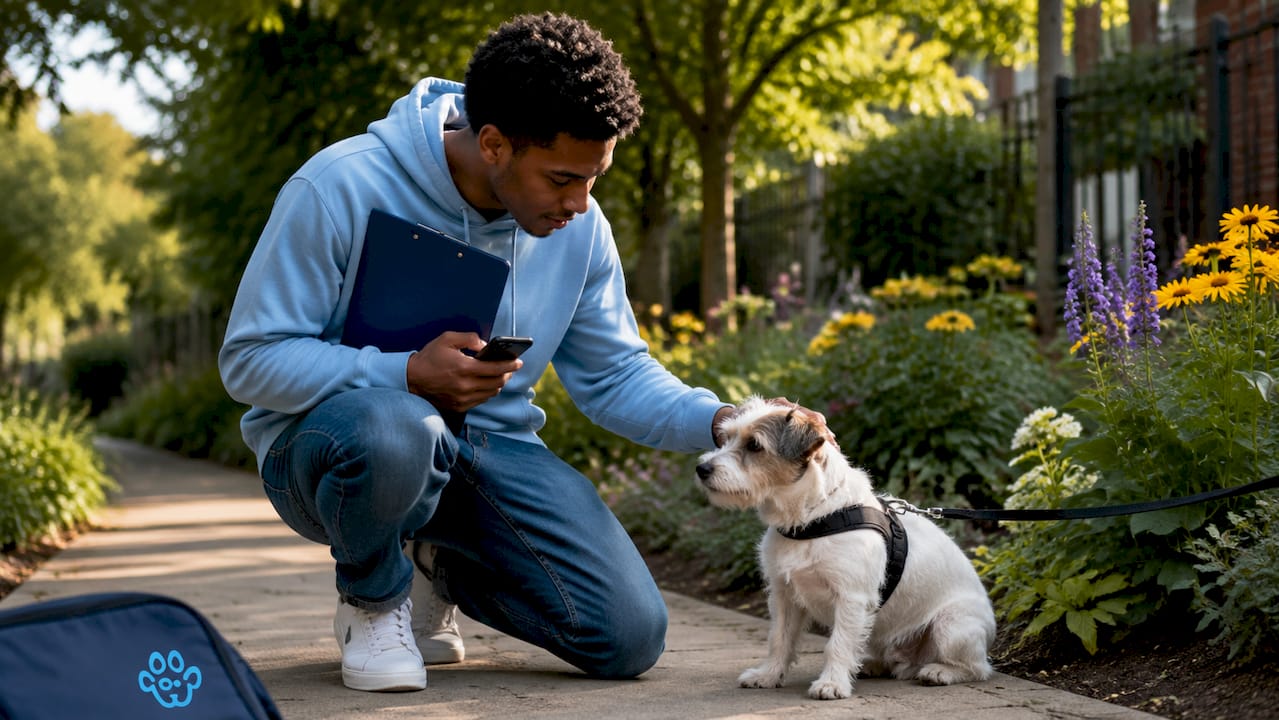
Where to actually find good referrals
The best referral sources are the people and professionals who already know your pet or know the local care landscape well.
Your veterinarian
This is the most underused referral source in pet care and the most valuable one. Your vet knows your pet's health history, temperament, and any special needs. When they recommend a sitter, that recommendation is specific and informed, not just "they seem nice." Most vets maintain a short list of local caregivers they trust, and getting on that list is significantly harder than collecting five-star app reviews. Ask directly at your next appointment.
Your groomer or trainer
Groomers and trainers see your pet regularly and understand their behavioral quirks in a way most people don't. A groomer who knows your dog is anxious around strangers can point you toward a sitter known for calm, patient handling. That specificity is something no algorithm can replicate.
Neighbors at the dog park
The person whose dog is always calm, well-exercised, and clearly well cared for is worth talking to. Ask them who handles care when they travel. Dog park conversations in neighborhoods like Albany Park, Ravenswood, and Andersonville have generated more reliable sitter recommendations than most people realize. Local knowledge travels fast.
Your building or neighborhood group
Chicago neighborhood Facebook groups, building chats, and Nextdoor threads are full of "who do you use for dog walking?" posts. The names that come up repeatedly, especially with specifics ("she sends photos every visit," "he's great with reactive dogs"), are worth following up on.
Other pet parents in your care network
If you already have a walker or sitter you trust, ask them if they know anyone who covers a different service or time slot. Professional caregivers tend to know each other in the same neighborhood, and a recommendation from someone already doing the job well carries real weight.
What to ask when someone gives you a referral
https://www.tendpets.com/blog/how-to-get-more-pet-sitting-clients
A referral is a starting point, not a guarantee. The right follow-up questions turn a warm lead into real confidence.
- How long have you used them? A few months of good service is encouraging. A few years is meaningful.
- What does communication look like after visits? Do they send photos? GPS tracking? Written notes? Or just silence and an assumption that everything went fine?
- Have you ever had a problem, and how did they handle it? This is the most revealing question. How someone responds when things go sideways tells you far more than how they perform when everything is easy.
- Do they use the same person every visit? Consistency matters enormously for pets. A service that sends whoever is available is not the same as one that sends someone your dog already knows.
- Would you recommend them without hesitation? Sometimes people are polite about mediocre experiences. This question cuts through that.
Pro tip: After a meet-and-greet with any referred sitter, ask them to tell you back what they've learned about your pet's routine. If they can do it accurately, they were paying attention. If they can't, keep looking.
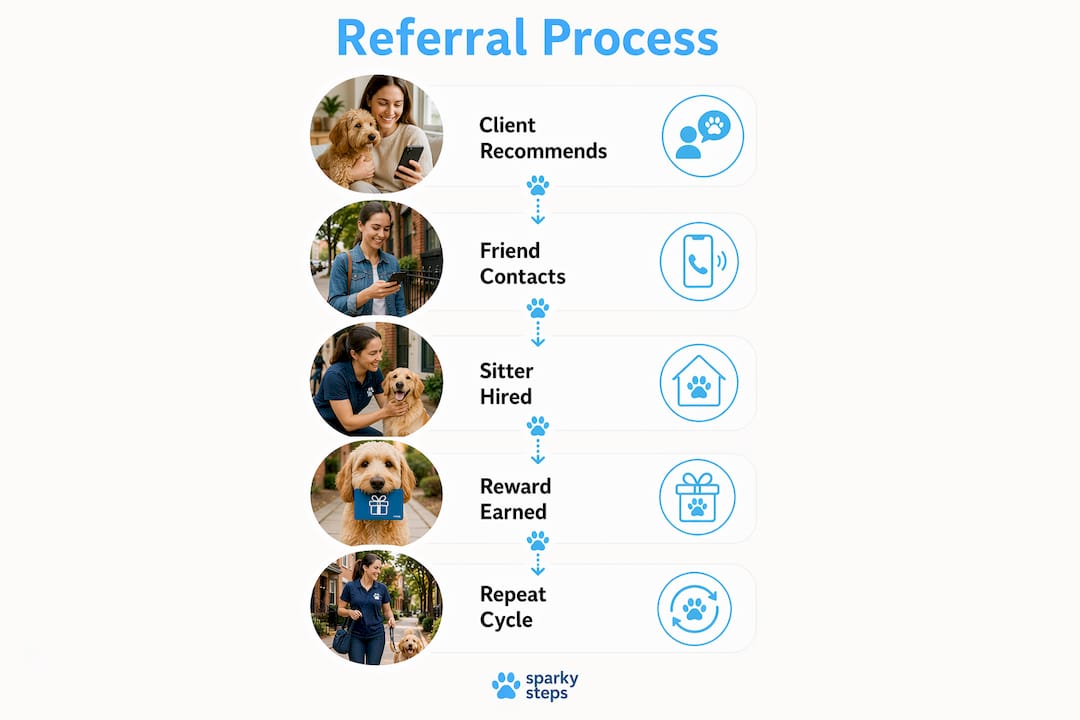
How to tell if a service is genuinely referral-built
Any pet care company can say "most of our clients come from referrals." Here's how to tell if that's actually true.
They're sometimes fully booked. A referral-driven service grows through word of mouth, which means demand can outpace availability. If a service always has immediate openings, that's worth noticing.
Their reviews are specific, not generic. "Great service, highly recommend" is a five-star review that tells you nothing. "She remembered that Luna needs her walk to start with five minutes of sniffing before she'll settle into a pace" is a referral in disguise. Look for specificity.
Their clients stay. Ask how long their average client has been with them. A high-turnover client roster suggests something isn't working. A service where most clients have been around for a year or more is doing something right.
Their professional partners vouch for them. If the local vet clinic on your block refers clients to them, or the trainer at your dog's obedience class knows their name, that's meaningful. Professional referrals require a level of trust that takes time to build and is easy to lose.
They welcome scrutiny. Services built on referrals and reputation welcome the meet-and-greet, the trial visit, the list of detailed questions. They have nothing to hide because their business track record is the pitch.
What to do once you find someone worth trusting
Finding a great sitter through a referral is only the first step. The relationship takes a little work to set up properly, and that setup is what makes everything run smoothly long term.
- Share everything upfront. Feeding schedule, medications, behavioral quirks, emergency contacts, vet information. A one-page pet profile you can hand over before the first visit saves a lot of confusion and makes the sitter's job genuinely easier.
- Do a trial visit before a long trip. Book a shorter visit or a walk before you leave for a week. It lets your pet get familiar with the sitter in a low-stakes context, and it lets you verify that the communication and reliability match what you were told.
- Give honest feedback early. If something is slightly off in the first few visits, say so. Good caregivers want to know. The ones who get defensive about feedback are showing you something important.
- Pass it on when it's working. If you find someone great, tell people. The referral network in a Chicago neighborhood is only as good as the people who keep it moving. Your recommendation to a neighbor is exactly the kind of thing that makes the whole system work.
Key takeaways
- Referrals from people you trust outperform app searches because the person referring you has skin in the game: they've already tested the sitter with their own pet.
- Your vet is the most underused and most valuable referral source in pet care. Ask them directly.
- The best follow-up question to any referral: "Have you ever had a problem, and how did they handle it?"
- Genuine signs of a referral-built service: they're sometimes full, their reviews are specific, their clients stay long-term, and they welcome scrutiny.
- Once you find someone great, set the relationship up well: share a pet profile, do a trial visit, give early feedback, and pass the name on when it's working.
What ten years of referrals has taught me
By Michael Jaurigue, co-founder of Sparky Steps
"Sparky Steps has been around since 2016, and the honest answer to "how did you grow?" is: one referral at a time. We didn't build the business through ad spend or app rankings. We built it because a pet parent in Ravenswood told her neighbor, who told her coworker, who moved to Andersonville, some clients, over the years, are moving from place to place, hoping all over the city! That kind of loyalty doesn't come from a five-star review on a platform. It comes from showing up consistently for years and giving people something actually worth talking about.
The thing I've noticed is that the referral conversation usually happens in a pretty specific moment: someone's about to travel and they're stressed about who's going to watch their dog, and a friend says "I know exactly who you should call." That's not a marketing opportunity. That's trust doing its job.
What I tell people who ask how to find a good sitter: stop starting with the app. Start with your vet, your groomer, the person at the dog park whose dog is clearly having the time of their life. Those conversations will get you somewhere faster than any search result. And when you find someone through that path and they're good, tell people. The referral network in a Chicago neighborhood is genuinely one of the most valuable things in it, and it only works because people keep it moving."
— Michael Jaurigue
Sparky Steps: built on Chicago referrals since 2016
Most of our clients found us through a neighbor, a vet, or a friend who wasn't willing to keep a good secret. We serve 250+ pet parents across Albany Park, Ravenswood, Edgewater, Andersonville, Uptown, and six other North Side neighborhoods, and the reason most of them stay is the same reason they came: someone they trusted told them to.
Every Sparky Steps client gets the same trusted walkers at every visit, real-time updates via DoTimely after every visit, and a care team that actually knows their pet. If you're looking for care you can trust, we'd love to meet your dog. 🐾
FAQ
What is a pet sitting referral?
A pet sitting referral is a personal recommendation from someone who has already used a caregiver and can vouch for their reliability from direct experience. It's the most efficient way to find trustworthy pet care because the person referring you has already done the vetting.
Where's the best place to find a pet sitter referral?
Your veterinarian is the most underused and most valuable source. Most vets maintain a short list of local caregivers they trust. Groomers, trainers, and neighbors at your local dog park are also excellent sources, especially for neighborhood-specific recommendations.
What should I ask someone who refers me to a pet sitter?
Ask how long they've used them, what communication looks like after visits, whether they've ever had a problem and how it was handled, and whether the same person shows up every time. Those four questions will tell you most of what you need to know.
How do I know if a pet care service is genuinely referral-driven?
Look for specific reviews rather than generic praise, clients who have stayed for a year or more, professional partners like vets or groomers who vouch for them, and a service that welcomes the meet-and-greet and trial visit without hesitation.
Should I still do a meet-and-greet even if I got a referral?
Always. A referral tells you the sitter is worth meeting. The meet-and-greet tells you whether they're the right fit for your specific pet. They're two different questions, and both matter.
Written by the Sparky Steps Team.
Authorship Note
The content above aligns with the values of Sparky Steps LLC. While our trusty artificial intelligence helped organize the article, whip up some fun images, and translate ideas into clear, practical language, the final masterpiece is a delightful collaboration between passionate human writers who adore animals and a sprinkle of artificial intelligence magic. Remember, if you think writing is easy, try typing with paws!


