

A dog walker meet and greet is a no-obligation, in-person introduction where you assess compatibility between your dog and a prospective walker before committing to regular care. Think of it as a job interview where your dog is the hiring manager. The MSPCA-Angell recommends this meeting to observe how the walker interacts with your dog, review equipment, and confirm walking routes. For urban pet parents in Chicago, where apartment hallways, busy sidewalks, and off-leash parks create real daily challenges, this guide gives you a clear, step-by-step process to make the most of it.
What a meet and greet actually is
A meet and greet is the industry's standard term for a structured, pre-hire introduction between a prospective walker and your dog. It's not just a social call. As Dan's Pet Care explains, it functions as a two-way interview: the walker learns your dog's triggers, medical history, and behavior, and you evaluate whether this person belongs in your home. The meeting typically happens at your home, lasts 20 to 45 minutes, and costs nothing. That last part matters. A free, no-pressure meeting removes every excuse to skip it.
The walker's job during this introduction is not just to be friendly. Professional walkers observe subtle behaviors like guarding, wariness, or stiffness that signal stress. They ask detailed questions about health conditions, dietary restrictions, and daily routines because that information is vital to keeping your dog safe on every single walk. If a prospective walker shows up and just wants to pet your dog without asking a single question, that tells you something important.
What to prepare before the walker arrives
Preparation separates a productive meeting from a pleasant but useless one. Arrive at your own meeting ready, and you will get far more useful information from the walker.
Documents and information to gather
Pull these together before the walker arrives:
- Medical records. Vaccination history, current medications, and any chronic conditions like allergies or joint issues.
- Behavior notes. Known triggers (skateboards, other dogs, loud trucks), fear responses, and any history of aggression or anxiety.
- Dietary details. Feeding schedule, food brand, and any treats the walker may use during walks.
- Emergency contacts. Your vet's name and number, plus a backup contact if you are unreachable.
- Home access details. Key or lockbox code, alarm instructions, and any rooms that are off-limits.
Equipment to have ready
| Item | Purpose |
|---|---|
| Leash and harness | Let the walker practice fitting and handling your dog's gear |
| High-value treats | Use during introductions to create a positive first impression |
| Training cue list | Share commands your dog already knows (sit, leave it, heel) |
| Waste bags | Show your preferred cleanup routine for city walks |
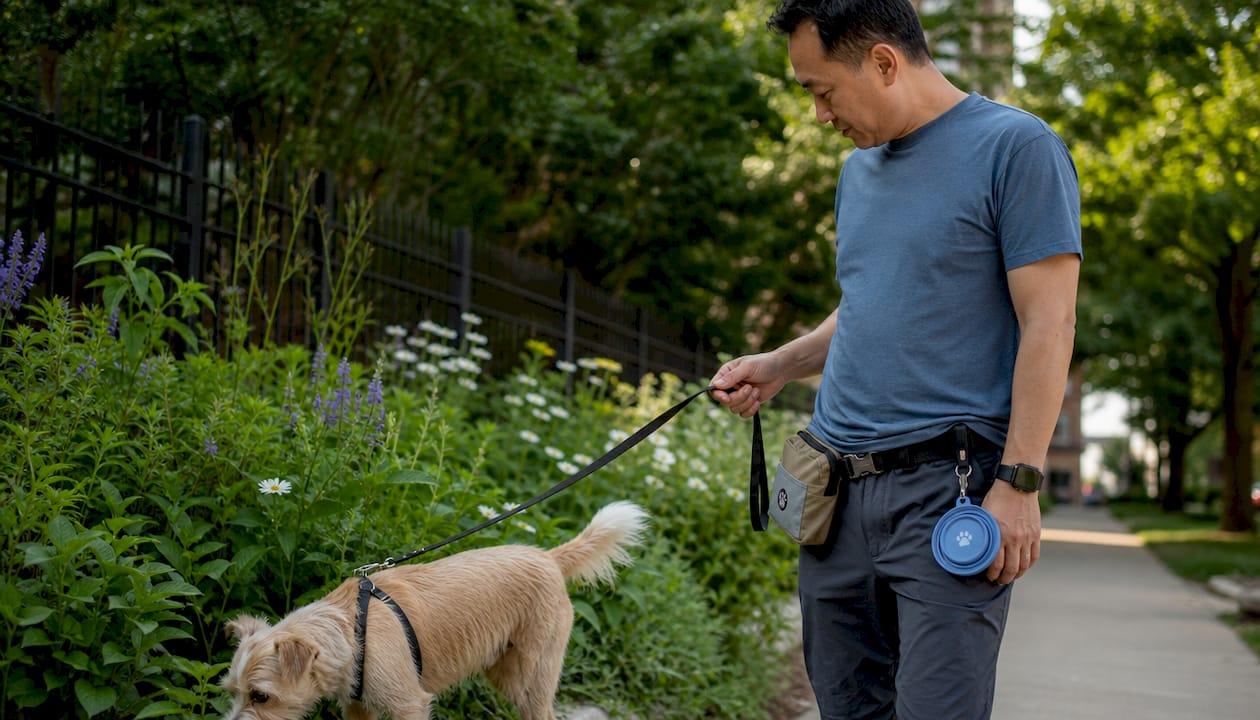
Organizing your home for a calm introduction also matters. Clear a quiet space where your dog can approach the walker without feeling cornered. City apartments are small, and a cluttered entryway can spike a dog's stress before the meeting even begins. Check out Sparky Steps' guide to preparing for your pet sitter for a full checklist you can print and use.
Pro tip: Write your dog's top three triggers on a notecard and hand it to the walker at the start of the meeting. Walkers who read it carefully and ask follow-up questions are the ones worth hiring.
How to conduct the meet and greet: step by step
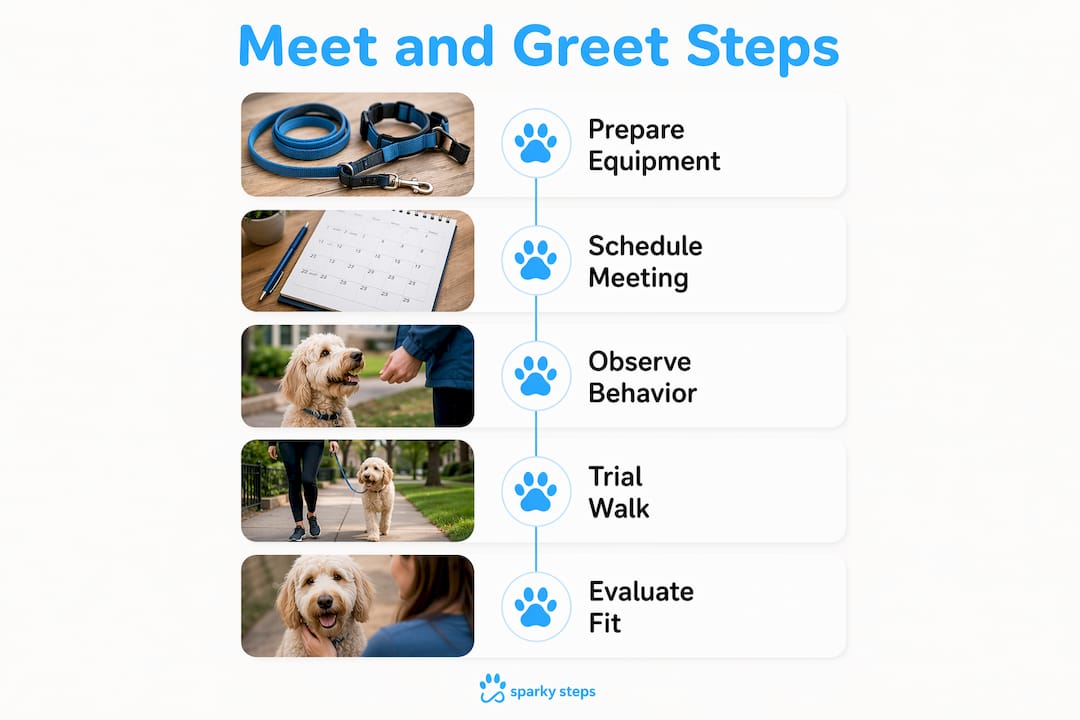
The meeting has a natural rhythm. Follow these steps and you will cover everything that matters.
-
Welcome the walker calmly. Greet the walker at the door without your dog present. Give the walker a moment to settle before the introduction. A chaotic first second sets the wrong tone for everyone, including your dog.
-
Let your dog approach on its own terms. Bring your dog into the room and let it sniff and investigate freely. Confident, relaxed greetings are a better sign than a dog that shrinks away or barks aggressively. Do not force the interaction.
-
Discuss triggers, health needs, and routine. Walk the walker through your dog's daily schedule, known triggers, and any health conditions. Reviewing leash habits and outdoor behavior at this stage lets the walker adjust their approach before the first real walk. Cover pulling, barking, chasing, and recall reliability.
-
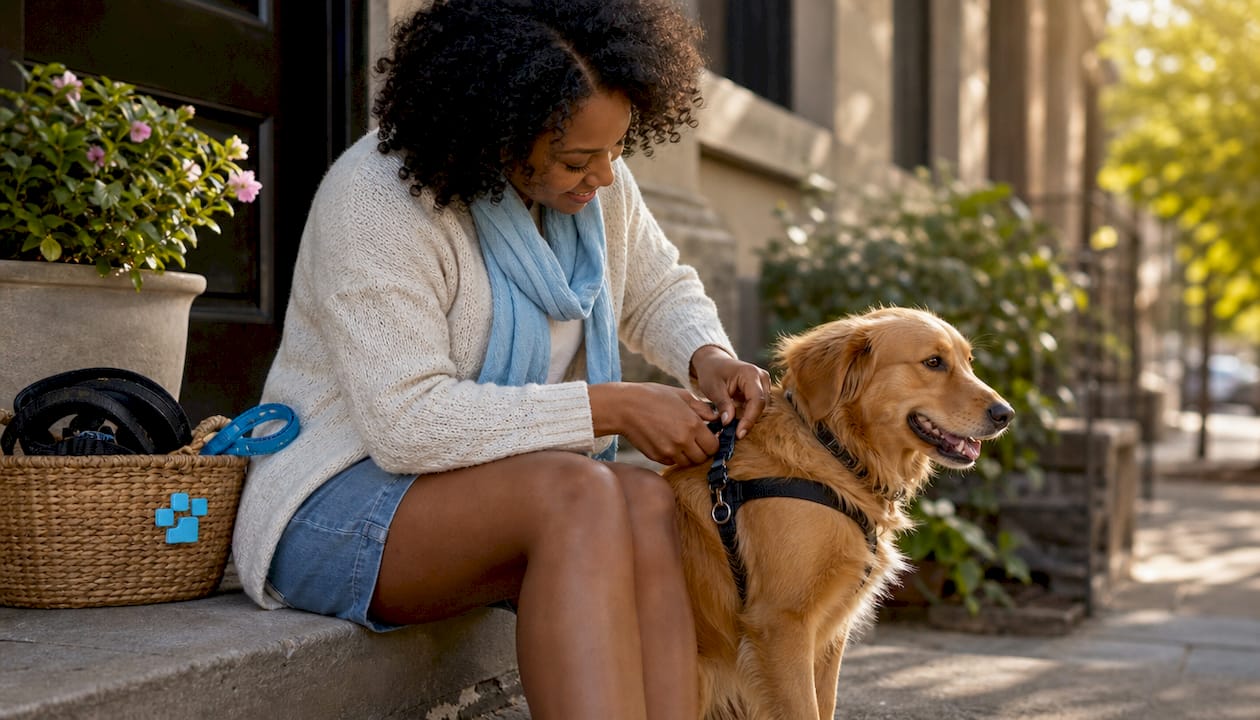
Demonstrate your equipment. Show the walker how to fit the harness, clip the leash, and use any training tools you rely on. Good leash etiquette makes a real difference on city streets, and the walker needs to know your dog's specific setup before stepping outside.
-
Ask your key questions. Cover emergency procedures, insurance status, cancellation policies, and group walk sizes. Solid, specific answers to these questions indicate professionalism and preparedness. Vague or dismissive answers are a red flag.
-
Take a short trial walk. Step outside together for 10 to 15 minutes. Watch how the walker handles the leash, responds to distractions, and communicates with your dog. Trial walks reveal leash control and reinforcement techniques that no amount of conversation can show you.
-
Debrief after the walk. Ask the walker what they noticed about your dog. A good walker will share specific observations, not just "she did great." Specificity signals attention and genuine interest in your dog as an individual.
Pro tip: If your dog has anxiety, schedule two separate meet and greets before making a decision. The second meeting often reveals a very different dog once the novelty wears off.
What to observe and evaluate during the meeting
Watching carefully gives you information that no resume or reference check can provide.
Your dog's body language
Your dog's reaction is the most honest data point in the room. Look for:
- Relaxed posture. Loose body, soft eyes, and a wagging tail at mid-height signal comfort.
- Stress signals. Yawning, lip licking, tail tucked, or moving away from the walker indicate discomfort.
- Guarding behavior. Stiffening, growling, or standing between you and the walker is a clear warning sign.
Professional walkers observe subtle behaviors like guarding or wariness because those signals directly affect safety on walks. If your dog is uneasy and the walker dismisses it, trust your dog.
The walker's handling skills and professionalism
- Calmness under pressure. Does the walker stay steady if your dog jumps, barks, or pulls?
- Communication clarity. Can the walker explain their approach in plain language without jargon?
- Documentation. Are they licensed, bonded, and insured? Do they carry proof?
- Emergency readiness. Can they describe exactly what they would do if your dog got injured or escaped?
For a deeper look at what to ask, Sparky Steps' resource on what to look for in a Chicago dog walker covers the full evaluation checklist.
Common mistakes to avoid
Even well-meaning pet parents make errors that lead to hiring regrets. Rushing the meeting or skipping the trial walk is the most common and most preventable mistake.
- Ignoring your dog's discomfort. If your dog avoids the walker or shows stress signals, do not rationalize it away. Your dog's reaction is real data.
- Skipping the emergency questions. A walker who cannot clearly explain their emergency protocol is not ready to handle a crisis on a busy Chicago street.
- Failing to verify credentials. Ask to see proof of insurance and any certifications. A professional walker will have these ready without hesitation.
- Overlooking communication habits. Ask how the walker reports back after visits. Do they send photos, notes, and GPS updates? Or do you hear nothing until pickup?
- Letting first impressions do all the work. A charming personality is not the same as reliable, skilled care. Dig into specifics.
Pro tip: Prepare a written list of five questions before the meeting. Pet parents who arrive with written questions consistently make better hiring decisions because they do not forget what matters under the pressure of a live conversation.
Sparky Steps' guide on how to hire a dog walker for the first time covers the full list of questions worth asking before you commit.
Key takeaways
| Point | Details |
|---|---|
| Prepare before the meeting | Gather medical records, behavior notes, equipment, and home access details in advance. |
| Let the dog lead the introduction | Allow your dog to approach the walker freely and read its body language for comfort or stress. |
| Ask about emergencies and insurance | Walkers who answer these questions clearly and specifically are the ones worth trusting. |
| Always do a trial walk | A short walk reveals leash control and handling skills that no conversation can show. |
| Trust your observations over charm | Specific, detailed answers from a walker matter far more than a friendly first impression. |
What 10 years of meet and greets actually taught me
By Michael Jaurigue, co-founder of Sparky Steps
"After a decade of running Sparky Steps and facilitating hundreds of introductions between walkers and dogs across Chicago's North Side, I can tell you the thing most guides get wrong: they treat the meet and greet as a formality. It is not. It is the most important 30 minutes in the entire hiring process.
The detail that reveals the most is almost never the big stuff. It is the small moment when the walker notices your dog glance toward the door and says "she's a little worried about exits, isn't she?" That level of observation tells you this person pays attention when no one is watching. That is exactly the quality you need in someone who will be alone with your dog on a city street.
I also think pet parents underestimate how much their own energy shapes the meeting. If you are anxious and hovering, your dog picks that up and mirrors it. The walker then sees a stressed dog, which may not reflect how your dog actually behaves day to day. Take a breath, sit down, and let the meeting unfold at a natural pace. You will get much cleaner information.
One more thing: technology matters. Ask any prospective walker how they communicate after visits. At Sparky Steps, every visit includes real-time updates via DoTimely, with GPS tracking, photos, and written notes sent directly to you. That level of transparency should be the standard you hold every walker to, not a bonus feature. If a walker cannot tell you exactly how they will keep you informed, that is a gap worth taking seriously."
- Michael Jaurigue
Sparky Steps is ready when you are
If you have done your homework and you know what a great meet and greet looks like, the next step is finding walkers who actually clear that bar. Sparky Steps has served 250+ Chicago pet parents since 2016 with the same trusted walkers every time, real-time updates via DoTimely, and a care team that is licensed, bonded, and insured. No strangers, no surprises.
Whether your dog needs a daily walk, a longer run, or full pet sitting coverage, we serve Albany Park, Ravenswood, Andersonville, Uptown, Edgewater, and beyond. Explore Chicago dog running services for high-energy dogs, or browse pet sitting in Chicago for full-day care.
FAQ
What is a dog walker meet and greet?
A dog walker meet and greet is a free, no-obligation, in-person introduction at your home where you observe how a prospective walker interacts with your dog before hiring. The MSPCA-Angell recommends this meeting to assess compatibility, review equipment, and confirm walking routes.
How long should a meet and greet with a dog walker last?
A thorough meet and greet typically runs 20 to 45 minutes, including time for introductions, a detailed conversation about your dog's needs, and a short trial walk. Meetings shorter than 15 minutes rarely cover enough ground to make a confident hiring decision.
What questions should I ask a dog walker during the meet and greet?
Ask about emergency procedures, insurance coverage, cancellation policies, and group walk sizes. Solid, specific answers to these questions are the clearest indicator of a professional, prepared walker.
Should I always do a trial walk during the meet and greet?
Yes. A trial walk is the single best way to evaluate a walker's leash control, handling technique, and response to distractions. Trial walks reveal compatibility that no amount of conversation can replicate.
What if my dog seems uncomfortable during the meet and greet?
Take it seriously. Stress signals like a tucked tail, lip licking, or moving away from the walker are meaningful data. Professional walkers recognize subtle discomfort signals and adjust their approach. A walker who dismisses your dog's unease is not the right fit.


