


There's no single right answer here, but there is a clear one for your dog. Choose a martingale collar for escape-prone dogs and narrow-headed breeds like sighthounds. Choose a harness for chronic pullers, puppies, seniors, or dogs with any neck or breathing concern. Correct fit and supervised use decide whether either option actually works.
TL;DR:
- Martingale collars are ideal for escape-prone, narrow-headed breeds, but should never be worn all day or unsupervised, to prevent injuries.
- Harnesses distribute pressure across the chest and shoulder, making them safer for dogs with neck, airway, or mobility concerns, especially front-clip styles for pulling dogs.
- Proper fit checks are essential for both devices, with two fingers of space fitting well and no skin irritation, to avoid accidents and discomfort.
- Dogs pulling harder on martingales show increased stress signals, meaning harnesses paired with training are more effective for managing pulling behaviors.
- Testing gear at home and on short walks, considering your dog's health history, ensures the safest choice between martingales and harnesses for your pet.
Martingale vs harness: three real walking scenarios
Most pet parents already know their dog's walking personality. The trick is matching that personality to the right gear instead of grabbing whatever's hanging by the door.
- The escape artist or sighthound. If your dog has a head narrower than its neck (greyhounds, whippets, and salukis are the classic examples), a martingale is the safer walking collar because the loop tightens just enough to stop a backward slip, without choking.
- The chronic puller or reactive walker. A front-clip or no-pull harness gives you better leverage. When your dog lunges, the pull redirects sideways instead of straight into the throat, which means less strain on both of you.
- Puppies, seniors, brachycephalic breeds, or dogs with a neck injury history. A harness protects the airway and spine. Growing joints and older joints both do better with pressure spread across the chest instead of concentrated at the neck.
If your dog fits more than one category (a senior sighthound, say), lean toward whichever risk is more urgent. A neck issue usually outranks escape risk, but talk to your vet about your dog's specific situation.
How martingale collars work, and where they stop being safe
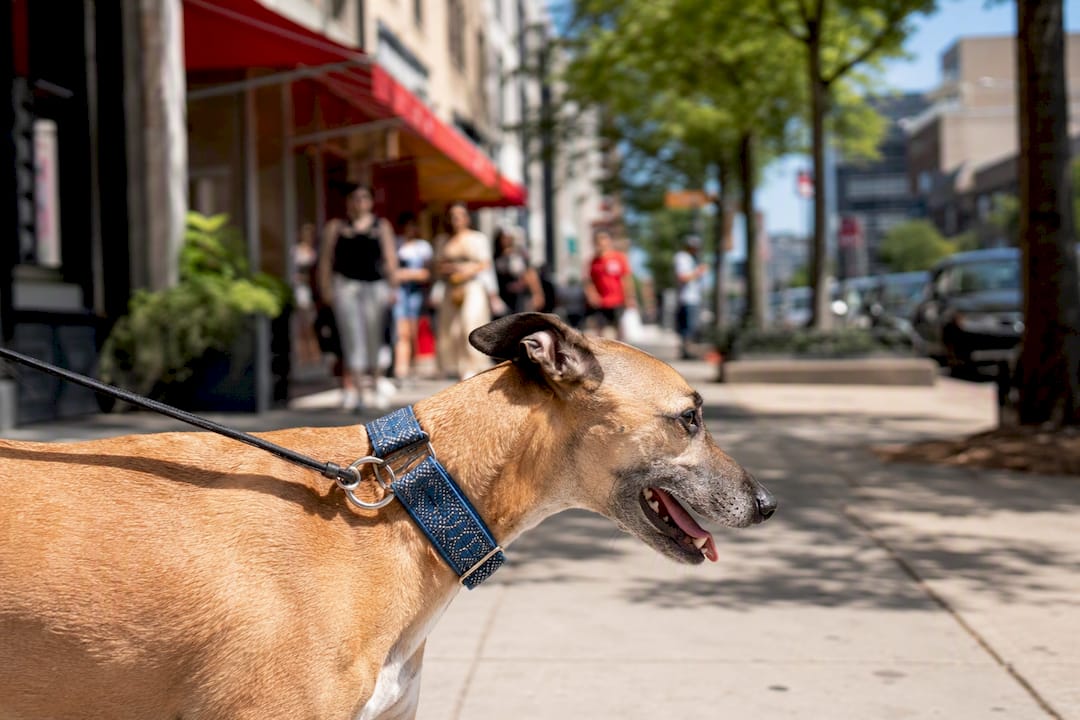
A martingale is a limited-slip collar: two loops, one that sits around the neck and a smaller control loop that tightens when your dog pulls back, then stops tightening once it reaches its designed limit. That's the whole trick. Unlike a choke chain or prong collar, a properly sized martingale cannot keep constricting past that point, which is exactly why sighthound rescue groups commonly recommend it as the go-to walking collar for narrow-headed breeds.
Martingales earn their keep in a narrow set of situations: sighthounds, dogs with a documented history of backing out of flat collars, and short, supervised walks where you are watching your dog the whole time.
Here is the fit check we use on every walk:
- Slide the collar over your dog's head with both loops loose.
- Tighten the control loop until it fits two fingers between the collar and neck.
- Confirm it cannot slip over the ears when your dog backs up.
- Recheck the fit every few months, especially for growing puppies.
One rule worth keeping firm: a martingale should never be a 24/7 collar. Keep a flat collar with ID tags on for lounging around the house, and save the martingale strictly for walks when you are holding the leash.
How harnesses work: front-clip, back-clip, and support styles
A harness distributes pressure across the chest and shoulders instead of the throat, which is why veterinarians consistently point pet parents with respiratory or neck concerns toward harnesses. No single throat point means no single throat point taking the hit when your dog lunges at a squirrel.
Not all harnesses do the same job:
- Front-clip harnesses redirect pulling sideways, which makes them the standout choice for dogs still learning loose-leash walking.
- Back-clip harnesses work well for dogs who already walk politely and do not need extra steering.
- Dual-clip harnesses give you both options depending on the situation.
- Support harnesses with a handle help dogs with mobility limits navigate stairs or hop into the car.
Look for a Y-shaped front instead of a straight chest strap. A strap that crosses directly over the shoulder joint can restrict your dog's natural gait over time, according to AKC's harness fitting guidance, even if it looks snug and secure in the store.
Comparing martingale collars and harnesses side by side
| Martingale collar | Harness | |
|---|---|---|
| Escape prevention | Excellent for narrow-headed breeds | Good, but depends on chest strap tightness |
| Control for pulling | Limited; can increase pulling force | Strong, especially front-clip styles |
| Neck pressure / respiratory risk | Higher; not for dogs with neck issues | Low; pressure spread across chest |
| Best for | Sighthounds, escape-prone dogs | Puppies, seniors, brachycephalic breeds, pullers |
| Fit complexity / daily wear | Simple fit, but not for unsupervised or all-day wear | More adjustment points, safe for extended wear |
A 2024 strain-gauge study measuring pulling force found dogs pulled significantly harder on a martingale-style collar than on a front-connection harness, with lip licking, a common stress signal, also observed. The researchers were careful to note this does not mean martingales are wrong for every dog. It means martingales are not a training shortcut. If pulling is the main problem you are trying to solve, a harness paired with real leash training does more work than a limited-slip collar ever will.
Fit and safety checks you should not skip
Bad fit turns either device into a liability. Here is how to catch problems before they become injuries.
Martingale checklist:
- Two fingers should slide comfortably between the tightened loop and your dog's neck.
- The collar should never be tight enough to leave a mark after removal.
- Never leave a martingale on an unsupervised dog, even in the yard.
Harness checklist:
- Straps sit flat against the body with no twisting.
- The front strap crosses low on the breastbone, not over the shoulder joint.
- You can fit two fingers under every strap.
- Watch your dog's stride on a short test walk. A choppy or shortened gait means the harness is restricting movement.
If you notice coughing, gagging, persistent rubbing, raw skin, or a sudden change in how your dog walks, take the gear off immediately and check in with your vet or a trainer before your next walk. Those are not quirks to work through. They are signals the fit is wrong.
How to choose: your next walk checklist
Before you buy anything, answer these questions honestly:
- Has your dog ever slipped a collar or bolted from a leash before?
- How hard does your dog pull, and how consistently?
- Does your dog have any diagnosed neck, spine, or airway condition?
- Is your regular walking route calm and predictable, or full of triggers like squirrels and other dogs?
Once you know the answers, test gear at home first. Buckle it on, walk around the living room, and watch how your dog moves. Then take a short, supervised walk around the block before committing to daily use. For most pullers still learning leash manners, a front-clip harness is the safer starting point. Reserve the martingale for dogs with a genuine escape risk, and always under direct supervision.
If you notice new coughing, a change in gait, or chafing after a walk, that is your cue to call a trainer or vet rather than pushing through it. A patient, force-free approach to introducing any new equipment, not just collars and harnesses, tends to get better long-term results than pushing through resistance.
What 10 years of Chicago walks taught us about gear
Our walkers check fit before every single walk, not just the first one. Dogs change: they gain weight, lose weight, grow out of puppy harnesses, or develop new sensitivities we need to know about. We lean on fear-free, positive methods, and because you get the same trusted walkers every time, they notice small changes fast, backed up by GPS tracking and photos from every visit so you are never wondering what happened out there. If your pup needs a little extra energy burned off, our dog running service is worth a look too.
"Get the fit right, watch your dog's body language, and the gear practically disappears. That is the goal every time."
- Michael Jaurigue
Sources
- Johnson and Wynne, comparing efficacy in reducing pulling and welfare impacts of four types of leash walking equipment, PeerJ (2024)
- Choosing the right dog harness, AKC
- Collar and harness options for dogs, VCA
FAQ
Why do dog trainers not like harnesses?
Most trainers do like harnesses. The occasional objection is to poorly fitted harnesses that cross the shoulder joint, not the harness concept itself, since proper Y-shaped designs avoid restricting a dog's natural gait.
When should you not use a martingale collar?
Skip the martingale for unsupervised time, for dogs with existing neck or airway problems, and for any dog who will be left alone in it. Veterinary guidance treats martingales strictly as a supervised walking collar.
Do dog trainers recommend harnesses?
Yes, especially front-clip styles for dogs still learning to walk without pulling. Harnesses give trainers better steering and reduce the strain that comes with constant leash corrections at the neck.
Do vets recommend collars or harnesses?
Vets generally recommend harnesses for puppies, seniors, and dogs with neck or respiratory conditions, and consider martingales the appropriate supervised walking collar for narrow-headed breeds like sighthounds.


