


Your older dog still needs to get outside. That is not a question. What senior dog walking involves, though, is very different from the brisk 45-minute loop you used to do together. Senior dogs face real physical changes, joint stiffness, reduced stamina, and sensitivity to heat and cold, that make thoughtful, tailored walks far more effective and far safer than simply following old routines. This guide covers everything you need to know about walking elderly dogs with compassion and confidence, from adjusting duration and terrain to spotting health warning signs before they become problems.
Table of contents
- Key takeaways
- What senior dog walking involves and why it changes
- Adjusting walk length and frequency
- Choosing the right surfaces and environment
- Recognizing health and mobility issues on walks
- The role of mental stimulation and routine
- My take on walking a senior dog
- Walk with confidence, with Sparky Steps beside you
- FAQ
Key takeaways
| Point | Details |
|---|---|
| Shorter walks, same frequency | Splitting daily exercise into multiple brief outings protects energy and joints without skipping movement. |
| Surfaces matter more than distance | Soft terrain like grass or dirt reduces joint impact and makes walks more comfortable for older dogs. |
| Watch for warning signs | Limping, stiffness, or reluctance to continue are signals to stop and reassess, not push through. |
| Routine builds confidence | Consistent timing and familiar routes help senior dogs feel secure and more willing to participate. |
| Sniffing counts as exercise | Mental stimulation through scent exploration supports cognitive health alongside physical activity. |
What senior dog walking involves and why it changes
A lot of people assume that because their dog is older, fewer walks are fine. The reality is the opposite. What changes is not the need for movement. What changes is the shape of that movement.
Walk plans must adapt to comfort cues like pace, physical response, and weather rather than the dog's age alone. A seven-year-old Lab recovering well from a healthy lifestyle may still enjoy longer outings. A ten-year-old Chihuahua with arthritis may need five short walks instead of two medium ones. Your dog's behavior on the walk is the real guide.
Senior dogs benefit enormously from continued daily movement. Walks keep muscles engaged, support healthy digestion, and give your dog the mental stimulation they need to stay sharp. The goal is not to stop walking. The goal is to walk smarter.
Adjusting walk length and frequency
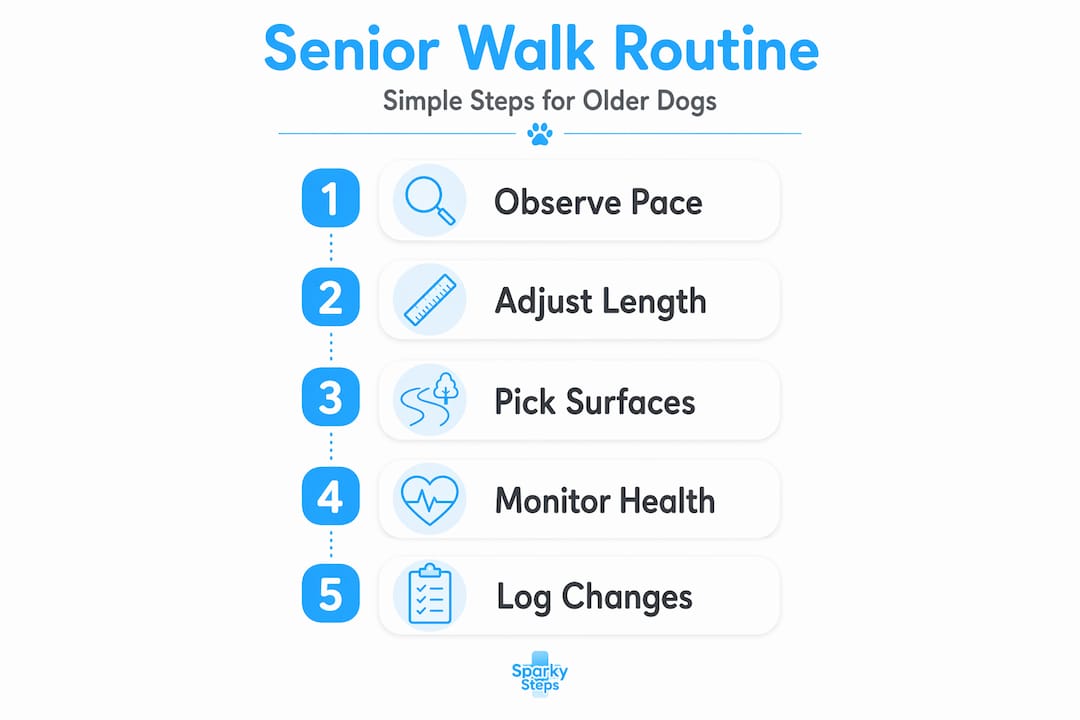
The practical starting point for daily exercise needs is 30 to 60 minutes total, though even 20 minutes can be enough for dogs with limited mobility. The key is spreading that time across multiple shorter walks rather than one long outing.
Here is what to watch for that tells you a walk is going too long or too hard:
- Excessive panting that does not slow down after a short rest
- Lagging behind or stopping and refusing to continue
- Limping or favoring one leg during or after the walk
- Trembling, glazed eyes, or unusual disorientation
- Slowing to a near stop when they normally walk steadily
A common starting routine is two 30-minute walks per day, reduced in duration or frequency if your dog shows fatigue signs. If your dog sits down mid-walk and looks up at you, that is not stubbornness. That is communication. Honor it.
Before you establish or change your senior dog's walking routine, talk to your veterinarian. This is especially true if your dog has a diagnosed condition like heart disease, arthritis, or diabetes. Your vet can help you set realistic targets and flag any activities to avoid.
It helps to keep a simple log for one week: note walk length, pace, and any signs of fatigue after each outing. You will spot patterns fast and have useful information ready for your next vet visit.
Choosing the right surfaces and environment
Terrain is one of the most underappreciated parts of dog walking for older pets. Unstable or hard surfaces can exacerbate joint pain and even create fear responses in dogs who have had a bad stumble. That fear can make them increasingly reluctant to walk at all.
Here is a quick comparison of common walking surfaces and how they affect senior dogs:
| Surface | Impact on senior dogs | Recommendation |
|---|---|---|
| Grass or dirt trails | Soft, low impact, easy on joints | Best choice for most seniors |
| Sand | Cushioned but slightly more effort | Good option, watch for heat |
| Asphalt or concrete | Hard, high impact on joints and paw pads | Limit, especially in extreme temps |
| Gravel or uneven paths | Unstable footing, risk of slips and cuts | Avoid when possible |
| Wet leaves or slick tiles | High fall risk, especially for arthritic dogs | Avoid entirely |
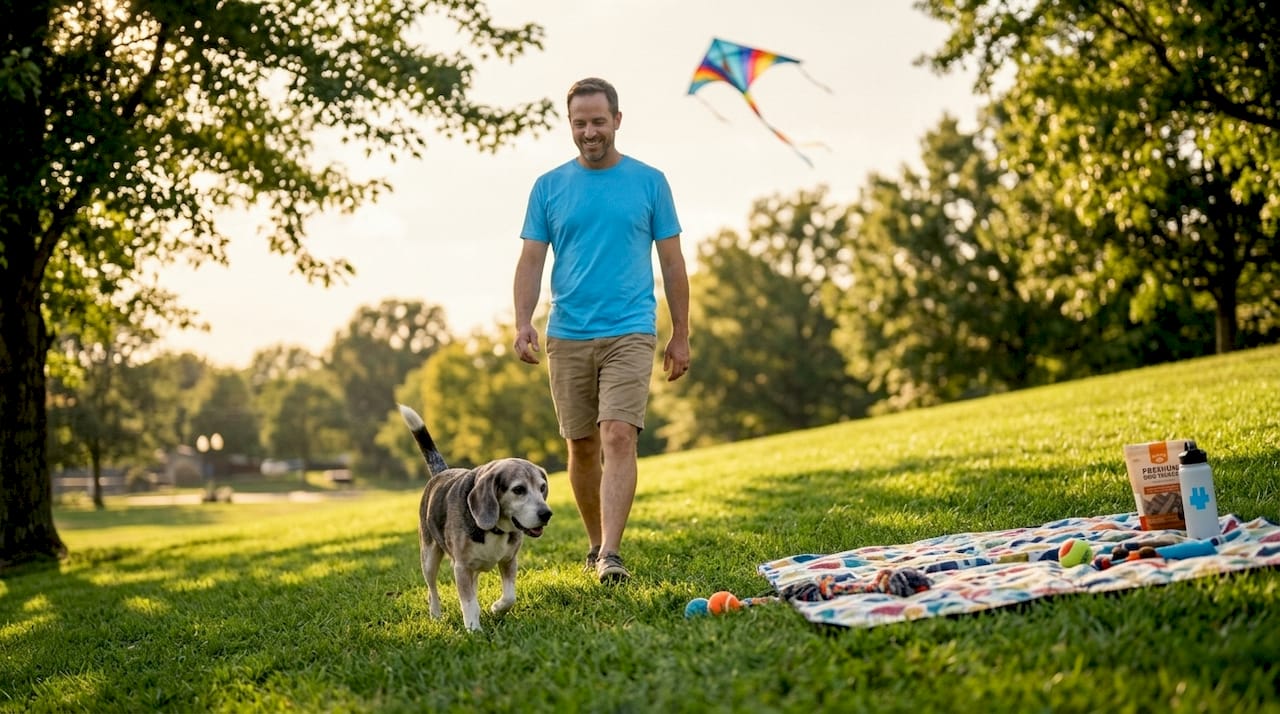
Low-impact surfaces like grass, dirt, or sand are the gold standard for protecting joints and paw pads. When your route only offers pavement, keep walks shorter and consider protective gear.
Weather deserves serious attention too. Senior dogs are far more sensitive to temperature extremes than younger dogs. On hot days, asphalt can burn paw pads within minutes. On cold days, a dog with low body fat or thin fur can lose heat fast. Protective clothing like raincoats or sweaters and maintaining a consistent routine even in mild weather are both smart moves.
If you are unsure whether pavement is too hot, press the back of your hand against it for seven seconds. If it is uncomfortable for you, it is too hot for your dog's paws.
Boots can protect paws from both heat and cold, though some dogs need time to get used to wearing them. Start with short indoor sessions to build comfort before heading outside.
Recognizing health and mobility issues on walks
Osteoarthritis affects around 80% of dogs over the age of eight. That statistic alone should reframe how you think about adjusting walks for senior dogs. Stiffness and reluctance are not just "getting old." They are often signs of a treatable condition.
Watch for these specific signals during walks:
- Difficulty getting up from a lying position before the walk starts
- Stiff or stilted gait, especially in the first few minutes
- Limping that worsens as the walk continues
- Reluctance to go up curbs or small inclines
- Yelping or flinching when you attach the leash or harness
- Shorter stride than usual, or steps that look choppy
When you notice any of these consistently, consult a veterinarian before continuing the same walk routine. Do not push through because your dog used to handle it fine. Physical conditions change, sometimes quickly.
For dogs who struggle with traditional walks, mobility aids can keep them connected to the world outside. Supportive harnesses with handles help you provide gentle lift on stairs or inclines without straining either of you. Pet strollers are an excellent option for dogs who can no longer bear full weight but still benefit from fresh air and sensory experience. Getting outside still matters, even if the format changes.
Veterinary experts are clear that senior dog walking should not be pushed through. Low-impact activity in short bursts, based on the dog's comfort in the moment, is the right approach.
The role of mental stimulation and routine
Physical movement is only part of what makes a walk valuable for a senior dog. Sniffing and exploring new scents are forms of cognitive exercise that support mental sharpness. A dog who spends five minutes thoroughly sniffing a patch of grass has done real mental work. Do not rush them past it.
Here is how to build mental engagement into your senior dog's walking practice:
- Let them lead the sniff. Give your dog time to investigate smells without rushing. This is not wasted time. It is enrichment.
- Vary the route occasionally. New smells from a different block or park give their brain new input. Keep it gentle and familiar enough not to cause anxiety.
- Bring a puzzle toy for after. A short, calm puzzle toy session after a walk extends the mental engagement without extra physical strain.
- Try scent games at rest stops. Hide a small treat in your hand during a rest break and let your dog sniff it out. It takes two minutes and activates their nose and brain together.
- Keep walk timing consistent. Senior dogs thrive on routine. Walking at roughly the same time each day reduces anxiety and makes them more willing and eager to participate.
Physical activity combined with cognitive engagement through scent and exploration genuinely contributes to seniors' mental sharpness and overall wellbeing. Think of the walk as a whole-body experience, not just a bathroom break.
My take on walking a senior dog
By Michael Jaurigue, co-founder of Sparky Steps
I used to try to replicate what our walks looked like when a dog was younger, same distance, same energy, and what I was actually doing was measuring the dog against a version of themselves that no longer existed. That took me longer to unlearn than it should have. A slower walk is not a lesser walk: watching an older dog take their time over a patch of clover, tail still wagging, is a different kind of joyful, not a sad one. If you are struggling with the shift, that is normal, your dog is not diminished, they are just asking you to walk differently with them.
Michael Jaurigue
Walk with confidence, with Sparky Steps beside you
Senior dog care tips and walking guides are a good start, but sometimes the most loving thing you can do is bring in a trusted professional. At Sparky Steps, we have been caring for Chicago's dogs since 2016, and we know that older dogs need walkers who pay attention, adapt in the moment, and genuinely care.
Our insured, background-checked caregivers provide real-time updates through our app, complete with GPS tracking and photos. You will always know how your dog is doing, even when you cannot be there.
Browse our dog care blog for more walking guides. Supporting older dogs is a lifestyle, and we are here for every step of it.
FAQ
How long should walks be for a senior dog?
Most senior dogs do well with 30 to 60 minutes of exercise daily, split into two or more shorter walks. Dogs with limited mobility may benefit from even shorter, more frequent outings.
What surfaces are best for walking elderly dogs?
Soft surfaces like grass, dirt, or sand are the best choices because they cushion joints and reduce impact on paw pads. Avoid hot pavement, gravel, and slippery terrain whenever possible.
When should I stop a walk for my senior dog?
Stop or cut a walk short if your dog pants heavily, limps, slows significantly, or refuses to continue. These are clear signs of fatigue or discomfort that should not be ignored.
Do senior dogs still need mental stimulation on walks?
Yes. Sniffing and sensory exploration during walks provide important cognitive engagement for older dogs. Letting them follow their nose is just as valuable as the physical movement itself.
What gear helps senior dogs on walks?
Supportive harnesses with handles help with lift on inclines, and pet strollers provide outdoor exposure for dogs who can no longer walk long distances comfortably. Boots and a warm sweater are worth considering for cold or hot weather conditions.


