

For most Chicago dogs walking treated sidewalks all winter, paw balm is the practical default because it needs no sizing and handles salt and cracked pads directly. Boots become necessary on sharp terrain, construction sites, long hikes, or when a wound needs mechanical coverage. If your route mixes salted sidewalks with rough, icy patches, using both together covers the most ground, literally.
TL;DR:
- Using paw balm alone is effective for salted sidewalks and dry, cracked pads, but it does not provide mechanical protection against sharp debris or hot surfaces.
- Boots require proper sizing, acclimation, and can slip off if not securely fitted, making maintenance and training essential for effective use.
- Combining boots and balm on routes that include both icy or rough terrain and salt-covered sidewalks offers the best comprehensive paw protection.
- The quality of boots depends on outsole material and closure type, with durable rubber soles and secure straps providing the most reliable protection.
- Regular paw rinse and fur trimming help reduce salt buildup and ice ball formation, improving the effectiveness of both boots and balm during winter walks.
Boots Vs Paw Balm: What Each One Actually Protects Against
Boots and balm solve two completely different problems, and confusing them is where most pet parents go wrong.
A boot is mechanical protection. It’s a physical barrier between your dog’s pad and whatever the ground is throwing at it: broken glass near the L tracks, jagged ice chunks, a hot manhole cover in July, or the gravel scattered across a half-finished alley repair. A well-fitted boot with a real rubber outsole can shield paws from hot surfaces and sharp debris, though it needs proper sizing and a break-in period to avoid chafing or falling off mid-walk, according to vet-approved paw safety guidance.
Balm is chemical and conditioning protection. It doesn’t block a shard of glass, but it does reduce salt irritation, slows ice-ball formation between the toes, and conditions pads that are already dry or cracked. Veterinary guidance is clear that balm has real limits here too: it does not insulate against hot pavement, so a paw wax alone won’t save a dog’s feet from a scorching sidewalk in summer heat.
Here’s a simple way to map hazard to solution:
- Sharp objects (glass, gravel, construction debris): boots
- Rock salt and sidewalk deicer: balm
- Ice-ball buildup between toes: balm, plus trimming the fur between pads
- Hot pavement in summer: boots, since balm provides no thermal barrier
- Dry, cracked, or peeling pads: balm, for conditioning and healing
Before you decide anything, run the five-second test recommended by the Kennel Club: press the back of your hand to the pavement for five seconds. If it’s too hot for your hand, it’s too hot for paws, no debate needed.
| Factor | Boots | Paw balm |
|---|---|---|
| Primary protection type | Mechanical barrier | Chemical/conditioning |
| Best for | Sharp terrain, construction zones, extreme cold or heat contact | Daily salted sidewalks, dry or cracked pads |
| Ease of use / dog acceptance | Requires fitting and acclimation; some dogs resist | Quick to apply; most dogs tolerate it easily |
| Risk of loss or failure | Can slip off, especially in deep snow or mud | No loss risk, but wears off during long walks |
| Reapplication / maintenance | Occasional replacement of worn outsoles | Reapply every walk or every few hours outdoors |
| Typical cost range | Higher upfront cost per set | Lower cost per application over time |
The trade-off is convenience versus coverage. Boots protect against more, but they demand more from you and your dog. Balm asks almost nothing of either of you, but it can’t do everything.
Real Products That Show the Trade-Offs
Nothing clarifies a comparison like looking at what’s actually on shelves.
The Ruffwear Grip Trex is a solid example of what a real boot should offer: a durable rubber outsole with genuine traction (the kind of construction with a grippy, Vibram-style sole and a breathable mesh upper that Hound & Field highlights as the gold standard for boot design), plus an adjustable closure to keep it from sliding off in slush. Expect a conditioning period. Most dogs need several short indoor sessions before they’ll walk normally in boots outdoors.
Musher’s Secret is the balm most Chicago pet parents have heard of, and for good reason. It’s a wax-based formula that creates an occlusive layer over the pad, blocking salt contact and reducing the chance of ice balling up between the toes. Editorial vet coverage consistently names it as a go-to for daily city walking conditions, though it offers no meaningful insulation against a July sidewalk.
When comparing products on a shelf or a product page, check for:
- Outsole material (real rubber grips better than thin synthetic soles)
- Closure type (Velcro straps that wrap fully around hold better than slip-on cuffs)
- Balm melting point and seasonal labeling (high-melt formulas for winter, low-melt for summer)
- Added healing ingredients like beeswax or shea for pads that are already cracked
How to Choose: Boots, Balm, or Both
Run through this short checklist before your next walk, especially if Chicago’s weather is doing something dramatic, which, let’s be honest, it usually is.
- Identify the hazard first. Sharp debris or extreme surface temperature points you to boots. Salt, ice balling, or dry cracked pads point you to balm.
- If boots are the call, measure your dog’s paw width, not just length, and choose a rubber outsole built for traction rather than a fabric slip-on made for looks.
- Plan for acclimation. Budget at least a week of short, low-stakes sessions before relying on boots for a real walk.
- If balm is the call, match the formula to the season. High-melt wax formulas hold up better in cold weather, while low-melt oils absorb better without trapping heat in summer, a distinction some balm guides explain well.
- Pack a small balm tin for long outings, even if your dog wears boots, in case a boot slips off two miles from home.
- Weigh the cost over a season, not a single purchase. Balm costs less per application but needs frequent reapplication. Boots cost more upfront but can last multiple seasons with proper care.
- Consider both together on mixed-hazard routes, like a lakefront path that’s salted near the sidewalk but icy and rough closer to the water.
Getting Your Dog Used to Wearing Boots
Most boot failures aren’t a product problem. They’re a training problem.
Start indoors, on carpet, for two or three minutes at a time. Let your dog sniff the boots first; some dogs need a full day of just seeing the boots sitting around before they’ll accept them on their feet. Put boots on one paw at a time rather than all four at once, and reward calm behavior immediately with a treat, not after the fussing starts.
The high-stepping, stiff-legged walk you’ll probably see at first is completely normal and usually fades within a few sessions. Short, frequent practice beats one long, frustrating attempt. Try five minutes indoors, then five minutes in the backyard or hallway, before ever testing boots on an actual walk.
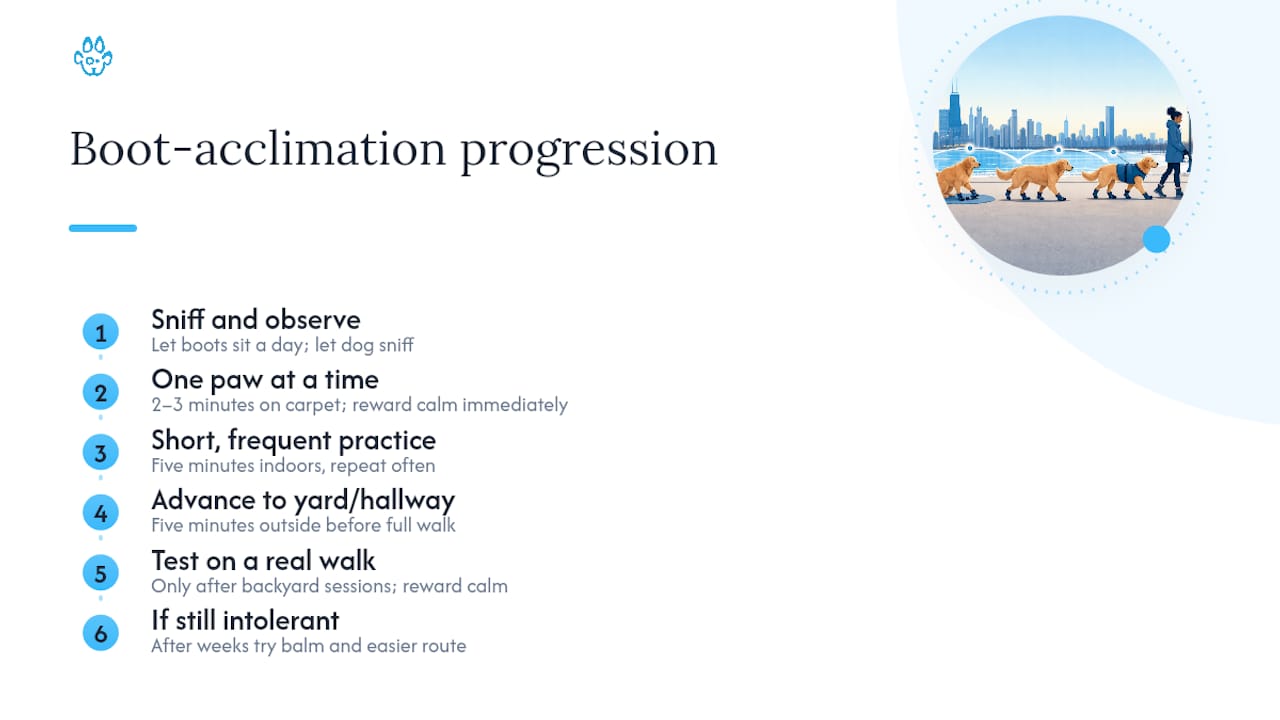
If your dog absolutely will not tolerate boots after a couple of weeks of gentle practice, that’s useful information, not a failure. Some dogs do better with balm and a well-timed route than they ever will in gear. Watch for excessive pawing, refusal to walk, or a boot that keeps twisting sideways. That last one is usually a sizing issue, not a temperament issue.
Common Mistakes With Boots and Balm
The most common boot mistake is buying by length alone and ignoring width, which leaves the boot loose enough to spin or slip off in slush. The second most common mistake is skipping acclimation entirely and expecting a dog to just accept four new objects strapped to its feet on day one. That rarely goes well.
With balm, the biggest mistake is applying it once in November and assuming it lasts all season. Wax wears off with friction and moisture, so daily city walkers need to reapply far more often than the label photo suggests, especially in slush. A second mistake is using a summer, low-melt formula through a Chicago winter. It simply won’t hold up against rock salt the way a high-melt wax will.
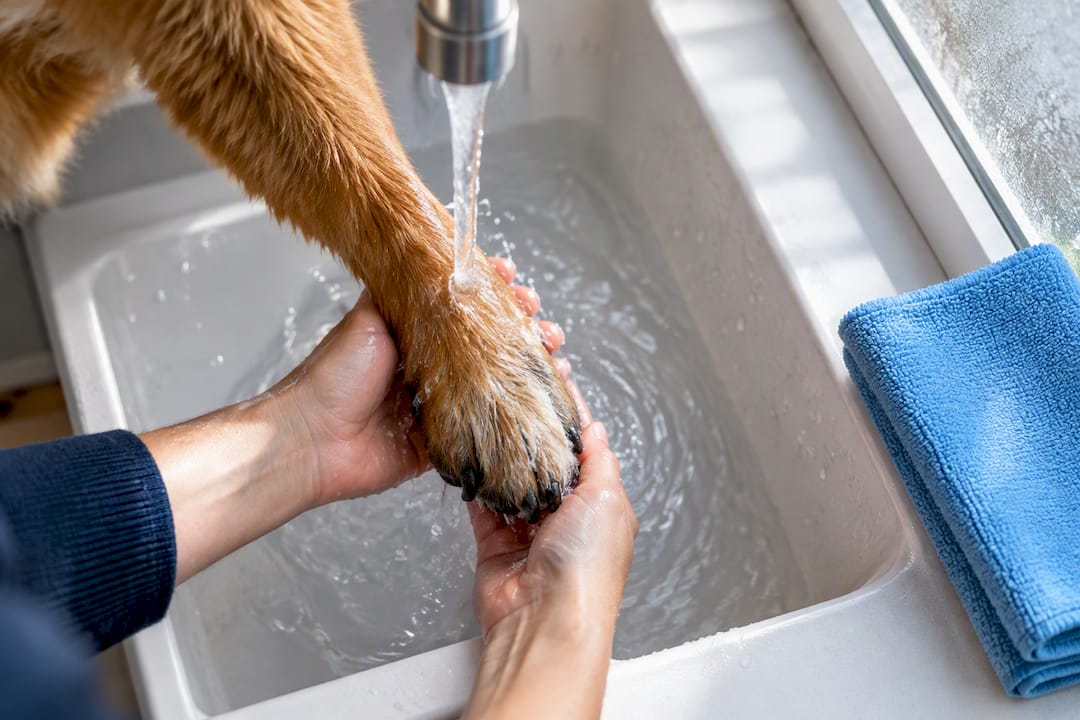
Rinsing paws after a salted walk helps both methods work better. Salt residue left on the skin keeps irritating even under a boot, and it undermines balm faster than a fresh application can keep up with. A quick paw check and rinse after every winter walk, along with trimming the fur between the pads, cuts down on both salt irritation and ice-ball buildup, according to paw pad care guidance from Zoetis. Skipping that step is probably the single most avoidable mistake on this whole list.
A Simpler Way to Handle Chicago’s Sidewalks
Boots and balm both take work: fitting, conditioning, reapplying, checking labels for melting points. If you’d rather skip some of that homework, timing and routes matter just as much as gear. A walker who knows which stretches of Lakeview or Ravenswood get salted heaviest, and which side streets stay shadier in July, can steer your dog away from the worst of it before balm or boots even become necessary.
That’s where Sparky Steps comes in, not as another paw product to compare, but as the team walking your dog through these exact conditions every day. A trustworthy dog walking service that knows North Side Chicago sidewalks and routes can help avoid areas heavily salted or exposed to hot pavement. Some dog walking services offer real-time updates with photos and notes so you can see how the walk went. Dog walking visits can be available in different durations and at varying rates. If you want a second set of eyes on your dog’s paw routine during the week, book a dog walking visit in Chicago and let a familiar face help you keep those paws in good shape all season.
Sources
- How to Protect Your Dog’s Paws in the Summer, According to Vets
- Vet-approved ways to keep dog paws safe
- Dog Boots vs Paw Wax: Which Protects Against What | Hound & Field
- How to Protect Your Dog’s Paws in the Summer, According to Vets (NBC Select)
FAQ
Is Paw Balm or Boots Better for Chicago Winters?
Paw balm is usually the better default for daily sidewalk walks because it blocks salt contact and needs no sizing or acclimation. Boots become the better choice on icy, uneven terrain or when a dog needs mechanical protection beyond what balm can provide.
Does Musher’s Secret Actually Work?
Musher’s Secret is a wax-based balm widely recommended for reducing salt irritation and ice-ball formation on winter walks. It conditions dry, cracked pads well but provides no insulation against hot summer pavement, so it isn’t a year-round, one-formula solution.
Do Dog Boots Fall Off Easily?
Boots can slip off in deep snow, slush, or mud if they’re sized wrong or lack a secure closure system. A properly fitted boot with a wraparound strap, like the design used on the Ruffwear Grip Trex, holds up far better than a slip-on cuff.
Can I Use Both Boots and Balm Together?
Yes, using both makes sense on routes that mix salted sidewalks with rough or icy patches. Balm handles the salt exposure while boots handle sharp or extreme surfaces, giving your dog chemical and mechanical protection at the same time.
How Much Does Dog Walking Cost in Chicago With Sparky Steps?
Sparky Steps dog walking visits start at $17 per visit, with prices varying depending on the visit length. Full pricing details, including add-on fees, are listed on the Sparky Steps dog walking page.
Recommended
- The Art of the Four-Season Walk: 10 Years of Dog Walking Lessons in Chicago
- Navigating the Chicago Chill: A Guide to Protecting Your Pup’s Paws in
- How to Keep Your Dog Comfortable All Winter
The Sparky Steps Team used AI to research and outline this article. A human on the team edited and fact-checked the final text.


