


TL;DR:
- Hiring a dog walker requires verifying credentials, conducting interviews, and doing a meet-and-greet to ensure safety and compatibility.
- Building a formal agreement and providing detailed information help establish a professional and trustworthy ongoing service.
Hiring a dog walker for the first time means selecting someone reliable, experienced, and genuinely compatible with your dog’s unique personality and needs. This is not a casual errand. You are trusting another person with a family member who cannot speak up for themselves. Trainer Russell Hartstein, cited by the American Kennel Club, puts it plainly: trust and safety come before convenience every single time. Whether you are a new dog owner in Chicago or any other urban environment, this guide walks you through every step, from knowing what to look for to signing a service agreement with confidence.
What to look for when you hire a dog walker first time
Before you search a single platform or ask a single neighbor, you need a clear picture of what your dog actually needs. A high-energy two-year-old Labrador Retriever has very different requirements than a senior Shih Tzu who prefers a slow, sniff-heavy stroll. Understanding your dog’s behavior signals is critical to choosing a walker who can handle those unique needs safely. Start there.
Once you know your dog’s temperament, exercise needs, and any behavioral quirks, you can build a profile of the ideal walker. Here is what that profile should include:
- Experience with your dog’s breed or size. A walker who has handled reactive dogs or large breeds brings a different skill set than one who primarily walks small, calm dogs.
- Proof of insurance and bonding. Experienced walkers carry insurance and bonding to protect against theft or injury. This is a professional standard, not a bonus feature.
- Licensing and client references. The American Kennel Club recommends verifying licensing, bonding, insurance, client references, and cancellation policies before hiring anyone.
- A clear cancellation and emergency policy. Life happens. You need to know what happens to your dog’s walk if the walker calls in sick.
- Comfort with your dog’s specific needs. Medication administration, harness preferences, reactive dog protocols — these details matter enormously in an urban setting.
You also need to decide on frequency and duration before you start interviewing. Do you need one 30-minute walk per day on weekdays? Two walks on days you work late? Knowing this upfront helps you filter candidates quickly and sets clear expectations from day one.
Pro Tip: Ask your veterinarian or dog trainer for a referral before turning to apps. Personal referrals from neighbors, vets, or trainers consistently produce the most trustworthy leads because these professionals have seen the walker in action.
How do you find and vet a dog walker?
Sourcing candidates is easier than most first-time owners expect. The challenge is not finding names. It is knowing which names are worth your time.
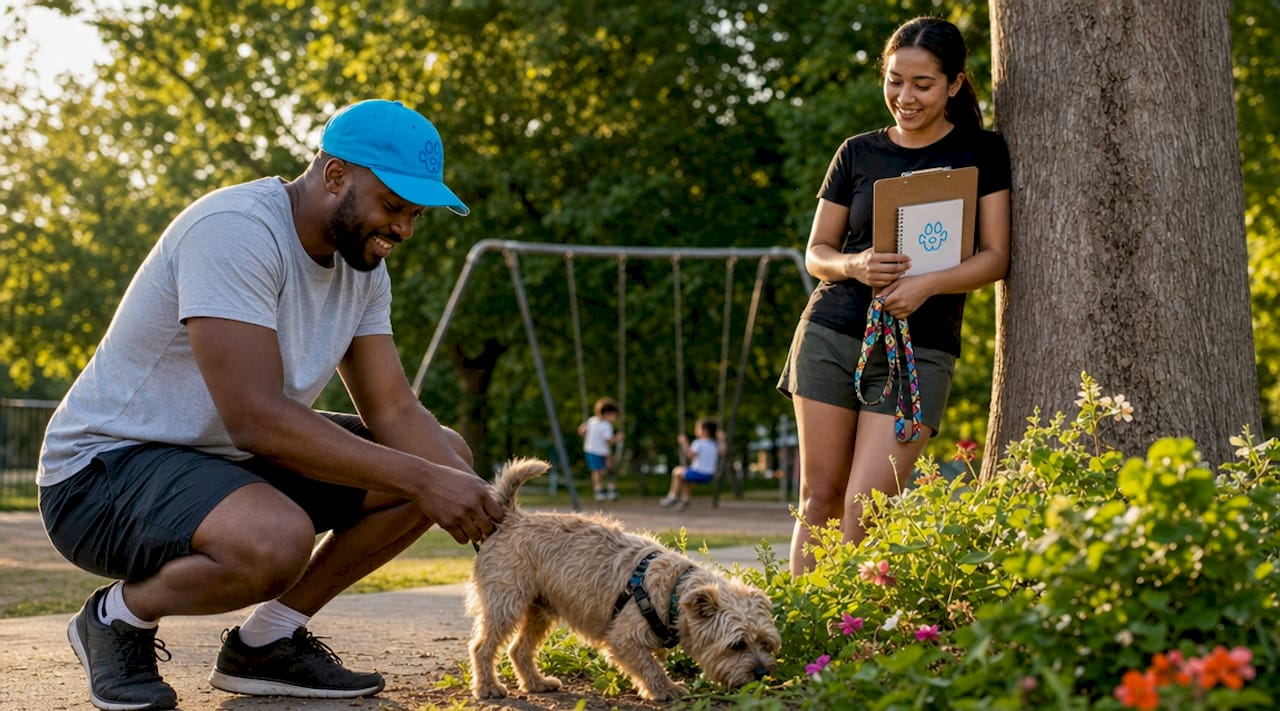
Start with your inner circle. Your vet, dog trainer, and neighbors who own dogs are your best first resource. Local Facebook groups and neighborhood apps like Nextdoor surface real, community-vetted recommendations fast. Dog walking platforms like Rover, Wag, and Care.com are convenient starting points, but platforms vary in background check thoroughness and do not require ongoing checks after initial approval. That means the vetting responsibility falls on you, not the app. Treat platform profiles as a starting point, not a seal of approval.
Once you have a shortlist of three to five candidates, conduct a phone or video interview before any in-person meeting. Here are the questions that reveal the most about a walker’s professionalism and fit:
- Are you insured and bonded? If the answer is vague or uncertain, move on.
- How many dogs do you walk at one time? More than four dogs in a group walk raises safety concerns, especially in busy urban areas.
- What is your experience with [your dog’s breed or behavior]? Listen for specific examples, not generic reassurances.
- What do you do in an emergency? A confident, detailed answer signals real experience.
- What is your cancellation policy? Both ways. What happens if they cancel? What happens if you cancel?
- How do you communicate with owners during and after walks? Daily updates, photos, and GPS reports are now standard in professional first time dog walking services.
- Can you provide two or three client references? Always follow up and actually call them.
Pay close attention to how a candidate responds to behavioral questions. A walker who says “I’ve never had a problem” has either been very lucky or is not being fully honest. A walker who says “Here’s how I handled a dog that lunged at cyclists” is someone worth meeting in person.
Why the meet-and-greet is non-negotiable
The meet-and-greet is the single most important step in the entire hiring process. It is a no-obligation session where you observe how the walker and your dog interact in real time. No resume, reference, or phone call tells you as much as watching your dog’s body language in those first five minutes.
During the meet-and-greet, cover these practical details:
- Walk routes and neighborhood hazards specific to your area
- Your dog’s harness, leash, and any gear preferences
- Emergency contact information and your vet’s details
- Any behavioral cues your dog uses to signal stress or excitement
- What to do if your dog refuses to walk or has an accident
After the meet-and-greet, schedule a paid trial walk. Trial walks allow assessment of punctuality, communication quality, and your dog’s post-walk behavior. When your dog comes home calm, well-exercised, and happy, that is a very good sign. When your dog comes home anxious or the walker is 20 minutes late with no message, that tells you something too.
MSPCA-Angell advises that shy or reactive dogs may need a second meet-and-greet before a paid trial walk begins. Rushing compatibility for a nervous dog almost always backfires.
Pro Tip: Bring your dog’s favorite treat and hand it to the walker to offer during the introduction. It is a small gesture that builds positive association fast and tells you a lot about how the walker handles the moment.
Why did the dog walker bring a ladder to work? Because the pay was a little ruff, but the tips were sky-high.
How to set up ongoing dog walking services the right way
Once you have found a walker you trust, the work is not over. Formalizing the arrangement protects both of you and sets the tone for a professional, respectful relationship.
Follow these steps to set up your ongoing service correctly:
- Get a written service agreement. A written agreement should cover rates, payment schedule, cancellation policy, emergency procedures, and what happens if your dog is injured during a walk. This document protects you and the walker equally.
- Provide a complete information packet. Give your walker your vet’s name and number, an emergency contact beyond yourself, any medication instructions, your home security details, and your dog’s feeding schedule if walks overlap with meal times.
- Establish your communication method. Decide upfront whether you want daily photo updates, end-of-walk reports, or GPS tracking. Regular communication like daily updates builds trust and catches problems early. Apps like PetCheck are commonly used for walk reports in professional services.
- Set a check-in schedule. Plan a brief monthly check-in, by text or a quick call, to discuss any changes in your dog’s behavior, health, or schedule needs.
Here is a quick reference for what your information packet should include:
| Item | Why it matters |
|---|---|
| Veterinarian name and phone number | Enables fast action in a medical emergency |
| Emergency contact (not you) | Covers situations when you are unreachable |
| Medication instructions | Prevents dosing errors on walk days |
| Home entry and security details | Allows smooth, safe access to your home |
| Behavioral notes and triggers | Helps walker avoid and manage stress situations |
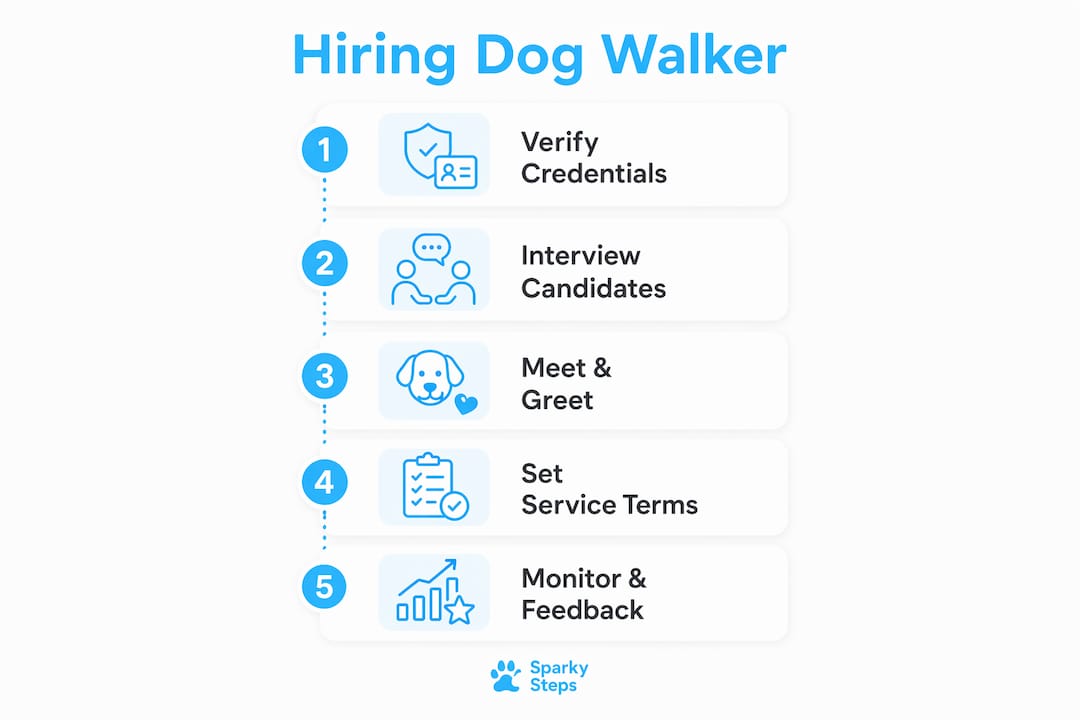
Monitoring walk reports and your dog’s behavior after walks is an ongoing best practice, not a one-time check. Changes in energy level, appetite, or mood after walks can signal that something on the route or in the dynamic needs attention.
Key takeaways
Hiring a trustworthy dog walker requires verifying insurance and bonding, conducting a structured interview, completing a meet-and-greet, and formalizing the arrangement with a written service agreement.
| Point | Details |
|---|---|
| Verify credentials first | Confirm insurance, bonding, licensing, and references before any in-person meeting. |
| Use referrals over apps alone | Vet, trainer, and neighbor referrals produce more reliable leads than platform profiles alone. |
| Meet-and-greet is mandatory | Observe your dog’s real reaction to the walker before committing to regular walks. |
| Trial walk before committing | A paid trial walk reveals punctuality, communication quality, and your dog’s comfort level. |
| Written agreements protect everyone | A service contract covering rates, cancellations, and emergencies is non-negotiable for ongoing care. |
What I have learned from watching this process up close
I have seen a lot of first-time dog owners in Chicago make the same mistake: they rush the process because they feel guilty about their dog being home alone. That guilt is real and completely understandable. But rushing past the vetting steps almost always leads to a second search within two months, and that second search is harder because the dog has already had a confusing experience with someone who was not the right fit.
The owners who get it right the first time share one habit. They treat the hiring process like hiring a part-time caregiver for a child, because that is essentially what it is. They ask hard questions, they check references, and they do not apologize for being thorough. A great walker will respect that thoroughness. A mediocre one will be put off by it. That reaction alone is useful information.
One thing that surprises people: consistent care routines matter more to dogs than most owners realize. A dog who sees the same trusted face at the same time each day is a calmer, more confident dog. That consistency is worth prioritizing even if it means paying a little more or waiting a little longer to find the right person.
Never settle because it is convenient. Your fur baby deserves someone who genuinely loves what they do.
— Michael
Ready to find a trusted walker in Chicago?
Sparky Steps has been serving Chicago dog owners since 2016 with insured, bonded, and background-checked walkers who genuinely care about your dog’s well-being. Every walker provides real-time updates through an app with photos, notes, and GPS tracking so you always know your pup is safe and happy. Scheduling is straightforward, communication is built into the platform, and every new client starts with a meet-and-greet to confirm the right fit. If you are ready to take the next step, visit Sparky Steps to explore personalized walking packages and connect with a caregiver your dog will love. Because every dog deserves a walk that feels like the best part of their day.
FAQ
What credentials should a dog walker have?
A professional dog walker should carry liability insurance and bonding, provide client references, and have a clear emergency protocol. The American Kennel Club also recommends confirming licensing and a written cancellation policy before hiring.
How many dogs should a walker handle at once?
Most professional walkers handle no more than four dogs per group walk to maintain safety and control. In dense urban environments, smaller groups are preferable, especially for reactive or large-breed dogs.
Are dog walking apps like Rover and Wag safe to use?
Rover, Wag, and Care.com are useful starting points, but background checks vary by platform and are not always repeated after initial approval. Always conduct your own interview, request references, and complete a meet-and-greet regardless of platform rating.
How long should a dog walk be?
Most adult dogs benefit from at least one 30-minute walk per day, though high-energy breeds often need 45 to 60 minutes. Your vet is the best source for a recommendation tailored to your dog’s age, breed, and health.
What should I do if my dog does not like the walker?
Schedule a second meet-and-greet in a neutral space and observe again. If your dog remains visibly stressed or uncomfortable after two sessions, trust that signal and continue your search. Compatibility matters more than convenience.
Written by the Sparky Steps Team.
Authorship Note
The content above aligns with the values of Sparky Steps LLC. While our trusty artificial intelligence helped organize the article, whip up some fun images, and translate ideas into clear, practical language, the final masterpiece is a delightful collaboration between passionate human writers who adore animals and a sprinkle of artificial intelligence magic. Remember, if you think writing is easy, try typing with paws!


