

TL;DR:
- Emergency pet sitting provides critical, 24/7 care including feeding, medication, behavioral support, and veterinary liaison during unexpected owner absences. It works closely with emergency veterinary services, requiring proper insurance coverage like Care, Custody & Control to safeguard against liability risks. Pet owners should prepare a detailed care bundle and verify sitters’ emergency protocols and insurance before a crisis occurs.
Emergency pet sitting is a specialized service that provides critical care and coordination for your pets when you are unexpectedly unable to do so. Unlike standard pet sitting, the emergency version covers a broader scope: feeding, medication administration, behavioral management, veterinary coordination, and real-time communication with you. Whether you are a Chicago apartment dweller rushing to the hospital or a dog parent stuck at the airport overnight, knowing what emergency pet sitting covers helps you choose the right service before a crisis hits. This guide breaks down every layer of coverage so you can protect your fur babies with confidence.
What does emergency pet sitting typically include?
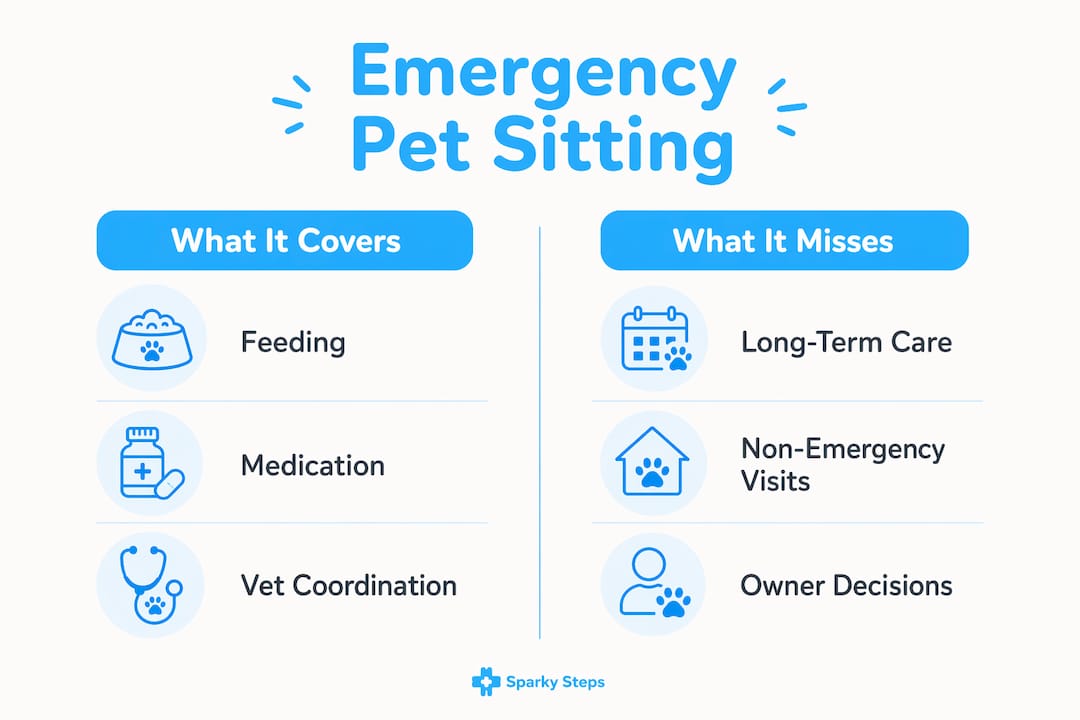
Emergency pet sitting covers far more than a quick food bowl refill. At its core, it is structured around 24/7 alert readiness and the ability to respond to unexpected situations at any hour. That means your sitter is not just available during business hours. They are on call, ready to act the moment you need them.
Here is what a well-prepared emergency pet sitter handles:
- Feeding and hydration: Meals served on your pet’s exact schedule, with attention to portion sizes and dietary restrictions.
- Medication administration: Oral medications, topical treatments, and even injections if the sitter is trained. The right sitter can extend care, coordinate with vets, and manage dynamic medical needs throughout a recovery period.
- Behavioral management: Knowing your dog’s triggers, your cat’s hiding spots, and how to keep anxious pets calm in unfamiliar situations.
- Safe pet pickup and placement: If your home is inaccessible, sitters coordinate safe pickup logistics and can arrange placement in approved boarding facilities.
- Photo updates and communication: You receive real-time reports, photos, and notes so you know your pet is safe even when you cannot be there.
- Veterinary coordination: Sitters act as your liaison with your vet, relaying symptoms, following care instructions, and arranging transport when needed.
Pro Tip: Before any emergency happens, share a written care bundle with your sitter that includes your pet’s feeding schedule, medication list, behavioral quirks, and your vet’s contact information. A sitter who has this on day one is ten times more effective on day one of a crisis.
Think of a good emergency sitter as part caregiver, part project manager, and part pet therapist. (They also do not charge by the hour for emotional support, which honestly puts them ahead of most humans.)
How does emergency pet sitting interact with emergency veterinary care?
Emergency pet sitting and emergency veterinary care are not the same thing, but they work together closely. Understanding the distinction prevents dangerous gaps in your pet’s care.
Here is how the roles divide during a real emergency:
- The sitter assesses the situation. If your dog is lethargic, vomiting, or showing signs of distress, the sitter documents symptoms and contacts you or your designated emergency contact immediately.
- The sitter contacts your vet. With your pre-authorized instructions in hand, the sitter reaches your veterinarian or an emergency animal hospital for guidance.
- The sitter arranges transport. Emergency pet sitters coordinate transport to emergency veterinary hospitals that provide 24/7 treatment, triage, and stabilization services.
- The vet takes over medical care. Life-threatening conditions like bloat, poisoning, or trauma require immediate hospital intervention. The sitter’s role shifts to support and communication.
- The sitter follows up. After your pet is stabilized, the sitter coordinates discharge instructions, picks up medications, and resumes in-home care.
“Emergency vets prioritize life-threatening cases and provide stabilization. Pet sitters facilitate referrals and transport, filling the critical gap between your home and the hospital.” — Virginia Veterinary Specialty & Emergency
The key takeaway here is that emergency care is triaged by severity. Some conditions, like a mild allergic reaction or a missed medication dose, can be managed by a trained sitter with vet guidance over the phone. Others require a hospital immediately. A qualified sitter knows the difference, and that knowledge is genuinely lifesaving.
What you want to avoid is a sitter who freezes when symptoms appear or who waits for your callback before acting. Clear written authorization to seek veterinary care on your behalf removes that hesitation entirely.

Why do pet sitters need specialized emergency protocols and insurance coverage?
Here is where things get serious, and where a lot of pet owners get caught off guard. Not all pet sitters carry the right insurance, and the gap between “insured” and “properly insured” matters enormously during an emergency.
The industry term you need to know is Care, Custody & Control (CCC) insurance. General liability insurance, which many sitters carry, does not cover injuries to animals in the sitter’s care. CCC insurance fills that gap specifically.
| Coverage type | What it covers | What it misses |
|---|---|---|
| General liability | Third-party property damage, bodily injury to humans | Injuries to pets in sitter’s care |
| Care, Custody & Control | Injuries and emergency vet treatments for pets in care | Does not cover sitter’s personal injury |
| Combined policy | Both human liability and pet injury during care | Varies by provider and policy limits |
CCC coverage costs about $100 to $250 per year and covers injuries and emergency vet treatments while pets are under sitter care. That is a small annual cost that protects both the sitter and you as the pet owner. Without it, a sitter who takes your dog to the emergency vet faces out-of-pocket expenses that can run into thousands of dollars, and that financial pressure can affect the quality of care your pet receives.
Without CCC coverage, sitters face out-of-pocket liabilities that damage their credibility and create real financial risk. For you as a pet owner, hiring an uninsured sitter means you may have no recourse if something goes wrong.
Pro Tip: Always ask a potential sitter to show proof of CCC insurance before your first booking. A professional sitter will have this documentation ready. If they hesitate or seem unfamiliar with the term, that tells you something important.
Why do emergency protocols matter beyond insurance? Because emergencies are chaotic by definition. A sitter with a written protocol knows exactly what to do in the first five minutes of a crisis. One without a protocol improvises, and improvisation with a sick pet is not a situation you want to fund. You can learn more about professional pet care standards that apply during emergencies to set your expectations correctly.
What should pet owners prepare before an emergency?
The single most effective thing you can do for your pet’s safety is build a care bundle before you ever need it. Providing a detailed care bundle including vet contacts, emergency authorization, medication schedules, feeding instructions, and behavioral notes is the foundation of effective emergency pet sitting.
Here is what your care bundle should include:
- Veterinary contacts: Primary vet name, phone, address, and your nearest 24-hour emergency animal hospital.
- Written emergency authorization: A signed note giving your sitter permission to authorize veterinary treatment on your behalf, including a spending limit if needed.
- Medication schedule: Drug name, dose, timing, and instructions for what to do if your pet refuses medication or shows an adverse reaction.
- Feeding instructions: Brand, portion size, meal times, and any food allergies or sensitivities.
- Behavioral notes: Fear triggers, favorite comfort items, signs of stress, and how your pet typically responds to strangers.
- Emergency contacts: A backup human contact (neighbor, family member) who has a key to your home.
| Information category | Why it matters in an emergency |
|---|---|
| Vet contacts | Enables immediate professional guidance without delay |
| Emergency authorization | Removes legal hesitation for sitters acting on your behalf |
| Medication details | Prevents dangerous dosing errors during high-stress situations |
| Behavioral notes | Helps sitters keep anxious pets calm and cooperative |
| Backup contacts | Provides a second layer of support if the sitter needs help |
Digital tools make this process much easier. PetPort offers a digital platform to maintain and share comprehensive emergency pet care plans accessible via QR codes and secure links. Your sitter can pull up your pet’s full care plan from their phone in seconds, which is exactly the kind of speed that matters at 2 a.m. on a Tuesday.
Sparky Steps clients use the app to share real-time updates, photos, and care notes, which means the communication loop stays open even when you are dealing with your own emergency. You can explore how in-home pet sitting keeps your pet’s routine intact during stressful times.
Key takeaways
Emergency pet sitting covers feeding, medication, veterinary coordination, safe transport, and real-time communication, and it only works well when pet owners prepare a detailed care bundle and hire sitters with verified CCC insurance.
| Point | Details |
|---|---|
| Core coverage scope | Emergency pet sitting includes feeding, medication, vet coordination, and 24/7 alert readiness. |
| Vet and sitter roles | Sitters arrange transport and follow-up care; emergency vets handle life-threatening medical treatment. |
| CCC insurance matters | Care, Custody & Control coverage costs $100 to $250 per year and protects both sitter and pet owner. |
| Owner preparation | A care bundle with vet contacts, authorizations, and medication schedules is the most critical preparation step. |
| Digital tools help | Platforms like PetPort let owners share QR-accessible care plans that sitters can access instantly. |
My honest take on emergency pet sitting preparedness
I have seen a lot of pet owners assume that hiring any sitter covers them in an emergency. It does not. The difference between a sitter who can handle a 3 a.m. seizure and one who cannot comes down to three things: experience with your pet’s specific medical needs, clear written instructions from you, and proper insurance coverage.
The most common mistake I see is pet owners leaving verbal instructions instead of written ones. Verbal instructions evaporate under pressure. A written care bundle does not. The second most common mistake is hiring based on price alone without asking about CCC insurance or emergency protocols. A sitter who charges a little more and carries proper coverage is worth every extra dollar when your dog needs an emergency vet visit at midnight.
Choosing a sitter with hands-on medication experience and flexible availability reduces stress during unexpected absences more than any other single factor. That is not a soft preference. It is the practical difference between a pet who gets the right care and one who does not.
The good news is that urban pet owners in Chicago have access to genuinely professional services that take emergency preparedness seriously. You just have to ask the right questions before you need the answers.
— Michael
How Sparky Steps handles emergency pet care in Chicago
Sparky Steps has been serving Chicago pet owners since 2016 with insured, background-checked caregivers who understand that your fur babies deserve the same level of care you would give them yourself. Every Sparky Steps sitter carries proper insurance coverage and follows documented emergency protocols, so you are never left wondering what happens if something goes wrong while you are away.
Sparky Steps offers flexible drop-in visits, overnight stays, and on-demand care options with real-time app updates, photos, and GPS tracking. Sitters coordinate directly with your veterinarian and keep you informed at every step. If you are an urban Chicago pet owner who wants dependable, insured pet care with genuine emergency preparedness built in, Sparky Steps is ready to meet your fur baby. Visit the website to explore services and book your first visit.
FAQ
What does emergency pet sitting cover?
Emergency pet sitting covers feeding, medication administration, behavioral care, veterinary coordination, safe transport, and real-time communication with the pet owner. It also includes 24/7 alert readiness and, in some cases, placement in approved boarding facilities.
Is emergency pet sitting the same as regular pet sitting?
No. Regular pet sitting follows a scheduled routine, while emergency pet sitting activates during unexpected owner absences and includes veterinary liaison, emergency transport coordination, and medical care management that standard sitting does not typically involve.
Do emergency pet sitters need special insurance?
Yes. Professional emergency pet sitters need Care, Custody & Control (CCC) insurance, which covers injuries and emergency vet treatments for pets in their care. General liability insurance alone does not cover pet injuries.
How should I prepare for emergency pet sitting?
Prepare a care bundle with your vet’s contact information, a signed emergency authorization, your pet’s medication schedule, feeding instructions, and behavioral notes. Digital platforms like PetPort let you store and share this information via QR code for instant sitter access.
Can a pet sitter authorize veterinary treatment?
A pet sitter can authorize veterinary treatment if you provide written permission in advance. Without that authorization, sitters may face legal hesitation during a crisis, which is why a signed emergency authorization is one of the most important documents in your care bundle.
Written by the Sparky Steps Team.
Authorship Note
The content above aligns with the values of Sparky Steps LLC. While our trusty artificial intelligence helped organize the article, whip up some fun images, and translate ideas into clear, practical language, the final masterpiece is a delightful collaboration between passionate human writers who adore animals and a sprinkle of artificial intelligence magic. Remember, if you think writing is easy, try typing with paws!


