


Your dog cannot tell you they are struggling with the long hours alone, but they show you in ways that are easy to read once you know what to look for. Restlessness during the day, destructive chewing, indoor accidents, and sudden behavior changes tied to long stretches by themselves are all signals that your current schedule is asking more of your dog than they can handle. The American Kennel Club (AKC), the American Animal Hospital Association (AAHA), and MSPCA-Angell all treat professional walking as a core part of responsible dog care, not a luxury. If your Chicago workday runs eight or more hours and your dog is home alone, the math is rarely in your favor. Recognizing these signs early is one of the kindest things you can do for your dog.
What are the key signs your dog needs a walker?
Restlessness, pacing, barking, or mischief during the day often signal under-stimulation rather than bad behavior. Your dog is not acting out to spite you. They are communicating a genuine physical and mental need that is going unmet.
Destructive behavior is one of the clearest signs. Chewed furniture legs, shredded pillows, and scratched doors are not personality flaws. AAHA connects these behaviors directly to insufficient daytime enrichment and exercise. A dog who gets a midday walk is a dog who has less energy left over for your couch cushions.
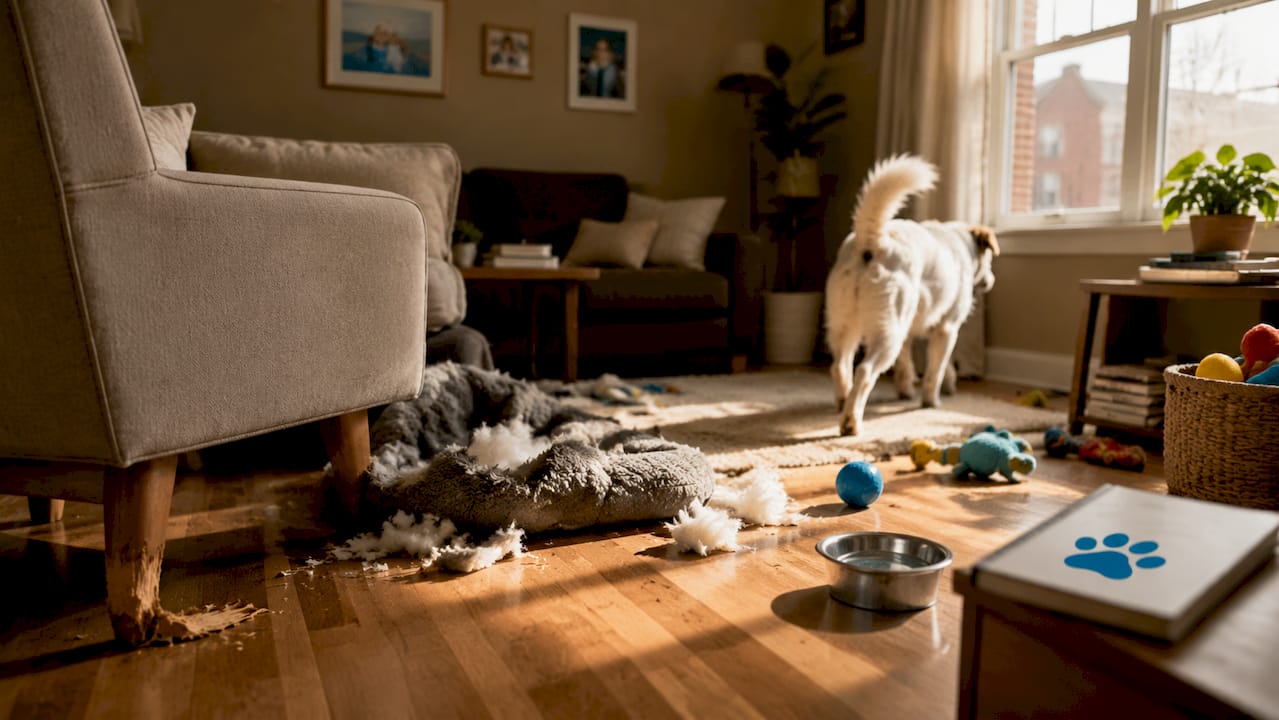
House soiling is another strong indicator. Bladder discomfort from holding too long causes indoor accidents even in fully trained dogs. This is not regression. It is a physical limit being exceeded, and it is entirely preventable with a midday visit.
Watch for sudden behavior changes too. A dog who was calm and is now anxious, clingy, or vocal is telling you something shifted. These changes often cluster around your busiest or longest absence periods, which is the clearest timing signal you can get.
- Restlessness or pacing during the day, especially around midday
- Excessive barking reported by neighbors or caught on a camera
- Destructive chewing of furniture, shoes, or household items
- Indoor accidents in a dog who is otherwise house-trained
- Sudden clinginess or anxiety when you prepare to leave
- Weight gain from reduced activity over weeks or months
If you are not sure whether the signs are there, set up a simple pet camera for one week. If your dog is pacing, barking, or getting into trouble between 11:00 AM and 2:00 PM, that midday window is your answer. The camera does not lie, even when your dog gives you the innocent eyes.
How does professional dog walking support your dog's health?
Professional dog walking delivers far more than a bathroom break. It provides physical exercise, mental stimulation, social exposure, and routine, all of which directly affect your dog's emotional wellbeing. AAHA emphasizes that enrichment is most effective when it includes rotated cognitive and physical activities tailored to the dog's age and ability. A walk through Albany Park or Andersonville offers smells, sounds, and sights that no backyard can replicate.
Regular walks reduce stress hormones, lower the risk of weight gain, and decrease the frequency of boredom-driven behaviors. The benefits compound over time. A dog who walks consistently is calmer at home, sleeps better, and is easier to live with. That is not a coincidence. It is biology.
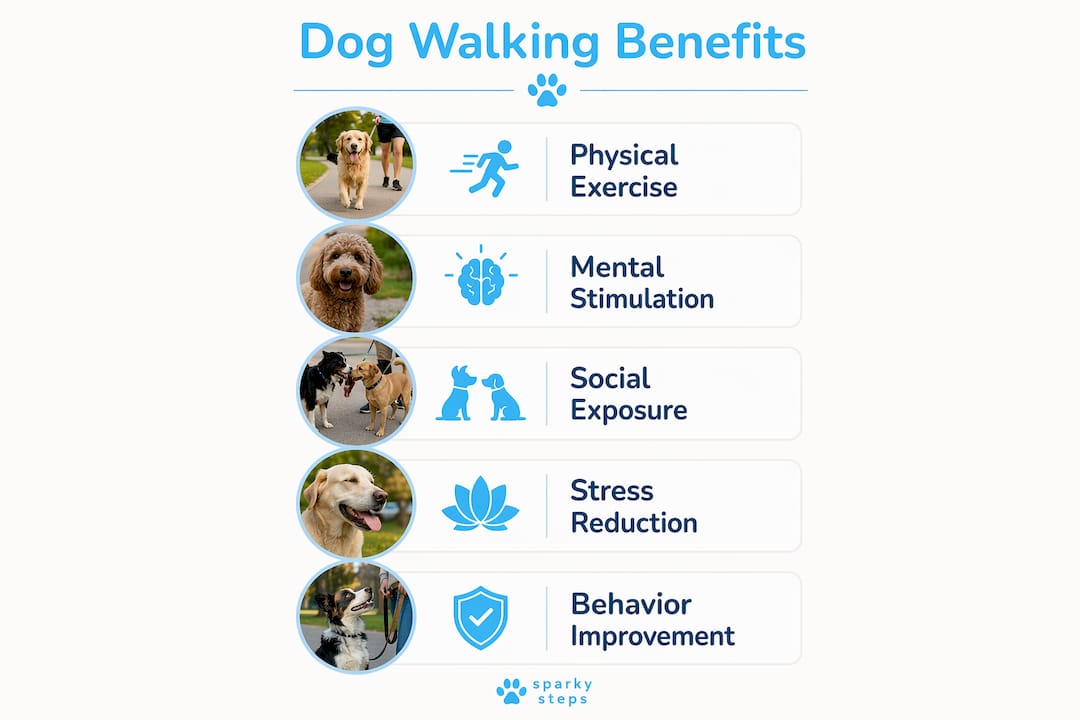
Midday walks specifically break up the longest stretch of the day. Problem behaviors that cluster during absence periods respond best to adding a midday walk rather than simply extending morning or evening walks. Squeezing extra walks into the bookends of your day is not the same as breaking up the middle.
| Benefit | What it means for your dog |
|---|---|
| Physical exercise | Maintains healthy weight and joint mobility |
| Mental stimulation | New smells and environments reduce boredom |
| Routine and structure | Predictable schedule lowers anxiety |
| Social exposure | Controlled interaction builds confidence |
| Bladder relief | Prevents discomfort and indoor accidents |
It also helps to ask your walker to vary the route every few visits. According to AAHA, variety in enrichment lowers stress more effectively than repetition. A new block is basically a fresh episode for your dog's nose, and they love the plot twists. Choosing sustainable pet products for your dog's walks, like eco-friendly harnesses and biodegradable waste bags, is a small way to extend responsible care beyond the walk itself.
How do you turn your dog's signs into a hiring decision?
The AKC recommends three preparatory steps before hiring: define your dog's specific needs, decide on service frequency, and set a realistic budget. These steps prevent you from hiring reactively and then adjusting awkwardly later.
Start by mapping your schedule honestly. If you are away from home for more than six hours on most weekdays, a daily midday walk is the right baseline. If your dog is a high-energy breed like a Labrador Retriever, a Border Collie, or a Vizsla, one walk per day may not be enough. Breed, age, and current behavior all factor into the right frequency.
- Audit your current schedule. Write down your actual departure and return times for a typical week. Be honest. Most pet parents underestimate how long they are away.
- Identify your dog's specific needs. A senior dog with joint issues needs a shorter, gentler walk. A young, high-energy dog may need a brisk 45-minute outing or even a run.
- Set a weekly budget. Professional walking in Chicago typically starts around $27 for a 30-minute visit. Multiply by frequency to get a realistic monthly number before you start calling walkers.
- Decide on a trial period. Start with two to three weeks of daily walks. Observe your dog's behavior at home. The results usually speak for themselves within the first week.
- Plan for consistency. The same walkers every time matter more than most pet parents realize. Rotating strangers create anxiety. A familiar face creates trust.
If you are hiring a dog walker for the first time, preparing a short written summary of your dog's routine, quirks, and any health notes makes the onboarding process smoother for everyone.
How do you vet and choose a trustworthy dog walker in Chicago?
Choosing a dog walker is a trust decision, not just a scheduling one. You are giving someone access to your home and your family member. The vetting process deserves real attention.
MSPCA-Angell stresses that meet-and-greet sessions with both the pet parent and the dog are more reliable than relying solely on app-based background checks. A background check tells you about the past. A meet-and-greet tells you about the present. Watch how the walker approaches your dog, reads body language, and handles a leash before you ever hand over a key.
- Ask about insurance and bonding. A professional walker carries their own certified pet care insurance. This protects you, your dog, and your home.
- Ask about their emergency protocol. What happens if your dog gets injured mid-walk? Who do they call, and how fast?
- Observe leash handling. Evaluating leash control and transitions during the meet-and-greet confirms the walker can manage your dog safely outside your presence.
- Ask about group vs. solo walks. Some dogs thrive in small groups. Others need solo attention. Know which your dog needs before you commit.
- Check for ongoing communication. GPS tracking, photos, and visit notes after every walk are the standard for professional service, not a bonus feature.
One simple move during the meet-and-greet: step out of the room for five minutes and watch how your dog reacts to the walker without you present. That reaction tells you more than any resume.
The AKC advises choosing walkers based on how well their service matches your dog's specific needs, not just on personal likeability. A charming walker who cannot handle a reactive dog on a busy Chicago street is the wrong fit. A trustworthy dog walker in Chicago combines handling skill, reliability, and genuine care in equal measure.
For a full checklist of what to look for, the trustworthy pet sitter checklist from Sparky Steps covers every key criterion in one place.
Key takeaways
Hiring a dog walker is the right call when your dog shows clear behavioral signs of under-stimulation, and the most effective response is a consistent midday walk from a vetted, insured professional.
| Point | Details |
|---|---|
| Behavioral signs are clear | Restlessness, destructive behavior, and indoor accidents signal unmet exercise needs. |
| Midday walks solve the core problem | Breaking up the longest absence stretch reduces problem behaviors more than extra morning or evening walks. |
| Enrichment is the real goal | Professional walks provide mental stimulation, routine, and social exposure beyond basic exercise. |
| Vetting matters more than price | Meet-and-greet sessions and insurance verification protect your dog and your home. |
| Consistency builds trust | The same walkers every time reduce anxiety and build a reliable routine for your dog. |
What I have learned after 10 years of watching dogs tell us what they need
By Michael Jaurigue, co-founder of Sparky Steps
"After ten years, the dogs who show up wound tight and pacing are usually the ones whose pet parents feel the worst guilt about hiring help, and I tell them the same thing every time: noticing the signs and doing something about it is not failing. The dogs who get consistent midday walks transform within weeks, not because of anything magical, just because their basic needs are finally met on a schedule that fits their biology. The behavior was never the problem. The unmet need was."
- Michael Jaurigue
Sparky Steps is here for Chicago's busiest pet parents
If your dog has been showing any of these signs, you do not have to figure it out alone. Sparky Steps has served 250+ Chicago pet parents across the North Side since 2016, and every visit comes with real-time updates via DoTimely: GPS tracking, photos, and visit notes sent straight to your phone. Our walkers are licensed, bonded, and insured, and you will always work with the same trusted walkers every time. No strangers, no surprises. We start with a meet-and-greet so your dog gets comfortable before the first solo walk. Visits start at $17, with 30-minute walks at $27. Take a look at our Chicago dog walking services and see what consistent, professional care looks like for your dog. ❤️
FAQ
What are the most common signs it's time to hire a dog walker?
The most common signs include restlessness, destructive chewing, indoor accidents in a house-trained dog, and excessive barking during the day. These behaviors typically indicate your dog is under-stimulated and needs structured midday exercise.
How often should a dog walker visit each week?
The AKC recommends basing frequency on your dog's breed, age, energy level, and your daily schedule. Most dogs left alone for six or more hours benefit from at least one midday walk per weekday.
Is a meet-and-greet really necessary before hiring a walker?
MSPCA-Angell confirms that a meet-and-greet is more reliable than app-based background checks alone. It lets you observe how the walker handles your dog and builds trust before the first unsupervised visit.
Can a dog walker help with my dog's anxiety?
Regular, consistent walks from a familiar walker reduce anxiety by providing routine, physical release, and social exposure. AAHA notes that structured enrichment activities directly support a dog's mental and emotional wellbeing.
What should I look for when vetting a dog walker in Chicago?
Look for insurance and bonding, a clear emergency protocol, strong leash handling skills, and a communication system that includes post-visit updates. A professional walker in Chicago should be able to answer all of these questions confidently before you hire them.


