


Dog walker certification won't make you a better walker overnight. But it will open doors that raw experience alone can't: client trust before the first walk, access to professional liability insurance, and a credential that tells people you take this seriously without you having to say a word.
This guide covers the certifications that actually matter in 2026, how to choose the right one for where you are in your career, and how professional credentials fit into building a real, sustainable dog walking business in Chicago. Whether you're just starting out or you've been walking dogs independently for years and want to level up, here's the honest breakdown. 🐾
Do you legally need a dog walker certification?
No. There's no legal requirement for dog walker certification anywhere in the US, and platforms like Rover and Wag don't require one either. So why bother?
Because clients care. A lot. Urban pet parents, especially in neighborhoods like Albany Park, Ravenswood, and Uptown, are handing over a family member. They want proof that you're not winging it. A credential from a recognized organization is the fastest way to answer that question before they even ask it.
Certification also gates access to things you need to run a real business: professional liability insurance, industry directories, and peer communities where you learn from people who've handled situations you haven't faced yet. The credential is the door; what's behind it is the real value.
The certifications that actually matter
Pet First aid and CPR
Start here. No exceptions.
Pet First Aid and CPR costs between $30 and $80 depending on the provider, takes four to eight hours, and is offered by the American Red Cross, PetTech, and ProPetHero. It is the single highest return-on-investment credential in the industry. Clients understand it immediately. It gives you real confidence when a dog swallows something it shouldn't (and you will meet that dog). And it signals something important: you thought about what happens when things go wrong.
Most certifications renew annually. Build the renewal date into your calendar the day you complete it.

Certified Professional Pet Sitter and Dog Walker (CPS-DW)
The PPCA’s CPS-DW certification course covers 49 structured lessons across safe handling, animal behavior, and business operations. It's one of the few programs that treats the business side of pet care as seriously as the animal care side, which matters when you're trying to build a client roster, not just fill a few slots.
Graduates get a directory listing and the CPS-DW logo for their marketing materials. That logo does real work: it tells a prospective client you completed a structured program evaluated by a recognized organization, not just watched a few YouTube videos and called yourself professional.
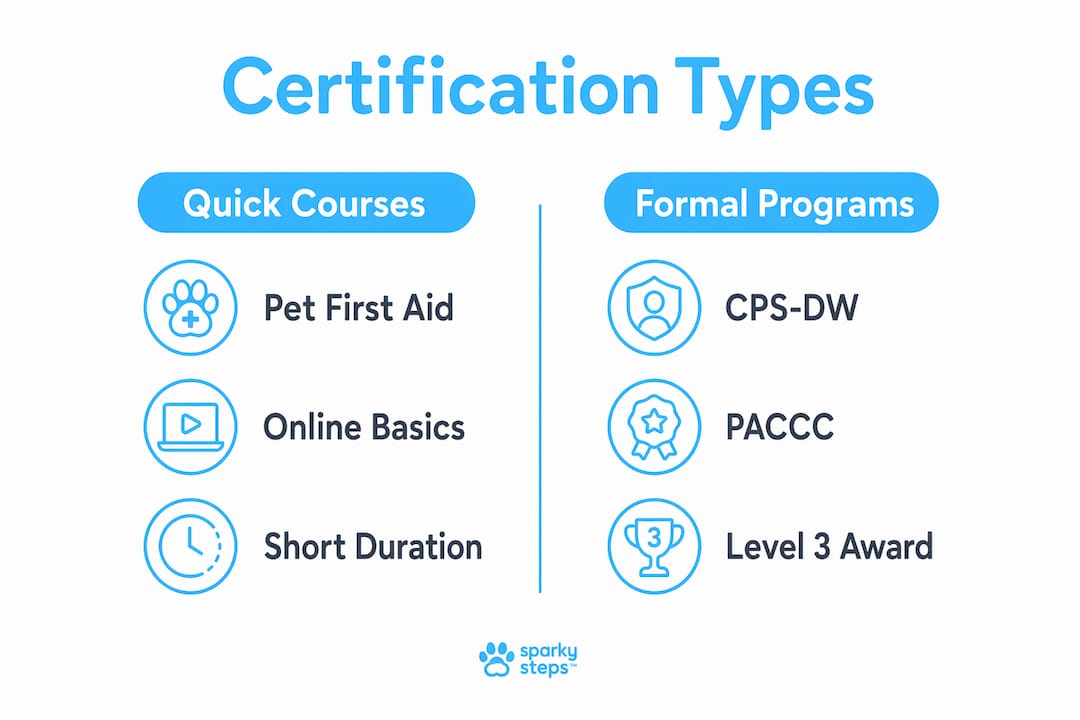
PACCC certification
The Professional Animal Care Certification Council runs the most rigorous independent, stringent exam exam in the industry. It covers animal behavior, health, safety, and professional ethics, renews every three years, and is the credential that serious professionals in competitive markets pursue when they want the gold standard.
PACCC also gives certified walkers access to insurance programs and professional networks that aren't available to uncredentialed walkers. That insurance access alone makes it worth pursuing once you're past the startup phase.
iPET Network level 3 award
For walkers who work with dogs that have behavioral challenges, the iPET Network Level 3 is worth knowing about. It's Ofqual-regulated (UK-based, but recognized in professional circles), covers dog behavior and welfare in depth, and is more rigorous than most US-based online programs. The UK-based Level 4 Certificate in Professional Pet Sitting involves approximately 230 hours of study, compared to online CPD courses that average around 20 hours. These qualifications carry weight with clients who specifically seek nationally verified credentials. If you specialize in reactive dogs, anxious dogs, or high-needs breeds, the behavior focus here is genuinely useful rather than just credential-padding.
Here is a quick comparison to help you size up your options:
| Certification | Provider | Duration | Approximate Cost | Key Benefit |
|---|---|---|---|---|
| Pet First Aid and CPR | American Red Cross, PetTech | 4 to 8 hours | $30 to $80 | Emergency readiness |
| CPS-DW | PPCA | Self-paced, 49 lessons | Varies by membership | Directory listing, business tools |
| PACCC Exam | PACCC | Exam-based, 3-year renewal | Varies | Industry-recognized credentialing |
| iPET Network Level 3 | iPET Network | Several weeks | Varies | Ofqual-regulated, behavior focus |
| Level 4 Certificate | Skills and Education Group | ~230 hours | Varies | Academically rigorous qualification |
Pro Tip: Start with Pet First Aid and CPR before investing in any other program. It is the one credential that every client understands immediately and that every dog walker genuinely needs.
How to choose the right dog walker certification program
Choosing a dog walking course comes down to one honest question: what do you actually want this credential to do for you? The answer shapes everything else.
There is a meaningful difference between educational certifications and membership credentials. Educational certifications like the CPS-DW or PACCC exam test your knowledge and award a credential based on demonstrated competence. Membership organizations offer resources, community, and a logo, but memberships offer no legal licensing and no proof of tested skill. Both have value, but they are not the same thing.
Here is how to match your goals to the right program:
- You are just starting out. Get Pet First Aid and CPR first. Full stop. It is affordable, universally recognized, and immediately useful.
- You want to build a professional business. Add the CPS-DW from PPCA. The 49-lesson structure covers business operations alongside animal care, which is rare in this space.
- You want the most credible industry credential. Pursue PACCC certification. The three-year renewal cycle and broad knowledge exam make it the gold standard for serious professionals.
- You work with dogs that have behavioral challenges. Look at programs with a canine behavior focus, such as the iPET Network Level 3 Award or courses aligned with dog trainer qualifications from the Certification Council for Professional Dog Trainers (CCPDT).
- You want to stand out in a competitive urban market. Combine Pet First Aid with one educational certification and display both credentials in your marketing. That combination covers safety and professional knowledge in a way clients can see and understand.
Pro Tip: Avoid courses priced at $150 or more that promise a “professional dog walker certificate” with no recognized accrediting body behind them. Courses costing $150 or more often contain common-sense content you can find free online. Spend that money on a recognized credential instead.
Why does any of this matter for marketing? Because clients increasingly seek verified qualifications regulated by national bodies rather than generic certificates. A logo from a recognized organization on your profile does more for client trust than a paragraph of self-description ever will.
Step-by-step process to get certified as a dog walker
Getting your dog walker certification does not require a complicated plan. It requires a practical one.
- Build your baseline experience first. Volunteer at a local shelter, offer to walk neighbors’ dogs, or assist an established walker. Most certification programs do not require prior credentials, but hands-on experience makes the coursework click in a way that pure reading never does.
- Complete Pet First Aid and CPR. Register through the American Red Cross or PetTech. Most courses take four to eight hours and can be completed online or in person. Keep your certificate current, as most require annual renewal.
- Select and enroll in your primary certification program. For the PPCA’s CPS-DW, you enroll directly through their platform and work through 49 self-paced lessons. For PACCC, you register for the exam and study their published competency framework. For the SPCA’s dog walker training, you complete a 6-day training course plus 9 supervised dog walks within three months, earning a qualification card valid for one year.
- Complete all practical requirements. Some programs require documented walks, supervised assessments, or written exams. Do not skip these. They are where the real learning happens, and they are what give the credential its credibility.
- Add your credentials to every client-facing platform. Update your website, social media profiles, and any pet care directories. The CPS-DW certification, for example, includes a directory listing you should activate immediately.
- Plan for continuing education and recertification. PACCC certification renews every three years. Pet First Aid typically renews annually. Build renewal dates into your calendar now so you never let a credential lapse.
Common pitfalls to watch for:
- Paying for unaccredited courses that look professional but carry no recognized value
- Skipping Pet First Aid because it seems basic (it is not basic when a dog goes into shock)
- Collecting multiple low-value certificates instead of one or two recognized credentials
- Forgetting to renew, which can quietly undermine client trust if they check your credentials
Pro Tip: Use your certification credentials in your client onboarding materials. A simple line like “I hold current Pet First Aid certification through the American Red Cross” does more for first-time client confidence than any amount of five-star reviews. Okay, maybe not more than five-star reviews. But it helps.
Learning how to become a professional pet sitter follows a similar certification path, so if you plan to offer both services, you can often complete overlapping coursework efficiently.
Why certification benefits go beyond a piece of paper
The indirect advantages of holding a recognized dog care training credential are just as real as the direct ones, and most new walkers underestimate them.
PACCC frames certification as a tool for public accountability in pet care, a profession that is easy to enter but carries genuine safety responsibilities. That framing matters. When you hold a PACCC credential, you are not just telling clients you passed a test. You are telling them you submitted to independent evaluation and met a standard set by the industry itself.
Certification also opens doors to professional liability insurance. PACCC membership benefits often include access to insurance programs and client vetting platforms that are simply not available to uncredentialed walkers. Professional liability insurance is something every serious dog walker needs, and certification is frequently the gateway to affordable coverage. For more on why insurance matters to the clients you want to attract, the Sparkysteps guide on finding an insured dog walker explains exactly what urban pet owners look for.
Here is a summary of the professional benefits that certified walkers access:
| Benefit | What it means in practice |
|---|---|
| Professional directory listings | CPS-DW and PACCC list certified walkers in searchable client directories |
| Insurance program access | Certification bodies often provide or refer members to liability insurance |
| Verified credibility | Clients can independently confirm your credential, building trust without sales effort |
| Peer community | Access to professional networks, forums, and continuing education resources |
| Competitive differentiation | In markets like Chicago, certification separates you from uncredentialed competitors |
Pro Tip: Join the professional community tied to your certification body. PPCA and PACCC both offer member forums and resources that keep you current on industry standards. The connections you make there are worth as much as the credential itself.
Key takeaways
Dog walker certification is not legally required in the US, but the right credentials from recognized organizations like PACCC, PPCA, and the American Red Cross are the most direct path to client trust, insurance access, and long-term professional credibility.
| Point | Details |
|---|---|
| Start with Pet First Aid | American Red Cross certification costs $30 to $80 and is the highest-ROI credential available. |
| Choose educational over membership | Programs like CPS-DW and PACCC test real knowledge; memberships alone do not prove competence. |
| Avoid unaccredited courses | Courses over $150 with no recognized accreditor often deliver no marketable value. |
| Certification unlocks insurance | PACCC and similar bodies provide access to professional liability insurance programs. |
| Renew on schedule | PACCC credentials last three years; Pet First Aid typically renews annually. |
My honest take on certification as a career investment
I have watched a lot of people enter the dog walking profession over the years, and the pattern is pretty consistent. The walkers who invest in one or two solid, recognized credentials early on build client rosters faster and hold onto clients longer. The ones who collect five generic online certificates and call themselves “multi-certified” tend to confuse clients more than they impress them.
My advice is simple: do not over-invest in credentials nobody has heard of. A $200 course from a company with a professional-looking website but no recognized accrediting body behind it is not a credential. It is a PDF. Spend that money on PACCC exam prep or a PPCA membership instead.
The combination that works best in a competitive urban market is Pet First Aid plus one substantive educational certification. That covers the safety question every client has in the back of their mind and the professional knowledge question that separates you from the neighbor who walks dogs for extra cash. (No offense to the neighbor. We have all been the neighbor.)
Hands-on experience still matters more than any certificate. But credentials give clients a way to trust you before they have seen you in action. In a city like Chicago, where pet owners have real options, that head start is worth every dollar and every hour you put into it. Understanding what professional pet care actually looks like from a client’s perspective will also sharpen how you present your credentials to the people who matter most.
— Michael
Already certified? Here's what to do next.
If you're a certified dog walker in Chicago looking for more than just clients, Sparky Steps might be worth a conversation.
We've been serving North Side Chicago pet parents since 2016, and we're building something beyond a single dog walking company. The idea is simple: independent walkers and small pet care businesses shouldn't have to choose between taking a day off and keeping their clients. Our network model, what we call the Reliability Buffer, lets certified partners cover each other so everyone can rest, travel, or handle life without losing the business they've built.
Partners in our network operate as independent 1099 contractors, keep their own clients and their own brand, and plug into our client base, scheduling platform (DoTimely), and marketing engine. The economics are transparent: partners earn 80% on solo visits. When coverage is needed, the 80% pool splits 40/40 between the primary and backup walker. Sparky Steps takes 20% to keep the network running.
We're not looking for gig workers. We're looking for professionals who take certification seriously, show up consistently, and care about the animals and families they serve. If that's you, we'd love to talk.
Learn about working with Sparky Steps →
FAQ
Is dog walker certification legally required in the US?
No. Certification is voluntary, but it significantly improves client trust, insurance access, and your ability to stand out in competitive urban markets like Chicago.
What's the best first certification for a new dog walker?
Pet First Aid and CPR through the American Red Cross or PetTech. It costs $30 to $80, takes four to eight hours, and is the most universally recognized and immediately useful credential you can hold.
What's the difference between an educational certification and a membership credential?
Educational certifications like CPS-DW and PACCC test your knowledge and award a credential based on demonstrated competence. Membership organizations offer resources and a logo but don't prove tested skill. Both have value, but they're not the same thing. Clients who dig into your credentials will know the difference.
Do certifications help with getting professional liability insurance?
Yes, meaningfully. PACCC and PPCA membership often provides access to insurance programs not available to uncredentialed walkers. Professional liability insurance is something every serious dog walker needs, and certification is frequently the most practical path to affordable coverage.
How does certification fit into joining a dog walking network like Sparky Steps?
Certification is one of the signals we look for when considering professional partners. It tells us you've invested in learning this work properly, that you take safety seriously, and that you're building a real career rather than filling time. If you're certified and based on Chicago's North Side, we'd genuinely love to connect.
Written by the Sparky Steps Team.
Why did the dog walker get a certification? Because he wanted to put his best paw forward professionally. (We are not sorry.)
Authorship Note
The content above aligns with the values of Sparky Steps LLC. While our trusty artificial intelligence helped organize the article, whip up some fun images, and translate ideas into clear, practical language, the final masterpiece is a delightful collaboration between passionate human writers who adore animals and a sprinkle of artificial intelligence magic. Remember, if you think writing is easy, try typing with paws!


