

TL;DR:
- Becoming a professional pet sitter transforms your love of animals into a rewarding business requiring certification, trust, and professionalism.
- Success depends on developing skills such as reliable communication, animal behavior awareness, and safety protocols to build client trust and ensure pet safety.
Becoming a pet sitter means turning your love for animals into a legitimate, rewarding career that combines compassion, responsibility, and real business skills. The pet care industry is valued at $158 billion in 2025 and projected to reach $165 billion in 2026, which means demand for trustworthy, professional pet sitters has never been stronger. To become a professional pet sitter, you need more than a love of fur babies. You need certifications like pet first aid and CPR, solid client communication habits, and a clear business setup from day one. This guide walks you through every step, from assessing your readiness to scaling a full pet care operation, with the kind of practical detail that actually prepares you for the job.
What skills and qualities does a successful pet sitter need?
A professional pet sitter is defined by reliability, animal knowledge, and the ability to stay calm when things go sideways. These are not soft suggestions. They are the baseline for earning and keeping client trust.
Here are the core skills every aspiring sitter needs to develop:
- Dependable communication. Clients need updates, especially when they are away from their fur babies. Sending photos, notes, and check-ins is not optional. It is what separates a professional from a neighbor doing a favor.
- Animal behavior awareness. Recognizing stress signals in dogs and cats, such as pinned ears, tucked tails, or excessive panting, helps you respond before a situation escalates.
- Physical stamina. Dog sitting and walking involves real physical work. Long walks, active play sessions, and yes, cleaning up messes are part of every shift.
- Patience and flexibility. Pets do not follow schedules perfectly. A dog may refuse to eat, a cat may hide for hours, or a client may call with last-minute changes. Rolling with it gracefully is part of the job.
- Respect for client privacy. You are often given access to someone’s home. Treating that access with the same care you give their pet is non-negotiable.
- Trustworthiness and discretion. Background checks, references, and a professional online presence all signal to clients that you take this seriously.
Pro Tip: Keep a small notebook or use a pet care app to log every visit. Recording feeding times, bathroom breaks, and mood observations gives clients peace of mind and protects you if any questions arise later.
The best pet sitters also know when to say no. Taking on a dog with severe aggression before you have the training to handle it safely is a risk to the pet, to you, and to your reputation.

Which certifications should aspiring pet sitters pursue?
Certifications are the fastest way to demonstrate professionalism and build client confidence before you have a long track record. The American Red Cross offers pet first aid and CPR courses that can be completed in as little as one hour. That one hour could be the difference between a pet surviving a choking incident and a tragedy. Every serious sitter should complete this before their first client.
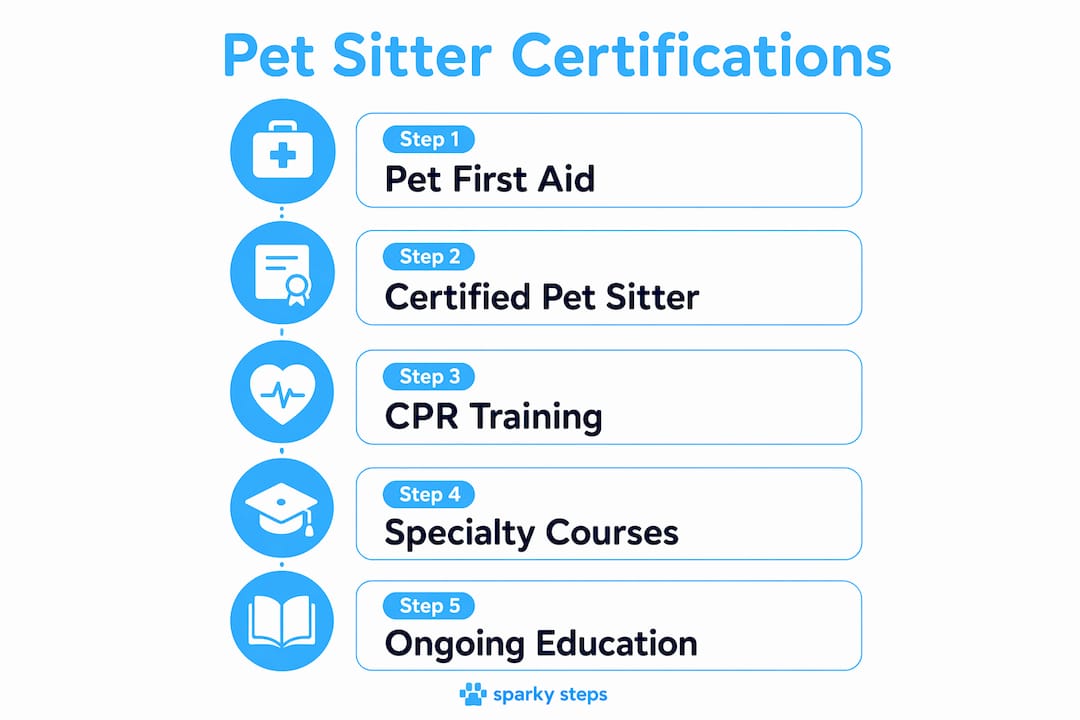
Beyond first aid, the Certified Professional Pet Sitter (CPPS) credential from Pet Sitters International is the gold standard for the industry. It requires passing a knowledge exam covering animal care, business practices, and safety protocols. Holding this credential signals to clients on platforms like Rover and Wag that you are not just an animal lover but a trained professional.
Here is a quick comparison of the most relevant credentials:
| Certification | Provider | Time to Complete | Best For |
|---|---|---|---|
| Pet First Aid & CPR | American Red Cross | 1 hour (self-paced) | All pet sitters, entry level |
| Certified Professional Pet Sitter (CPPS) | Pet Sitters International | Weeks (exam-based) | Established or serious sitters |
| Dog Trainer Foundations | Karen Pryor Academy | Weeks (online) | Sitters specializing in dogs |
| Fear Free Pet Professional | Fear Free | Several hours (online) | Sitters handling anxious pets |
Other credentials worth considering include Fear Free certification, which teaches you how to reduce stress and anxiety in pets during care visits. This is especially valuable for sitters who work with rescue animals or pets with known behavioral challenges.
- Pet First Aid and CPR (American Red Cross): Start here, no exceptions.
- CPPS credential (Pet Sitters International): Pursue this once you have a few months of experience.
- Fear Free certification: Adds real depth for handling anxious or reactive pets.
- Canine body language courses: Available through the International Association of Animal Behavior Consultants.
Certifications also give you a competitive edge on booking platforms. Clients searching for a dog sitter on Rover or Wag are more likely to choose a sitter with visible credentials over one with none, even if the uncertified sitter has more reviews.
What are the critical steps to start your pet sitting business?
Starting a pet sitting business requires more than announcing your services on social media. The foundation is built on paperwork, process, and one very important in-person conversation.
Here is the step-by-step process to launch professionally:
- Create a service agreement. This document outlines your rates, cancellation policy, liability limits, and what happens in a pet emergency. Understanding your business structure options early helps you set this up correctly.
- Build a detailed pet intake form. Collect medical history, vaccination records, feeding schedules, behavioral notes, and emergency contact information. Asking about medical needs, bite history, and anxiety triggers during intake is what separates professionals from hobbyists.
- Get emergency vet authorization. Every client should sign a form authorizing you to seek emergency veterinary care if they cannot be reached. This protects the pet and protects you legally.
- Collect verified home entry instructions. Written, step-by-step home access instructions reduce the risk of security errors and give you a reference if something goes wrong.
- Schedule an in-home meet-and-greet. The meet-and-greet is non-negotiable for building trust between you, the owner, and the pet. It lets you observe the pet’s behavior in its own environment before any services begin.
- Set your pricing and policies. Research local rates, define your service area, and decide on add-ons like medication administration or overnight stays.
- Choose your scheduling and communication tools. Apps like Time To Pet or PetPocketbook help you manage bookings, send client updates, and track payments without a spreadsheet nightmare.
Pro Tip: During the meet-and-greet, let the pet approach you on its own terms. Crouching down, avoiding direct eye contact, and offering a treat from an open palm builds trust faster than any amount of enthusiastic greeting.
The meet-and-greet also gives you a chance to spot any red flags, such as a pet that shows resource guarding or a home environment that raises safety concerns, before you are committed to the job.
How to handle common challenges and safety considerations in pet sitting
Pet sitting is genuinely rewarding, but it comes with real physical and emotional demands that beginners consistently underestimate. Waste cleanup and maintaining sanitary conditions are core duties on every single visit. If that reality makes you hesitate, it is worth thinking carefully before committing to this career.
Here are the most common challenges and how to handle them:
- Pet anxiety and separation distress. Some dogs bark, pace, or destroy furniture when their owners leave. Ask about this during intake and have a plan, whether that means longer visits, calming music, or a Kong toy stuffed with peanut butter.
- Aggression and unexpected behavior. Even friendly pets can react unpredictably in new situations. Never put yourself in a position where you cannot safely exit a room.
- Home security compliance. Strict adherence to security instructions protects pets from escaping or encountering outdoor dangers. A tragic coyote attack documented in 2024 was directly linked to a sitter failing to follow the client’s specific outdoor access instructions. Follow every instruction exactly as written.
- Client boundary issues. Late cancellations, scope creep, and delayed payments are common. Your service agreement is your best tool for handling these professionally.
- Special needs pets. Administering medication, managing mobility issues, or caring for diabetic animals requires extra training and should be priced accordingly.
“Over-communication is never a mistake in pet sitting. When in doubt, send one more photo, leave one more note, and confirm one more detail. Your clients will thank you for it.”
Setting clear boundaries from the start, both with pets and with clients, is what keeps this job sustainable and safe for everyone involved.
How to grow and scale a pet sitting business sustainably
Once you have a steady client base, the next challenge is growing without burning out. Here is how to build a pet care business that lasts:
- Shift from technician to business owner. Successful long-term pet care businesses evolve from the owner doing every visit to the owner managing client experience and team quality. Laurie Yost built a two-location operation over 15 years by making this shift deliberately.
- Use technology to manage growth. Scheduling software, GPS tracking apps, and CRM tools let you handle more clients without dropping the ball on communication or quality.
- Build your local reputation. Word of mouth is still the most powerful marketing tool for pet sitters. Learn how to grow your client base through referrals, neighborhood groups, and local vet partnerships.
- Specialize to command premium pricing. Sitters who focus on senior dogs, exotic animals, or post-surgical care can charge significantly more than generalists. Specialization also reduces competition.
- Protect your energy. Schedule days off, set maximum client loads, and resist the urge to say yes to every request. Burnout is the number one reason pet sitters leave the industry.
Pro Tip: Ask every satisfied client for a Google review within 48 hours of a completed service. Reviews compound over time and become your most valuable marketing asset, especially for clients searching for a dog sitter in your area.
The pet care business best practices for 2026 point clearly toward sitters who invest in systems, not just sweat. The ones who thrive treat their business like a business from day one.
Key takeaways
Becoming a professional pet sitter requires certifications, structured client onboarding, and a clear plan to grow beyond solo daily care.
| Point | Details |
|---|---|
| Start with certifications | Complete pet first aid and CPR through the American Red Cross before your first client. |
| Build a proper intake process | Use service agreements, intake forms, and emergency vet authorization for every new client. |
| Make the meet-and-greet mandatory | Observing pet behavior in its home environment before starting is non-negotiable for safety. |
| Handle challenges proactively | Follow all home security instructions exactly and over-communicate with clients at every visit. |
| Scale with intention | Shift from daily caretaker to business manager to build a sustainable, growing operation. |
What I have learned after years in pet care
I have seen a lot of people start pet sitting with the best intentions and quit within six months. Not because they stopped loving animals, but because they were not prepared for the business side of it. The paperwork, the client conversations, the pricing negotiations, and yes, the messes. Those things do not go away.
What I tell every new sitter is this: treat your first client like your hundredth. Set up the intake form, do the meet-and-greet, get the emergency vet authorization. It feels like overkill when you are just starting out. It feels like a lifesaver the first time something goes wrong.
The sitters who build real careers are the ones who professionalize early and keep learning. They take the Fear Free course. They join Pet Sitters International. They ask better questions at intake than their competitors do. The professional pet care model rewards preparation more than passion, though having both never hurts.
And honestly? Spending your days with fur babies who are genuinely happy to see you is a pretty great way to earn a living. Just remember to bring extra waste bags. Always. (You will thank me later.)
— Michael
Start your pet care journey with Sparky Steps
Sparky Steps has been connecting Chicago pet owners with dependable, background-checked caregivers since 2016. Whether you are looking to join a community of professional pet sitters or find trusted care for your own fur baby, Sparky Steps offers the resources, referrals, and support to help you succeed. The platform combines real-time GPS tracking, photo updates, and a consistent caregiver model that clients genuinely love. Visit Sparky Steps to explore dog walking, pet sitting, and small animal care services, or to learn more about becoming part of the Sparky Steps caregiver community in Chicago.
FAQ
What does a pet sitter actually do?
A pet sitter provides in-home or on-location care for pets while their owners are away, covering feeding, exercise, medication administration, and companionship. Services range from daily drop-in visits to overnight stays and extended care.
Do you need a license to be a pet sitter?
No formal license is required in most U.S. states, but certifications like pet first aid and CPR from the American Red Cross and the Certified Professional Pet Sitter credential from Pet Sitters International are strongly recommended for credibility and safety.
How much do professional pet sitters charge?
Rates vary by location and service type, but most professional pet sitters charge between $20 and $35 for a 30-minute drop-in visit and $50 to $100 or more for overnight stays in 2026. Specializations like medication administration or senior pet care command higher rates.
How do I find my first pet sitting clients?
Start with neighbors, friends, and local community groups, then create profiles on platforms like Rover and Wag. Asking satisfied clients for Google reviews and partnering with local veterinary offices are two of the fastest ways to build a steady referral pipeline.
Is pet sitting a good business to start in 2026?
The North American pet boarding market is growing at 14.5% annually through 2033, making 2026 a strong time to enter the industry. Demand for reliable, insured, and certified pet sitters continues to outpace supply in most urban markets.
Written by the Sparky Steps Team.


