


TL;DR:
- A pet sitter’s code of ethics is a set of professional guidelines that emphasize kindness, safety, and respect for animals, clients, and property. These voluntary standards fill regulatory gaps, ensuring accountability, safety, and trustworthiness through written agreements, certifications, and ethical practices. Upholding these principles is essential for responsible pet care, especially in situations requiring critical decisions and sensitive handling.
A pet sitter code of ethics is a formalized set of professional commitments that defines how a pet sitter must treat animals, clients, and client property with kindness, safety, and respect. Known more formally in the industry as a code of conduct for pet sitters, this framework covers everything from confidentiality and emergency protocols to punctuality and hazard prevention. For pet owners, understanding these standards is the clearest way to separate a trustworthy caregiver from someone who just loves dogs and owns a leash. (No offense to leash owners. You’re doing great.)
Pet sitting operates in a lightly regulated field compared to veterinary care, which means voluntary ethical codes fill the gap that laws leave open. Organizations like Pet Sitters International (PSI) and the Professional Pet Care Association publish specific codes that set minimum expectations for professionalism. These codes protect your fur baby, your home, and your peace of mind while you’re away.

What is a pet sitter code of ethics, and what principles does it cover?
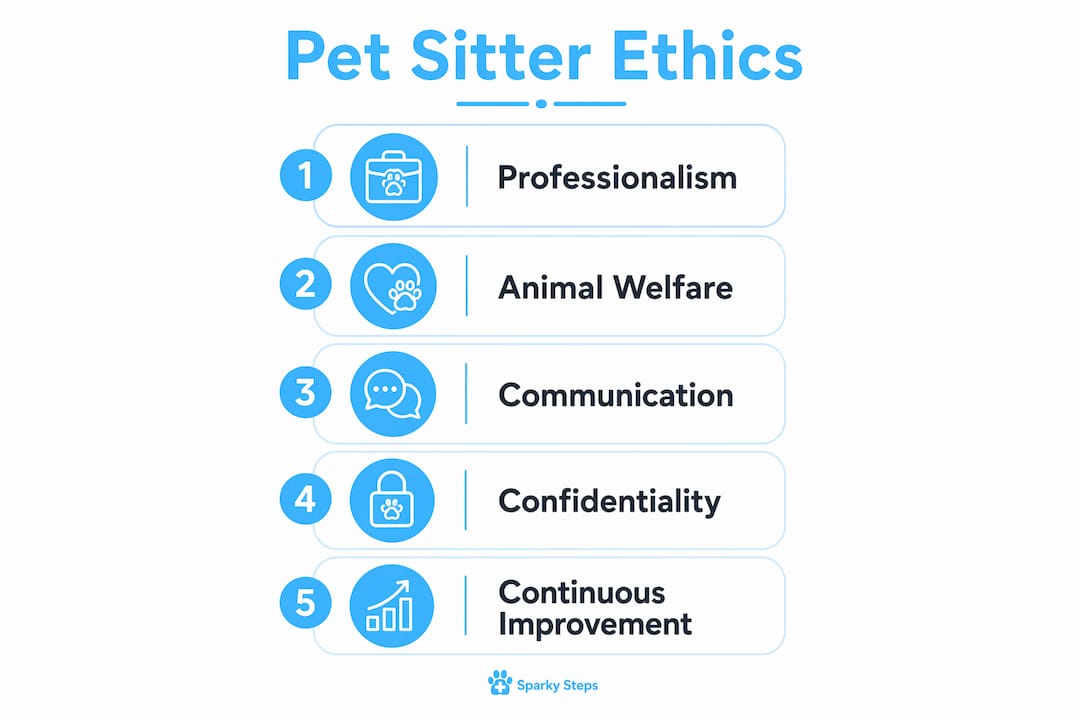
A pet sitter code of ethics defines the non-negotiable behaviors a professional caregiver agrees to uphold across every visit, every client, and every pet in their care. The core principles fall into five clear categories.
- Animal welfare and dignity. Sitters commit to treating every pet with patience, kindness, and respect regardless of the animal’s behavior or special needs. This means no rough handling, no shortcuts on feeding schedules, and no ignoring signs of distress.
- Safety and hazard prevention. Published codes stress checking homes for hazards and ensuring safe walking routes and equipment before every visit. A sitter who spots a chewed electrical cord or an unlocked gate and says nothing is not meeting this standard.
- Client confidentiality. A professional code mandates never posting pictures of a client’s home, pets, or travel plans on social media, and prohibits unauthorized visitors during visits. Your home address and vacation schedule are not content for someone’s Instagram story.
- Punctuality and reliable communication. Sitters must show up on time, follow agreed routines, and communicate proactively if anything changes. Missing a visit without notice is not just unprofessional. It can be dangerous.
- Respect for client property. Ethical sitters treat your home as a trusted guest would. That means no snooping, no using your belongings, and leaving everything exactly as they found it.
Pro Tip: Ask a prospective sitter to walk you through their code of ethics before the first visit. A sitter who can articulate these principles clearly has internalized them. A sitter who looks confused has not.
How do pet sitter codes of ethics work as industry self-regulation?
Pet sitting is not governed by a national licensing board the way that veterinary medicine or even cosmetology is. Ethics and professionalism rely on voluntary standards to fill gaps left by the lack of formal regulation. This makes ethical codes more than just feel-good documents. They function as the industry’s floor for acceptable care.
“PSI’s Global Standards function as minimum expectations for professionalism, enabling pet owners to self-audit and professionals to show accountability.” — Pet Sitter Confessional, Episode 640
When a dispute arises between a pet owner and a sitter, whether over a missed visit, an injured pet, or a damaged home, courts and insurance providers look to industry standards to determine what “reasonable care” means. A sitter who follows a published code has documented evidence of due diligence. A sitter who operates without one has nothing to point to.
Voluntary certifications from organizations like PSI or the National Association of Professional Pet Sitters (NAPPS) signal that a sitter has committed to a specific code and undergone training to uphold it. These credentials do not guarantee perfection, but they do demonstrate that a sitter takes the work seriously enough to be held accountable. Think of it as the difference between someone who says they can cook and someone who went to culinary school. Both might make a great omelet, but one of them knows what to do when the kitchen catches fire.
The self-regulatory model also encourages continuous improvement. Sitters who belong to professional communities share best practices, update their knowledge on animal behavior, and stay current on safety protocols. That ongoing learning directly benefits your pet.
What practical features verify a sitter’s commitment to ethical standards?
Knowing what to look for makes the difference between choosing a great sitter and hoping for the best. Here is a numbered checklist of the most reliable indicators that a pet sitter operates according to a genuine code of ethics.
- Written service agreement. The American Kennel Club’s Harriet Meyers recommends contracts with specific provisions covering payment, cancellation, emergency releases, and emergency contacts. A sitter who resists putting anything in writing is waving a red flag.
- In-home consultation. A sitter who insists on meeting your pet in your home before the first paid visit is following ethical documentation standards. This meeting lets them assess your pet’s needs, identify hazards, and confirm routines.
- Certification or professional membership. Membership in PSI, NAPPS, or the Professional Pet Care Association means the sitter has agreed to a published code. You can verify membership and look up the code directly on those organizations’ websites.
- References and verifiable reviews. Positive reviews on Google, Rover, or a sitter’s own website are useful, but direct references from past clients are more reliable. Ask specifically about reliability and communication.
- Clear emergency plan. Ethical sitters know exactly which veterinary clinic they will use in an emergency, have your vet’s contact information on file, and can name a backup sitter if they become unavailable.
- Transparent communication tools. Services that provide real-time updates, GPS tracking, and photos during visits demonstrate accountability built into their daily practice, not just their marketing.
| Feature | What it signals |
|---|---|
| Written service agreement | Commitment to clear expectations and legal accountability |
| In-home consultation | Genuine interest in your pet’s individual needs |
| Professional certification | Adherence to a published, verifiable code of ethics |
| Emergency plan on file | Preparedness and proactive safety thinking |
| Real-time visit updates | Transparency and ongoing communication |
Pro Tip: When reviewing a sitter’s contract, check specifically for a clause about unauthorized visitors. A code that prohibits unauthorized people during visits protects your home and your pet simultaneously.
What ethical challenges do pet sitters face, and how do codes address them?
Real-world pet sitting involves situations that no training video fully prepares you for. Ethical codes provide the framework for navigating these moments responsibly.
- Medication administration. Giving a pet the wrong dose or skipping a dose because it was inconvenient can cause serious harm. Ethical codes require sitters to follow medication instructions exactly and document every dose. If a sitter is not comfortable administering medication, the code requires them to say so upfront, not discover it mid-visit.
- Confidentiality after visits. Maintaining client confidentiality extends beyond the visit itself. Sitters must never discuss a client’s travel schedule, home layout, or pet details outside the professional relationship. This protects clients from security risks that most pet owners never think to ask about.
- Distraction and unauthorized visitors. A sitter who invites a friend over “just to hang out” while watching your dog has violated a core ethical principle. Codes are explicit that visits are professional commitments, not social opportunities.
- Escape prevention and hazard checks. Proactive hazard thinking such as checking for escape risks and toxic plants before walks is a daily ethical duty, not an optional extra. A sitter who checks the yard fence every single visit is doing their job. One who assumes it is fine because it was fine last week is not.
- Honesty about mistakes. Every experienced sitter has had something go wrong. A sitter who calls you immediately when your dog gets into the trash is practicing ethical transparency. One who hides it and hopes you do not notice is not someone you want back in your home.
- Unreliable communication as a red flag. Missing scheduled visits or failing to respond promptly is a life-or-death concern in pet care, not just a minor inconvenience. Ethical codes treat dependable communication as a non-negotiable standard.
Understanding emergency pet care protocols in advance helps both you and your sitter respond quickly when something unexpected happens.
Key takeaways
A pet sitter code of ethics is the clearest measure of whether a caregiver will protect your pet, respect your home, and communicate honestly when it matters most.
| Point | Details |
|---|---|
| Ethics fill a regulatory gap | Voluntary codes set professional standards where formal licensing laws do not apply. |
| Safety is a daily practice | Hazard checks, secure equipment, and escape prevention are ethical duties on every visit. |
| Confidentiality protects your home | Sitters must never share your travel plans, home details, or pet photos without permission. |
| Written agreements confirm commitment | Contracts covering emergencies, cancellations, and payment are signs of ethical seriousness. |
| Certifications signal accountability | PSI, NAPPS, and similar memberships tie sitters to a published, verifiable code of conduct. |
Why ethics in pet sitting matter more than most owners realize
I have been around pet care long enough to know that the word “ethics” makes some people’s eyes glaze over. It sounds like something for a philosophy class, not a dog walk. But here is what I have actually seen: the moments that define a pet sitter’s character are never the easy ones. They are the 6 a.m. call when a dog has gotten into something toxic. They are the decision to tell a client their cat knocked over a lamp versus hoping no one notices. They are the choice to stay an extra 20 minutes because a nervous rescue dog needed more time to settle.
Ethical codes do not create good sitters. They give good sitters a framework to operate consistently, even when no one is watching. And that last part is the whole point. You are not home. You cannot watch. The code is what stands in for your presence.
What I tell every pet owner who asks how to choose a pet sitter: do not just ask for references. Ask the sitter what they would do if your dog got loose. Ask what they do if they realize they gave the wrong medication. Ask who their backup is if they get sick. A sitter with a genuine ethical foundation answers those questions without hesitation. One who stumbles is telling you something important.
The professional pet care standards that separate great sitters from average ones are not secret. They are written down. Your job as a pet owner is to ask for them.
— Michael
Sparkysteps brings ethical pet care to Chicago’s fur babies
Sparkysteps has operated in Chicago since 2016 with a clear commitment to the professional pet sitting standards described in this article. Every Sparkysteps caregiver is insured, background-checked, and operates under written agreements that cover emergencies, communication, and client confidentiality. Real-time updates with photos, notes, and GPS tracking keep you connected to your pet’s day, because transparency is not a feature. It is an ethical commitment. If you are ready to work with a team that treats your fur baby like family, visit Sparkysteps to learn more about Chicago’s trusted pet care community. And hey, if you want to show the world you are a proud pet parent, we love that energy too.
FAQ
What is a pet sitter code of ethics?
A pet sitter code of ethics is a formal set of professional guidelines that defines how a sitter must treat animals, clients, and client property. It covers safety, confidentiality, communication, and accountability across every visit.
Is a pet sitter code of ethics legally required?
Pet sitting is largely unregulated compared to veterinary care, so ethical codes are voluntary rather than legally mandated. However, they serve as industry benchmarks that courts and insurance providers reference when evaluating disputes.
How do I know if a pet sitter follows an ethical code?
Ask for a written service agreement, verify membership in organizations like PSI or NAPPS, and request an in-home consultation. Sitters who follow a genuine code will have documented protocols for emergencies, communication, and confidentiality.
What are the biggest ethical red flags in a pet sitter?
Missing scheduled visits, refusing to provide a written contract, and poor communication are the clearest warning signs. A sitter who cannot name their emergency veterinary plan or backup caregiver is also a concern.
Why does confidentiality matter in pet sitting ethics?
A sitter who knows your home layout and travel schedule has access to sensitive information. Ethical codes require sitters to never share trip details, home photos, or pet information outside the professional relationship, protecting your security as well as your pet’s welfare.
Written by the Sparky Steps Team.
Authorship Note
The content above aligns with the values of Sparky Steps LLC. While our trusty artificial intelligence helped organize the article, whip up some fun images, and translate ideas into clear, practical language, the final masterpiece is a delightful collaboration between passionate human writers who adore animals and a sprinkle of artificial intelligence magic. Remember, if you think writing is easy, try typing with paws!


