

Most pet owners assume professional pet care means someone stops by to fill a food bowl and take a quick walk around the block. The reality is far more structured, credentialed, and personalized than that. Understanding how professional pet care works helps you make smarter decisions for your fur babies and avoid trusting the wrong people with the animals you love. This guide breaks down every layer of professional pet care, from service types and caregiver qualifications to how daily routines are built and why it all matters for your pet’s health and happiness.
Table of Contents
- Key takeaways
- How professional pet care works: the service types explained
- What qualifies a professional pet caregiver
- How care routines are structured and customized
- Professional vs. non-professional care: what is actually at stake
- How to choose the right professional pet care provider
- My honest take on professional pet care
- Experience professional pet care with Sparky Steps
- FAQ
Key takeaways
| Point | Details |
|---|---|
| Services vary significantly | From drop-in visits to full-time dog nannies, each service type has a distinct scope and time commitment. |
| Credentials define professionalism | Real professionals hold certifications, carry insurance, conduct behavioral vetting, and have emergency policies in place. |
| Routines are personalized | Care plans are customized around your pet’s age, health, behavior, and your specific instructions. |
| Professionalism prevents risks | Qualified caregivers catch early health signs, prevent injuries, and handle emergencies that informal sitters cannot. |
| Asking the right questions matters | Vetting a caregiver with specific questions and credential checks protects your pet and your peace of mind. |
How professional pet care works: the service types explained
Not all professional pet care is the same. The category includes a wide range of services, each designed for a specific situation and level of need. Knowing what each one actually entails helps you match the right service to your pet’s personality and your schedule.
Pet sitting is one of the most common options. A sitter visits your home one or more times a day to feed your pet, provide companionship, handle bathroom breaks, and check on overall wellbeing. It is ideal for cats, small animals, and dogs who are comfortable being home alone for stretches of time. For more detail on how this works locally, Sparky Steps has a helpful breakdown of in-home cat sitting that illustrates the level of care involved.
Dog walking focuses on structured exercise and mental stimulation. A professional walker follows a set route, monitors leash behavior, watches for hazards, and reports back to you with updates. This is not a casual stroll with a neighbor. It is a scheduled service with accountability built in.
Live-in care and dog nannies sit at the high end of the spectrum. Demand for live-in pet nannies has tripled, with these caregivers dedicating 40 to 50 hours per week to a single household’s pets. That means structured mealtimes, enrichment activities, training reinforcement, and around-the-clock supervision.
Pro Tip: If your dog has separation anxiety or a complex medical routine, a dog nanny may offer something a drop-in sitter simply cannot: true consistency and presence throughout the day.
Professional grooming is another pillar of pet care services explained properly. Professional grooming prevents severe matting that can require veterinary sedation to address, and groomers complete the process in roughly two hours compared to the multiple hours an untrained owner might spend. Groomers also spot skin issues, ear infections, and unusual lumps that owners often miss.
Tele-vet and veterinary care round out the picture. Tele-vet services cover minor behavioral concerns and prescription refills cost-effectively, though they do not replace in-person visits for acute needs. With routine vet expenses averaging over $4,000 annually, understanding which service fits which situation directly affects your budget.
| Service type | Typical time commitment | Best for |
|---|---|---|
| Drop-in pet sitting | 30 to 60 minutes per visit | Cats, small animals, independent dogs |
| Dog walking | 30 to 60 minutes per walk | Active dogs needing daily exercise |
| Overnight/house sitting | 8 to 24 hours | Dogs that need company through the night |
| Dog nanny | 40 to 50 hours per week | Complex routines, anxious or medically-managed pets |
| Professional grooming | 1.5 to 3 hours | All pets needing coat, nail, and skin care |
What qualifies a professional pet caregiver
This is where most pet owners have blind spots. Love for animals is not a qualification. A truly professional caregiver brings a structured skill set backed by training, policies, and accountability.

On the certification side, professionals often complete pet first aid and CPR courses, animal behavior training programs, and species-specific care courses. Organizations like Pet Sitters International and the National Association of Professional Pet Sitters offer recognized credentials that signal commitment to the field.
Beyond certifications, professional pet sitters collect veterinary information, emergency contacts, and references before accepting a new client. They conduct behavioral assessments to understand how your pet responds to strangers, other animals, and new environments. They also have clear written policies for emergencies, difficult animal behavior, and scheduling limits. That last point matters more than people realize. A professional who maintains firm client limits does so to protect quality of care, not because they are turning away business.
Insurance and bonding deserve special attention. Many pet owners wrongly assume that large pet-sitting apps provide thorough coverage. In reality, those policies are often limited and may exclude animal-caused damages entirely. A truly professional caregiver carries their own liability insurance and can show you proof.
Pro Tip: Always ask a prospective caregiver to provide their insurance certificate directly, not just a verbal confirmation. A legitimate professional will have it ready.
Key markers of a qualified caregiver include:
- Completed pet first aid and CPR training
- Verifiable references from past clients
- A written emergency contact and protocol plan
- Personal liability insurance, not just app-based coverage
- Clear policies on behavior management and overbooking
How care routines are structured and customized
One of the most misunderstood parts of how professional pet care works is the planning that happens before a caregiver ever sets foot in your home. A good professional does not wing it. They build a care plan around your pet’s specific needs and execute it with consistency.
A typical daily care routine for a dog includes:
- Morning feeding based on the pet’s dietary plan and portion size
- A structured walk or outdoor exercise session with leash and safety checks
- Mid-day enrichment, playtime, or a second walk depending on energy level
- Medication administration if required, logged with time and dose
- Evening feeding and a final bathroom break before the owner returns
- End-of-day report sent to the owner with photos and notes
For pets with health conditions, aging animals, or those recovering from surgery, routines become more precise. Medication timing, mobility support, dietary restrictions, and post-procedure monitoring all get incorporated into a written care plan.
Real-time communication tools have transformed pet care practices. Apps that send GPS-tracked walk maps, timestamped photos, and written visit notes give you a window into your pet’s day even when you are at work across the city. Regular monitoring of subtle health changes is one of the biggest advantages a professional brings, because they see your pet often enough to notice when something is slightly off before it becomes a serious problem.
| Care component | Basic service | High-end management |
|---|---|---|
| Feeding | Standard portioning per instructions | Prescription diet, timed doses, weight monitoring |
| Exercise | Single daily walk | Multiple structured activities, enrichment plans |
| Health monitoring | General wellness check | Symptom logging, vet coordination, medication tracking |
| Owner communication | End-of-day message | Real-time app updates with GPS and photos |
Professional vs. non-professional care: what is actually at stake
It is tempting to ask a neighbor or a friend’s college-aged kid to watch your pet. It is cheaper, convenient, and familiar. But there is a meaningful gap between informal help and what a professional provides.
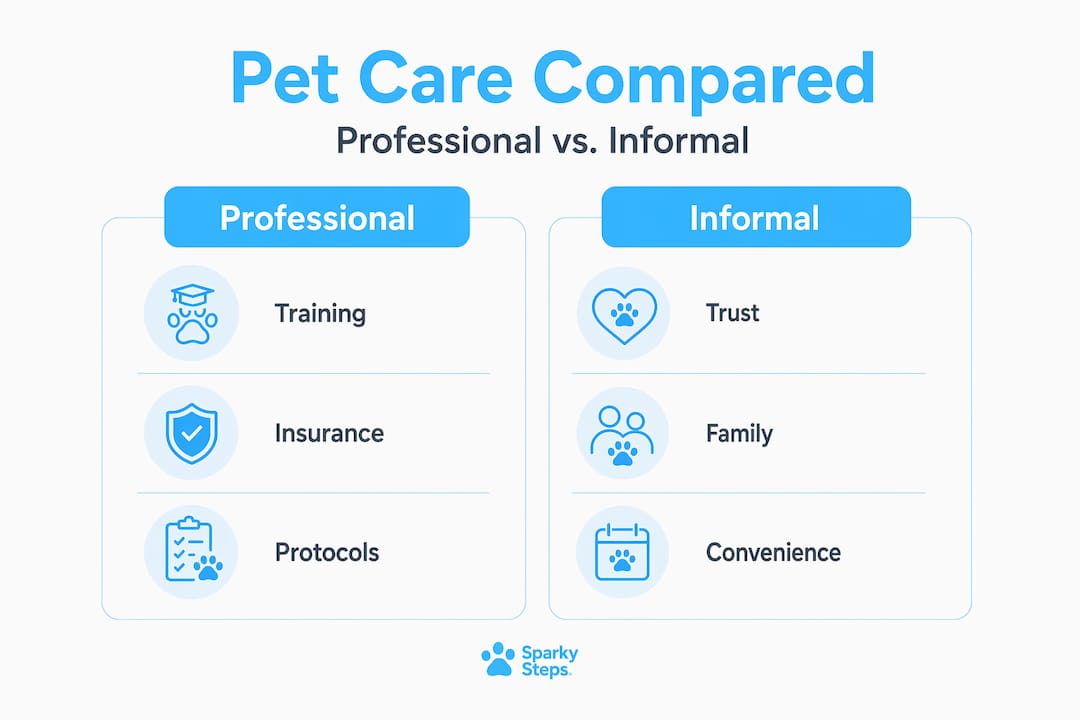
Non-professional caregivers often lack emergency training, have no backup plan if something comes up, and do not carry insurance. They may also underestimate behavioral cues that signal stress, pain, or illness. The risks are not hypothetical. Escaped dogs, medication errors, and delayed responses to health changes are all documented outcomes of unqualified care.
Professional caregivers offer several concrete advantages:
- Consistent schedules that reduce pet anxiety and support behavioral health
- Emergency preparedness including knowledge of nearest emergency vet clinics
- Professional accountability, meaning they show up, or they arrange a qualified backup
- Documentation of every visit, which matters if a health issue emerges later
- Bonded and insured coverage that protects your home and your pet
The cost difference is real but reflects genuine value. House sitting rates typically range from $50 to $100 per day depending on the pet’s needs. That price point covers the training, insurance, and reliability you cannot get from informal arrangements.
This is also why professional pet care saves time for owners in ways that go beyond the obvious. You are not spending evenings worrying, not rushing home at lunch, and not texting a neighbor hoping they remembered to come by.
| Factor | Professional caregiver | Informal helper |
|---|---|---|
| Emergency readiness | Trained, has protocols | Unprepared |
| Insurance | Personal liability coverage | None |
| Consistency | Scheduled, accountable | Variable |
| Health monitoring | Active observation | Passive at best |
| Communication | Documented updates | Unreliable |
How to choose the right professional pet care provider
Knowing what professional care looks like is one thing. Finding the right provider for your specific pet and situation takes a bit more work, but the process is straightforward if you know what to ask.
Start with these steps:
- Request credentials upfront. Ask about certifications, first aid training, and how long they have been working professionally. Look for names and organizations you can verify.
- Check references from current clients. Ask specifically about how the caregiver handles unexpected situations, not just whether they liked the person.
- Clarify your pet’s needs in writing. Feeding schedules, medication instructions, behavioral notes, and emergency contacts should all be documented before care begins.
- Ask about their backup plan. What happens if they get sick? A professional will have an answer. An informal sitter usually will not.
- Review their communication method. Do they send updates during visits? Can you see GPS data from walks? Real-time updates are a sign of genuine accountability.
- Understand their policies on difficult behavior. If your dog gets reactive on walks, what do they do? The answer reveals how trained they actually are.
Pro Tip: Schedule a meet-and-greet before the first official booking. Watch how the caregiver interacts with your pet, not just how they talk to you. Your pet’s comfort level is one of the most honest signals you will get.
For pet owners in Chicago, understanding how weekend pet sitting works can help you see how scheduling and routine planning come together in a real-world context.
When your pet has more specialized needs, consider whether you need a higher level of care. Small animals, for example, have specific handling, diet, and environment requirements that not every sitter is equipped to manage. Sparky Steps covers this in detail in their small animal care services guide.
My honest take on professional pet care
I’ve worked alongside professional pet caregivers long enough to say with confidence that the biggest misconception owners carry is this: they think professionalism is about personality. It is not. A warm, animal-loving person who lacks training, policies, and accountability is still a liability when something goes wrong.
What I’ve seen actually make a difference is the combination of structure and genuine care. The professionals who do this well are not just kind. They are prepared. They know what to do when a dog gets into something it shouldn’t, when a cat stops eating, or when a senior pet shows a subtle change in gait. Those moments are where the investment in professional care pays off in ways you can not put a price on.
I’ve also noticed that owners who invest in professional care tend to be more relaxed and more present when they are home, because they are not carrying the weight of guilt or worry about what happened during the day. That peace of mind is real, and it changes the quality of time you spend with your pet.
The other thing worth saying plainly: professional pet care requires more than love. Structured training and clear policies are what actually keep pets safe and owners confident. Love is the motivation. Training is the tool.
— Michael
Experience professional pet care with Sparky Steps
If this article has helped clarify what trustworthy, expert pet care actually looks like, Sparky Steps is ready to put it into practice for your fur babies. Serving Chicago pet owners since 2016, Sparky Steps provides insured dog walking and pet sitting with consistent caregivers, real-time app updates, GPS tracking, and personalized care plans for dogs, cats, and small animals. Every caregiver is background-checked and matched to your pet’s specific needs. Whether you need a dependable weekday walker or full coverage while you travel, the Sparky Steps team has you covered. And if you want to wear your love for your pet proudly, check out the Dog Person Tee from the Sparky Steps shop.
FAQ
What does a professional pet sitter actually do?
A professional pet sitter visits your home on a set schedule to feed, exercise, and monitor your pet. They document each visit, collect emergency contacts and vet information in advance, and carry liability insurance.
How is a dog nanny different from a pet sitter?
A dog nanny works 40 to 50 hours per week with a single household’s pets, managing full daily routines. A pet sitter typically does drop-in visits or short walks without the same level of daily commitment.
How do I know if a pet caregiver is truly professional?
Ask for proof of certifications, personal liability insurance, and client references. A professional will have written emergency protocols, clear behavior management policies, and a backup plan if they are unavailable.
Does professional grooming really make a difference?
Yes. Professional grooming prevents serious matting that can require veterinary sedation to treat, and groomers catch early signs of skin conditions, ear infections, and other health issues that owners often miss.
How much does professional pet care typically cost?
Costs vary by service. House sitting rates generally run $50 to $100 per day. Dog walking and drop-in visits are typically priced per visit, with rates reflecting the caregiver’s training, insurance, and reliability.
Written by the Sparky Steps Team.


