


TL;DR:
- Proper ferret care in Chicago requires vet verification, consistent grooming, and a clean environment suited to local climate. Owners should connect with trusted rescue organizations like the GCFA and maintain a high-protein diet for their ferrets’ health. Proactive planning, community involvement, and regular cleaning are key to a happy, healthy ferret.
Ferret care in Chicago is defined as the specialized practice of meeting an exotic pet’s dietary, medical, grooming, and environmental needs within the specific context of Chicagoland resources and climate. Ferrets are classified as exotic animals, which means not every vet in the city can treat them, not every pet store stocks the right food, and not every sitter knows how to handle their quirky, high-energy personalities. The Greater Chicago Ferret Association (GCFA) has provided health care and vaccinations to over 10,000 ferrets and shelters hundreds annually, making it the single most important local organization for any Chicago ferret owner to know. Whether you are a first-time ferret parent or a seasoned weasel wrangler, this guide covers everything from finding a trusted vet to keeping your fur baby’s cage smelling less like a locker room.
What are the best ferret vet services in Chicago?
Veterinary care is the foundation of responsible ferret ownership, and Chicago presents a specific challenge: not all Chicago vets treat ferrets as exotic animals, so you must verify a clinic’s exotic pet capabilities before you ever need them. This is not a minor detail. Showing up at an emergency with a sick ferret only to hear “we don’t see exotic pets” is a stressful situation that is entirely preventable with a few phone calls made in advance.
Routine exams are non-negotiable for ferret health. Professional veterinary care identifies dental problems, GI issues, parasites, and weight changes that owners routinely miss at home. Ferrets are notorious for hiding illness until it becomes serious, so a vet who knows ferret physiology is your early warning system.
Here is how to build your Chicago ferret vet plan:
- Search GCFA-endorsed listings. The GCFA maintains references to Chicago exotic pet vet listings as starting points, but you must call each clinic directly to confirm they currently treat ferrets.
- Maintain multiple contacts. The GCFA advises owners to keep several verified vet contacts on hand for emergencies, not just one. Clinics change staff and policies.
- Ask the right questions. When you call, ask specifically: “Do you have a veterinarian experienced with ferrets?” and “Do you handle ferret emergencies?” A general “yes, we see exotic pets” is not enough.
- Locate an emergency exotic vet. Standard emergency animal hospitals often do not treat ferrets. Identify at least one 24-hour exotic emergency option in the Chicagoland area before you need it.
Pro Tip: Save your ferret vet contacts in your phone under a label like “Ferret Vet Emergency” so you are never scrambling to find a number at 2 a.m. when your little guy decides to eat something he absolutely should not have.
For broader small animal care planning in Chicago, the small animal care resources at Sparky Steps offer useful context on navigating local exotic pet clinic options.
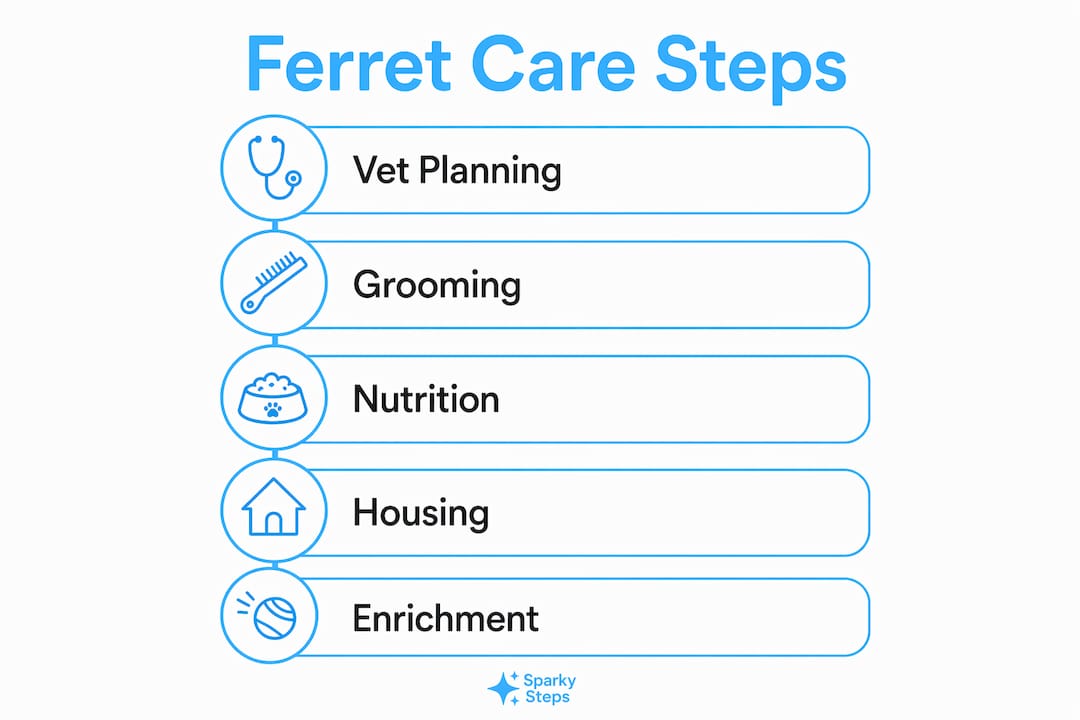
How to groom and control odor for your Chicago ferret
Chicago ferret grooming is one of the most misunderstood aspects of ferret ownership. The musky smell ferrets are famous for does not come primarily from being dirty. It comes from their skin’s natural oil glands. Over-bathing is actually counterproductive: bathing too frequently strips the skin of its natural oils, which causes the glands to overcompensate and produce even more musk. The sweet spot is a bath every two to three months using lukewarm water and a mild or ferret-specific shampoo like Marshall Ferret Shampoo or a gentle tearless formula.
Beyond bathing, a consistent grooming routine covers three other areas:
- Nail trimming. Ferret nails grow fast and can snag on fabric or scratch you during playtime. Trim them every two to three weeks with small animal nail clippers. Wrapping your ferret in a towel (“the ferret burrito”) keeps them calm and your fingers intact.
- Ear cleaning. Ferrets produce dark brown ear wax that looks alarming but is normal. Clean ears gently every one to two weeks with a cotton ball and a ferret-safe ear cleaner. Never use cotton swabs deep in the ear canal.
- Coat brushing. During shedding seasons, which happen twice a year, a soft bristle brush removes loose fur and reduces the amount your ferret ingests during self-grooming.
Pro Tip: The real secret to odor control is not more baths. It is cleaner bedding and a cleaner cage. Washing your ferret’s hammocks and fleece bedding weekly cuts musky smell faster than any shampoo.
Common grooming mistakes include using human shampoo (too harsh), bathing monthly or more (triggers more musk), and skipping ear checks (leads to ear mite infestations that require a vet visit). Keep it simple, keep it consistent, and your ferret will smell perfectly tolerable. Well, mostly.
What housing, diet, and daily routines support a healthy Chicago ferret?
Setting up the right home environment is where ferret health tips in Chicago get practical. Chicago’s cold winters and humid summers affect your ferret’s comfort, so indoor climate control matters. Ferrets are highly sensitive to heat and can suffer heatstroke at temperatures above 80°F. Keep their living space between 60°F and 75°F year-round.
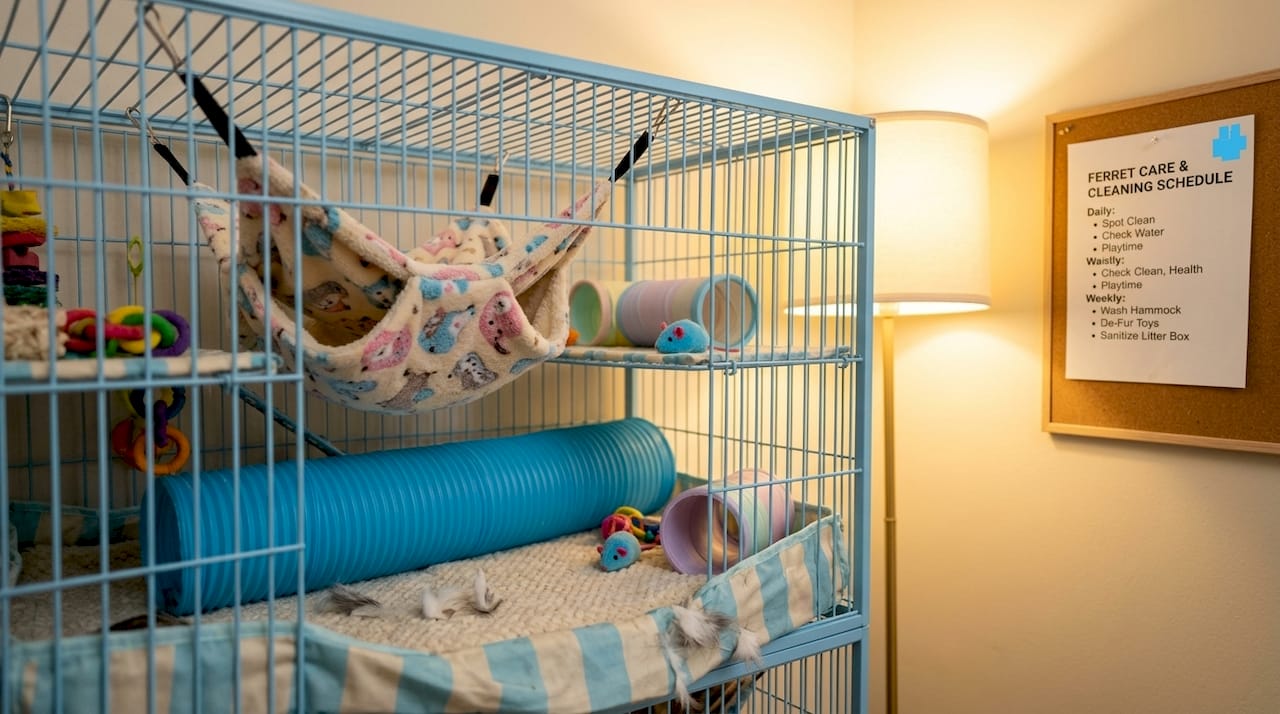
Cage setup and cleaning schedule
The ideal ferret cage is multi-level, wire construction with a solid floor (wire floors damage ferret feet), and at minimum 3 feet wide by 2 feet deep by 2 feet tall for a single ferret. Bigger is always better. Here is the cleaning routine that keeps odor and illness in check:
- Daily: Spot-clean the litter box, remove uneaten food, and wipe down soiled surfaces.
- Weekly: Deep-clean the cage with a pet-safe disinfectant, wash all bedding and hammocks, and scrub food and water dishes.
- Monthly: Scrub hard-to-reach corners, replace worn bedding, and inspect the cage structure for sharp edges or broken latches.
Weekly bedding laundering is the single most effective step for controlling ferret odors and reducing infection risk. This is not optional maintenance. It is the linchpin of a healthy ferret environment.
Nutrition and best ferret food in Chicago
Ferrets are obligate carnivores. Their digestive systems are built for high-protein, high-fat, low-carbohydrate diets. The best ferret food in Chicago is a high-quality kibble with meat listed as the first ingredient, such as Marshall Premium Ferret Diet, Zupreem Ferret Diet, or Wysong Ferret Archetype. Avoid foods with corn, peas, or fruit as primary ingredients. These spike blood sugar and contribute to insulinoma, a common and serious ferret disease.
| Food type | Recommended? |
|---|---|
| High-protein ferret kibble (Marshall, Zupreem) | Yes, primary diet |
| Raw meat diet (chicken, turkey) | Yes, with proper handling |
| Cat food with high meat content | Acceptable short-term backup |
| Dog food or grain-heavy kibble | No, nutritionally inadequate |
| Fruits, vegetables, sugary treats | No, linked to insulinoma |
Fresh water must be available at all times, either in a heavy ceramic bowl or a sipper bottle. Ferrets eat small amounts frequently throughout the day, so free-feeding kibble is the standard approach for most owners.
Enrichment and hazard-proofing your Chicago home
Ferrets need at least four hours of supervised out-of-cage time daily. They are curious, fast, and remarkably good at getting into places they should not be. Before letting your ferret roam, ferret-proof the space by blocking gaps behind appliances, securing cabinets, and removing rubber items (ferrets love to chew and swallow rubber, which causes life-threatening blockages).
How to find local ferret shelters and trusted sitters in Chicago
Adopting a ferret in Chicago through a rescue is the most responsible path for most new owners. The GCFA operates as a no-kill rescue and requires an online adoption application with committee approval before any ferret is placed. This process exists because ferrets have specialized medical and care needs that not every household is prepared for. The screening is thorough by design, and that is a good thing.
Here is what to know about Chicago’s local ferret community and sitter options:
- GCFA does not offer boarding. The shelter lists sitter recommendations, but these are unendorsed referrals. The GCFA explicitly notes that these listings are not official endorsements, so you must personally screen any sitter you contact through their list.
- Interview sitters thoroughly. Ask about their direct experience with ferrets, how they handle medical emergencies, and whether they are comfortable with the ferret’s specific diet and enrichment needs. A sitter experienced only with dogs or cats is not automatically qualified for ferret care.
- Volunteer with GCFA. Getting involved with the Greater Chicago Ferret Association connects you with experienced owners, fosters community knowledge-sharing, and gives your ferret access to health events and vaccination clinics.
- Use vetted local services. For owners who want professional, insured care, resources like the weekend pet sitting guide from Sparky Steps outline what to look for when evaluating a sitter for small or exotic animals.
The adoption process through GCFA reflects a broader truth: ferret ownership is a commitment that benefits enormously from community support and education before the ferret ever comes home.
Key takeaways
Successful ferret care in Chicago depends on proactive vet planning, consistent grooming habits, proper nutrition, and connection with local rescue resources like the GCFA.
| Point | Details |
|---|---|
| Verify exotic vets in advance | Call multiple Chicago clinics before an emergency to confirm ferret treatment capability. |
| Groom every few months, not monthly | Over-bathing increases musk; bathe every two to three months with ferret-safe shampoo. |
| Clean the cage weekly, not occasionally | Weekly bedding laundering and deep-cleaning are the most effective odor and infection controls. |
| Feed high-protein, meat-first kibble | Brands like Marshall and Zupreem meet ferret nutritional needs; avoid grain-heavy or sugary foods. |
| Screen sitters personally | GCFA sitter lists are unendorsed referrals; always interview and verify sitter experience directly. |
What Chicago ferret owners actually get wrong
I have talked with a lot of Chicago pet owners over the years, and ferret owners consistently make the same two mistakes. The first is waiting until something is wrong to find a vet. Chicago has excellent exotic animal care available, but it is not uniformly distributed across the city. The clinics that genuinely know ferrets are worth finding before your ferret swallows a rubber toy at 11 p.m. on a Saturday. The second mistake is underestimating how much the environment matters. Owners spend money on premium food and then wonder why their ferret smells terrible. Nine times out of ten, the answer is a cage that is not being cleaned thoroughly or often enough.
What I find genuinely rewarding about Chicago’s ferret community is the GCFA. It is rare to find a rescue organization that has served over 10,000 animals and still operates with the hands-on care and educational commitment they bring. New ferret owners who plug into that community skip years of trial and error. The ferrets are also, objectively, hilarious. They do this thing called the “dook and war dance” when they are excited, which looks like a tiny furry creature having the best day of its life. That alone makes the cage cleaning worth it.
— Michael
How Sparky Steps supports Chicago ferret owners
When you need to travel or simply need a break, finding someone you trust with your ferret is not easy. Sparky Steps has served Chicago pet owners since 2016 with insured, background-checked caregivers who provide personalized attention to small and exotic animals. The team offers real-time updates through an app with photos and notes, so you always know your ferret is safe and cared for. If you are looking for a dependable, local option for pet sitting that goes beyond the standard dog-and-cat experience, Sparky Steps is worth a conversation. Your fur baby deserves someone who actually knows what a dook is.
FAQ
What vets in Chicago treat ferrets?
Not all Chicago veterinary clinics treat ferrets as exotic animals, so you must call ahead to verify. Use GCFA-referenced listings as a starting point and confirm current ferret care capability directly with each clinic.
How often should I bathe my ferret?
Bathe your ferret every two to three months using lukewarm water and a mild or ferret-specific shampoo. Bathing more frequently strips skin oils and actually increases musky odor.
Where can I adopt a ferret in Chicago?
The Greater Chicago Ferret Association is the primary local ferret rescue, operating a no-kill shelter with a formal adoption application and committee review process. Visit gcfa.com to start an application.
What is the best food for ferrets available in Chicago?
High-protein ferret kibble with meat as the first ingredient is the standard recommendation. Brands like Marshall Premium Ferret Diet and Zupreem Ferret Diet are widely available and nutritionally appropriate.
How do I control ferret odor in my Chicago apartment?
Weekly cage cleaning, including laundering all bedding and hammocks, is the most effective odor control method. Limit baths to every few months, as over-bathing worsens musk production.
Written by the Sparky Steps Team.


