


Most Chicago cat owners assume in-home cat sitting means a neighbor popping in to refill a bowl. It doesn’t. What is in-home cat sitting, really? It’s a professional care arrangement where a trained, accountable sitter comes to your home to maintain your cat’s exact routine, handle medications, provide genuine companionship, and keep your fur baby safe and comfortable while you’re away. This guide breaks down what quality in-home cat care actually includes, what professional standards reputable sitters follow, and how to find someone you can genuinely trust in Chicago.
Table of Contents
- What is in-home cat sitting and why is it valuable?
- Industry standards and quality frameworks for in-home cat sitting
- Preparing your home and cat for in-home sitting: meet-and-greet and checklists
- Common challenges and expert advice for successful in-home cat sitting
- Choosing the right in-home cat sitting service in Chicago
- Why the conventional wisdom on cat sitting is backwards
- Find trusted in-home cat sitting support with Sparky Steps in Chicago
- Frequently asked questions
Key Takeaways
| Point | Details |
|---|---|
| Professional care standard | In-home cat sitting involves consistent routines, safety protocols, and emergency preparedness beyond casual visits. |
| Prepare beforehand | Scheduling meet-and-greets and providing detailed instructions reduces stress for cats and improves sitter performance. |
| Common pitfalls | Most in-home cat sitting issues arise from unclear feeding and litter instructions, not lack of affection. |
| Choose carefully | Evaluate sitters based on insurance, contracts, communication, and references to ensure reliable care. |
| Trust matters | A sitter’s professionalism and documented practices safeguard your cat’s well-being and your home’s security. |
What is in-home cat sitting and why is it valuable?
In-home cat sitting means professional care happens inside your home, on your cat’s schedule, without uprooting them to a foreign environment. That distinction matters more than most people realize. Cats are deeply territorial animals. A change in location triggers stress responses that can affect their appetite, litter box habits, and immune system. Boarding removes them from everything familiar. In-home care doesn’t.
Professional pet sitting involves feeding, play, medication, and maintaining your cat’s routine in your home to reduce stress. That’s not a casual favor. That’s a skilled service requiring preparation, communication, and accountability.
Here’s what quality in-home cat sitting typically covers:
- Feeding at your cat’s regular times, with the exact portions and food they’re used to
- Fresh water and any dietary supplements or prescription food
- Litter box cleaning on the schedule your cat expects
- Medication administration, including pills, ear drops, or subcutaneous fluids for senior cats
- Playtime and companionship, especially critical for cats who experience anxiety when left alone
- Home security checks, like bringing in mail, adjusting lights, or noting anything unusual
- Visit reports, often with photos, so you know your cat is okay
For Chicago owners managing busy travel schedules, this level of professional cat sitting advice is the difference between coming home to a content cat and coming home to a stressed one with a hairball problem and a skipped litter box.
Industry standards and quality frameworks for in-home cat sitting
Not every person who calls themselves a cat sitter operates at the same level. Fortunately, the industry now has benchmarks. Pet Sitters International released global professional standards covering contracts, insurance, health protocols, emergency preparedness, client security, and professional conduct. These are the ten categories that define what separates a trustworthy professional from someone just looking to make extra cash.

| Standard category | What it means for your cat |
|---|---|
| Written contracts | Clear expectations for visit frequency, services, and payment |
| Insurance and bonding | Financial protection if accidents happen in your home |
| Animal health protocols | Recognizing signs of illness and knowing when to call a vet |
| Sanitation practices | Preventing cross-contamination between client homes |
| Emergency preparedness | Sitter knows your vet, backup contacts, and crisis procedures |
| Client privacy and security | Your home’s access and personal details are protected |
| Professional conduct | Ethical behavior, respectful communication, and reliability |
| Documented routines | Written care notes so nothing gets missed between visits |
When you interview a sitter, you’re not just checking for a friendly personality. You’re checking whether they operate with this level of structure. A sitter who can’t show you a contract or explain their emergency plan is not meeting modern professional pet care standards.
Pro Tip: Ask any prospective sitter specifically what happens if your cat shows signs of illness during a visit. Their answer will tell you everything about how seriously they take their role.
Understanding these standards clarifies why preparation and communication are crucial before your cat sitter’s first visit.
Preparing your home and cat for in-home sitting: meet-and-greet and checklists
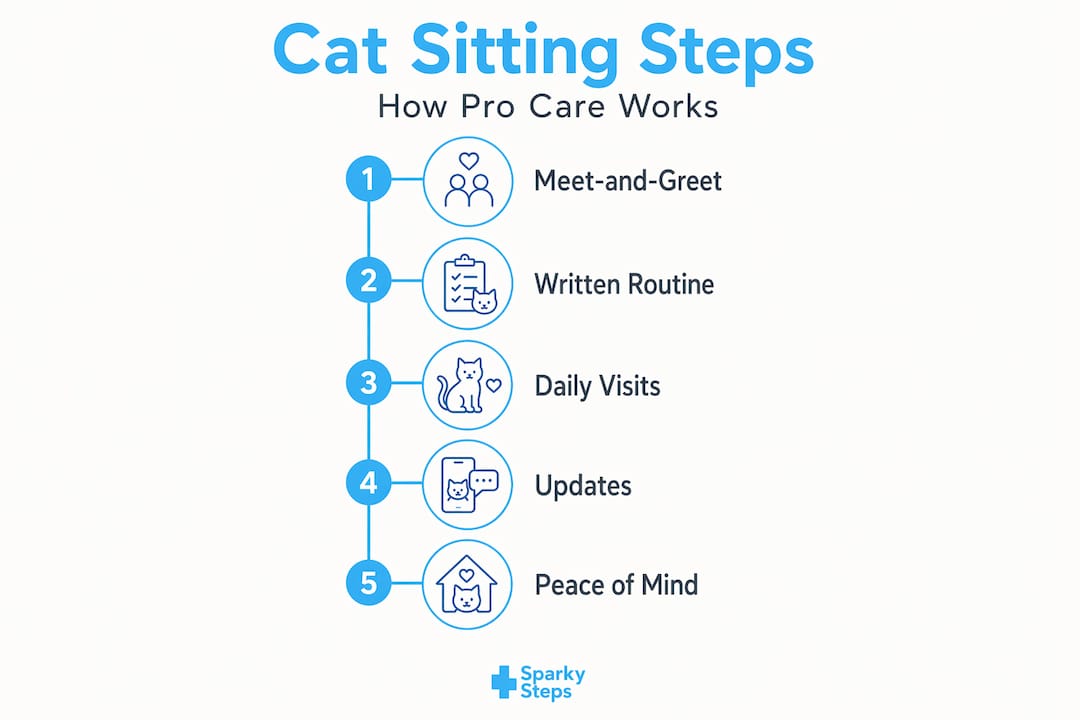
The most preventable problems in cat sitting come from skipped preparation steps. A meet-and-greet and checklist covering feeding, litter, medication, and emergency contacts prevent missed routines and ease stress for cats and sitters alike. Think of the meet-and-greet as your cat’s job interview for the sitter, and your chance to confirm the sitter is someone you’d trust with a key to your home.
Here’s a step-by-step preparation process that works:
- Schedule a meet-and-greet at least one week before your trip. Give your cat time to associate the sitter’s scent and voice with a safe, positive experience.
- Prepare a written feeding guide. Include exact portions, brand names, feeding times, and any quirks like “she only eats if the bowl is on the left side of her mat.”
- Document your litter box setup. How many boxes, which litter, how often to scoop, and where to dispose of waste.
- List all medications with dosage, timing, method of delivery, and what to do if your cat refuses or vomits a pill.
- Identify your cat’s favorite hiding spots. Tell the sitter exactly where to check if your cat isn’t visible during a visit.
- Write down all emergency contacts. Your vet’s number, a 24-hour emergency animal hospital in Chicago, and a trusted local contact who can help if needed.
- Walk through your home together. Show the sitter the thermostat, the fuse box, where extra food is stored, and any areas that are off-limits.
For shy cats, don’t expect an instant bond. Use weekend pet sitting preparation to schedule a short trial visit before your actual trip. Even one 20-minute drop-in with you present helps your cat file the sitter under “safe human” rather than “alarming stranger.”
Pro Tip: Create a separate laminated card with your vet’s address and your cat’s medical history. Keep it on the fridge. Your sitter will find it immediately in a stressful moment.
Common challenges and expert advice for successful in-home cat sitting
Even well-meaning, experienced sitters run into problems when instructions are vague. The highest failure rate in cat sitting comes from misaligned logistics like unclear feeding portions and litter disposal, not from a lack of affection. That’s a crucial insight. Most sitters genuinely care. What trips them up is incomplete information.
The most common issues Chicago cat owners report after sitting experiences:
- Unclear feeding amounts that result in overfeeding or underfeeding
- Missing litter instructions, leading to the wrong product being used or boxes not cleaned frequently enough
- No guidance on hiding behavior, causing a sitter to leave without confirming the cat’s safety
- Skipped medications because the process wasn’t clearly demonstrated in person
- Miscommunication about visit length, leaving cats alone longer than expected
“When the cat hides and the sitter doesn’t know where to look or how long to search, everyone’s anxiety spikes, including your cat’s. Clear written instructions and a behavioral baseline from the meet-and-greet solve this entirely.”
Short trial visits are one of the most underused tools in cat care at home. A sitter who visits twice before your actual trip isn’t just doing you a favor. They’re building genuine familiarity with your cat’s body language, preferences, and boundaries. Cats notice. By the third visit, most cats who initially hid will at least acknowledge the sitter from a distance.
Visit cat care challenges and tips for more guidance on managing these common situations with confidence.
Choosing the right in-home cat sitting service in Chicago
Now you know what quality looks like. Here’s how to apply it. When you evaluate any cat sitting service in Chicago, these are the questions worth asking before you hand over your key:
- Does the sitter provide a written contract specifying visit length, frequency, and services?
- Are they insured and bonded? Can they show proof?
- Do they have verifiable references from other Chicago cat owners?
- How do they communicate updates? Photos, app notifications, written reports?
- What is their emergency protocol if your cat is injured or ill during a visit?
- Have they cared for cats with medical needs similar to your cat’s?
- Are they willing to do a paid trial visit before your trip?
A meet-and-greet plus written routines allow you to compare sitters on professionalism, warmth, and reliability for your unique cat’s needs. Don’t shortcut this step, even if a sitter comes highly recommended.
| Feature | Professional sitter | Informal arrangement |
|---|---|---|
| Written contract | Yes, always | Rarely |
| Insurance | Yes, documented | No |
| Emergency plan | Defined and communicated | Improvised |
| Routine documentation | Standard practice | Depends on the person |
| Consistent caregiver | Yes, assigned | Variable |
| Real-time updates | App, photos, notes | Text if remembered |
Cats thrive on consistency. The more a sitter can mirror your normal schedule, the less disruption your cat experiences. That predictability is why choosing cat sitting services based on credentials and structure matters far more than choosing based on price alone.
Why the conventional wisdom on cat sitting is backwards
Here’s the part most cat sitting articles skip: people undervalue in-home cat sitting because cats have a reputation for independence. “They’ll be fine, they’re cats” is something we’ve all heard. That belief leads owners to hire the cheapest or most convenient option without asking hard questions.
But in-home care isn’t just dropping by. It’s a consistent, safety- and privacy-focused practice involving documented routines and emergency preparedness. The sitter has access to your home, your cat’s medical information, and sometimes your daily schedule. That’s a significant level of trust, and it deserves a significant level of scrutiny.
We’ve seen owners choose a sitter based on cute Instagram photos and a friendly smile, only to come home to a cat who skipped meals for three days because the sitter didn’t realize the food needed to be warmed slightly first. That’s not negligence. That’s incomplete information combined with a lack of professional structure.
The owners who feel most at peace during travel aren’t the ones who hired the cheapest option. They’re the ones who treated the hiring process like what it actually is: bringing a professional into their home to care for a family member. Check credentials at professional in-home cat sitting insights. Ask the hard questions. Require documentation. Your cat’s well-being depends on the standards you set before you leave.
Find trusted in-home cat sitting support with Sparky Steps in Chicago
If everything you’ve read here has you thinking “I need someone I can actually trust,” Sparky Steps was built for exactly that. Serving Chicago since 2016, we’ve built our entire approach around the standards that matter most: trained and insured caregivers, real-time photo and note updates through our app, and a consistent caregiver model so your cat sees the same familiar face every visit.

Every client relationship starts with a meet-and-greet where we learn your cat’s routine, personality, hiding spots, and medical needs before we ever visit alone. We don’t do vague. We do documented, personalized care that fits your cat’s actual life. Whether you’re traveling for a weekend or a few weeks, we’ll keep your fur baby comfortable, healthy, and right at home. Check out what Sparky Steps professional pet care looks like in practice, we got your back!
Written by the Sparky Steps Team
Frequently asked questions
What does in-home cat sitting typically include?
In-home cat sitting usually includes feeding, litter box maintenance, administering medication if needed, playtime, and companionship in your home to maintain your cat’s routine. As noted in a professional pet sitting overview, quality sitters also handle routine upkeep that keeps your cat calm and healthy.
Why is a meet-and-greet important before in-home cat sitting?
A meet-and-greet helps your cat recognize the sitter’s scent and voice before solo visits begin, reducing anxiety during the actual sitting period. It also gives you a chance to walk through your cat’s full routine and confirm the sitter is prepared. A solid preparation checklist shared during the meet-and-greet prevents the most common care lapses.
What professional standards should a reputable cat sitter meet?
Reputable cat sitters follow documented standards including clear contracts, verified insurance, health and sanitation protocols, emergency preparedness, client privacy practices, and ethical conduct. PSI’s global standards now provide a formal benchmark for exactly what professional pet sitting businesses should uphold.
How should I prepare instructions for my cat sitter?
Provide a detailed written routine covering feeding times and amounts, litter box care, hiding spots, medication instructions, emergency contact info, and any household rules. A cat sitter checklist should include per-cat specifics so nothing gets missed, especially for multi-cat households or cats with medical needs.
What if my cat hides when the sitter arrives?
Hiding at first is completely normal cat behavior, especially with a new person. Use the meet-and-greet to establish a behavioral baseline and give the sitter written instructions on where to look and how long to search before contacting you. Short trial visits before your trip help your cat build comfort with the sitter’s presence over time.


