

A pet sitter’s role during overtime is to provide consistent, structured care that keeps your fur baby safe, calm, and content while you’re stuck at the office longer than planned. When your workday stretches past 5 PM, your dog or cat doesn’t know why you’re late. They just know you’re not home. For Chicago pet parents on the North Side, that gap between “I’ll be home by 6” and “I’m still in a meeting at 8” is exactly where dependable pet care during overtime becomes non-negotiable. The good news: the right sitter makes that gap disappear.
What is the role of a pet sitter during overtime hours?
The role of a pet sitter during overtime is to step in as a calm, familiar presence that holds your pet’s routine together. Industry guidelines recommend that dogs not be left alone for more than 4 hours without a break. That guideline exists because prolonged alone time leads to anxiety, accidents, and behavioral regression. A sitter closes that window before it becomes a problem.
Pet sitting responsibilities during extended absences go well beyond a quick pop-in. A dependable sitter handles the full picture of your pet’s day. Here is what that looks like in practice:
- Feeding and fresh water: Meals stay on schedule, even when your schedule does not.
- Potty breaks: Regular outdoor time prevents accidents and keeps your dog comfortable.
- Medication administration: For pets on prescriptions, timing matters. A prepared sitter follows your instructions exactly.
- Exercise and mental enrichment: A walk around Andersonville or a puzzle toy session in Ravenswood keeps energy levels balanced.
- Health and behavior monitoring: A familiar sitter notices when something is off, whether that is a limp, a skipped meal, or unusual hiding behavior in a cat.
- Routine maintenance: Feeding at the same time, walking the same route, and using the same commands reduces anxiety significantly.
- Real-time communication: Updates, photos, and notes sent directly to you so you can focus on work without worrying.
Pro Tip: Create a one-page “pet profile” for your sitter that lists feeding times, walk routes, favorite toys, and any quirks. A sitter who knows your dog prefers the left side of the leash is a sitter who already feels familiar to your pet.
Midday visits from sitters significantly reduce anxiety and improve behavior during long work hours. Cats benefit from daily check-ins too, not just dogs. That midday break is often the single most effective tool in your overtime care plan.

Why does sitter consistency matter so much for your pet?
The same trusted sitter every time is not a luxury. It is a welfare decision. A pet who recognizes their sitter’s voice, scent, and routine experiences far less stress than one greeting a stranger at the door. Familiarity builds trust, and trust reduces the cortisol spike that comes with an unfamiliar visitor.
Consistency also makes your sitter better at their job. A sitter who visits three times a week learns your dog’s baseline. They know what “normal” looks like, so they catch what “off” looks like early. That kind of attentiveness is only possible through a recurring relationship, not a one-time visit.
“Structured, predictable routines and low-stress care are the key factors in settling anxious pets during long alone times. More exercise alone does not fully manage anxiety. Pets need controlled structure and predictability to feel safe.” — SpawtOn Pet Services
This insight reframes how most pet parents think about overtime care. Tiring your dog out before you leave is not the answer. A calm, predictable sitter who shows up at the same time and follows the same routine is. For dogs already prone to separation anxiety, that consistency is the difference between a settled afternoon and a destroyed couch cushion.
Owner stress also travels. Dogs exhibit pacing, whining, and restlessness when their pet parents are emotionally exhausted. A calm, familiar sitter acts as a buffer, breaking that emotional feedback loop and giving your pet a steady anchor when your own energy is scattered across a deadline.
What risks do pets face during overtime without proper care?
Pets left alone too long face real consequences. Prolonged alone time causes anxiety, accidents, and behavioral setbacks that can take weeks to reverse. These are not minor inconveniences. They are welfare issues that compound over time if overtime becomes a regular pattern.
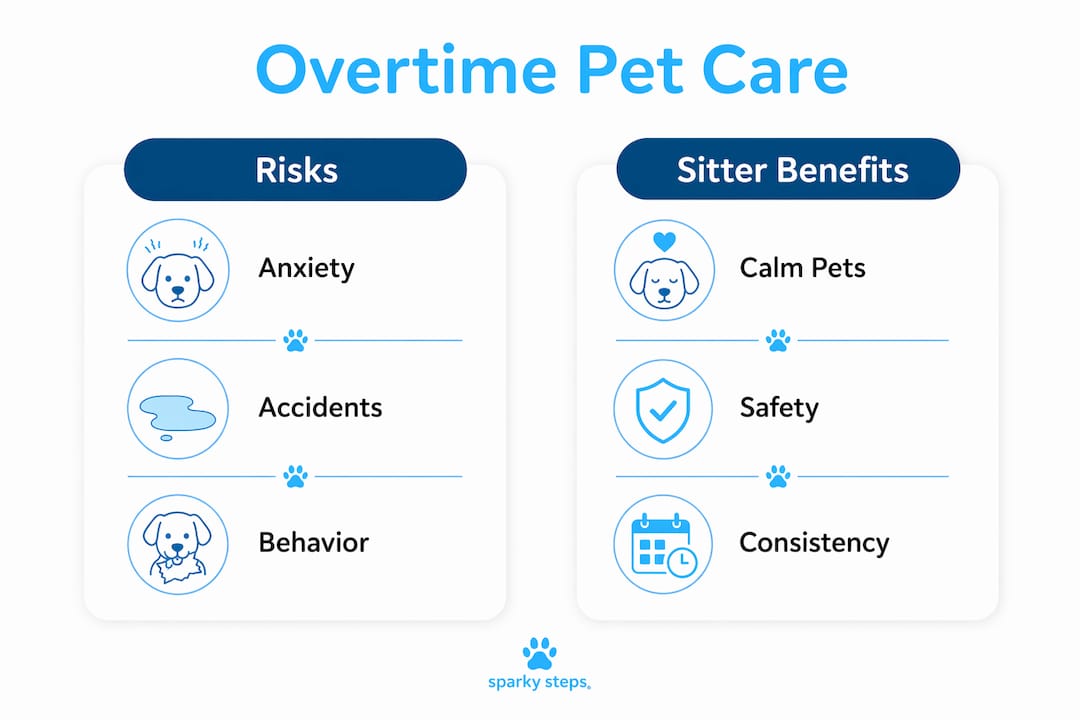
| Risk | What it looks like | How a sitter helps |
|---|---|---|
| Separation anxiety | Pacing, whining, destructive behavior | Familiar presence and predictable routine |
| Accidents indoors | Soiling, urinary issues | Scheduled potty breaks every 3–4 hours |
| Behavioral regression | Forgetting training, resource guarding | Consistent commands and calm reinforcement |
| Health changes missed | Limping, appetite loss, lethargy | Regular observation by a sitter who knows the baseline |
| Emotional distress | Hiding, excessive grooming in cats | Daily check-ins and enrichment activities |
The 4-hour maximum alone time guideline is the industry standard for adult dogs. Puppies, seniors, and anxious dogs need breaks even more frequently. That standard exists because the physical and emotional toll of longer isolation is measurable and preventable.
A prepared sitter also carries an emergency plan. Well-prepared sitters maintain contact with pet parents, have backup protocols, and can coordinate with a vet if needed. That layer of preparedness is what separates professional pet care from a neighbor doing you a favor. (No offense to your neighbor. They’re probably great. But do they have a vet’s number saved in their phone? Exactly.)
How to choose a pet sitter for dependable overtime coverage in Chicago
Choosing the right sitter for overtime coverage requires more than a quick search. You need someone vetted, consistent, and genuinely familiar with your pet’s needs. Here is a practical process for Chicago pet parents:
- Verify credentials. Look for sitters who are licensed, bonded, and insured. This protects you, your home, and your pet if anything goes wrong.
- Check for consistency. Ask directly: will the same person show up every time? A rotating pool of strangers defeats the purpose of building familiarity.
- Review their communication style. A trustworthy sitter sends updates without being asked. Real-time updates via an app like DoTimely mean you see GPS tracking, photos, and visit notes in real time.
- Conduct a meet-and-greet. Watch how the sitter interacts with your pet before the first solo visit. Your dog’s body language tells you everything.
- Set clear expectations in writing. Feeding times, walk routes, emergency contacts, medication instructions, and your vet’s address. Put it all in one document.
- Ask about emergency protocols. What happens if your pet shows signs of illness? What if you cannot be reached? A prepared sitter has answers ready.
Use Sparky Steps’ trustworthy pet sitter checklist to evaluate any sitter you are considering. It covers the questions most pet parents forget to ask until it is too late.
Pro Tip: Before your first overtime visit, do a dry run. Have the sitter visit while you are home but in another room. Your pet learns the sitter is safe. The sitter learns your pet’s quirks. Everyone wins, including your couch cushions.
Preparing your home matters too. Read Sparky Steps’ complete sitter preparation guide for a room-by-room checklist that makes every visit smoother.
What are the benefits of recurring pet sitting during frequent overtime?
Recurring pet sitting is not just convenient. It is clinically better for your pet. Regular, recurring care creates predictability that supports behavioral change and emotional regulation. A pet who sees the same sitter three times a week develops a genuine relationship, not just a tolerance for strangers.
The benefits stack up quickly for pet parents managing frequent overtime:
- Deeper behavioral insight: A recurring sitter notices gradual changes in appetite, energy, or mood that a one-time visitor would miss entirely.
- Reduced owner guilt: Reframing pet care as proactive support shifts your mindset from “I’m failing my pet” to “I’ve set my pet up for a great afternoon.” That mental shift matters.
- Flexible scheduling: A sitter who knows your routine can adapt when overtime hits unexpectedly. You text at 4 PM, they adjust at 4:05 PM.
- Support for anxious or high-needs pets: Dogs with separation anxiety benefit enormously from a familiar face showing up on schedule. Read more about caring for anxious dogs and how sitters create calm environments.
- Home security as a bonus: A sitter visiting your Uptown or Edgewater apartment during the day also means your home is not sitting empty for 10 hours straight.
Creating a cozy, enriching environment at home also supports your sitter’s work. A comfortable space with familiar smells, toys, and a designated rest area gives your pet a sense of control when you are not there.
Key Takeaways
A pet sitter’s role during overtime is to maintain routine, prevent anxiety, and act as a trusted, familiar presence that keeps your pet physically and emotionally well while you work extended hours.
| Point | Details |
|---|---|
| 4-hour alone time limit | Industry guidelines cap unsupervised alone time at 4 hours to prevent anxiety and accidents. |
| Consistency over novelty | The same sitter every visit builds trust and allows early detection of health or behavior changes. |
| Routine beats exercise | Structured, predictable care reduces anxiety more effectively than extra physical activity alone. |
| Emergency preparedness | A dependable sitter has a vet contact, backup plan, and real-time communication ready before overtime hits. |
| Recurring care pays off | Regular visits build behavioral stability and reduce owner guilt during periods of frequent overtime. |
What I’ve learned after 10 years of watching overtime stress pets out
I’ve been doing this since 2016, and the pattern I see most often surprises new pet parents every time. The pet parents who feel the worst guilt during overtime are usually the ones whose pets are actually fine. Why? Because they planned ahead. They have the same trusted walkers showing up, the same routine running, and a DoTimely update hitting their phone at 2 PM with a photo of their dog looking deeply unbothered.
The pet parents whose pets struggle are usually the ones who assumed everything would be fine and then scrambled at 6 PM to find someone, anyone, to pop by. Last-minute care is not bad care, but it is inconsistent care. And inconsistency is what anxious dogs feel in their bones.
Here’s the thing most articles won’t tell you: your stress is contagious. When you leave the house frazzled and running late, your dog feels that. When your sitter arrives calm, familiar, and on schedule, your dog feels that too. The sitter is not just covering your absence. They are actively regulating your pet’s emotional state. That is a real job, and it deserves real preparation.
My honest advice: treat your sitter like a member of your care team, not a backup plan. Brief them properly. Use the pet sitter handoff guide we put together. And if your dog has anxiety, do not wait for overtime season to figure out who is coming. Build that relationship now, when the stakes are low. Your future self, stuck in a 7 PM meeting, will thank you. (And so will your dog. Probably with zoomies.)
— Michael Jaurigue
Sparky Steps is here when overtime runs long
Chicago overtime does not follow a schedule, and neither should your pet care. Sparky Steps has served 250+ North Side pet parents since 2016 with the same trusted walkers every visit, real-time updates via DoTimely, and a care team that knows your pet by name. Whether you need a midday visit in Andersonville or a full afternoon of coverage in Roscoe Village, the team is ready. Every sitter is licensed, bonded, and insured, so you can stay in that meeting without watching the clock.
Check out professional pet sitting in Chicago to see scheduling options that flex with your workday, not against it.
FAQ
What does a pet sitter do during overtime hours?
A pet sitter handles feeding, potty breaks, exercise, medication, and emotional support during extended owner absences. They maintain your pet’s routine and send real-time updates so you stay informed.
How long can a dog safely be left alone?
Dogs should not be left alone for more than 4 hours without a break. Puppies and anxious dogs need shorter intervals, often every 1–2 hours.
Why does having the same pet sitter every time matter?
Consistency builds trust and allows the sitter to recognize subtle changes in your pet’s health or mood. A familiar sitter also reduces separation anxiety by providing a predictable, calming presence.
How do I prepare my pet sitter for overtime coverage?
Write a one-page pet profile covering feeding times, walk routes, medication instructions, emergency contacts, and your vet’s address. A meet-and-greet before the first solo visit also helps your pet adjust faster.
Does recurring pet sitting really reduce anxiety?
Yes. Recurring care creates predictability that supports behavioral stability and emotional regulation in pets. Regular visits from the same sitter produce calmer, more settled behavior over time.
Written by the Sparky Steps Team.
Authorship Note
The content above aligns with the values of Sparky Steps LLC. While our trusty artificial intelligence helped organize the article, whip up some fun images, and translate ideas into clear, practical language, the final masterpiece is a delightful collaboration between passionate human writers who adore animals and a sprinkle of artificial intelligence magic. Remember, if you think writing is easy, try typing with paws!


